

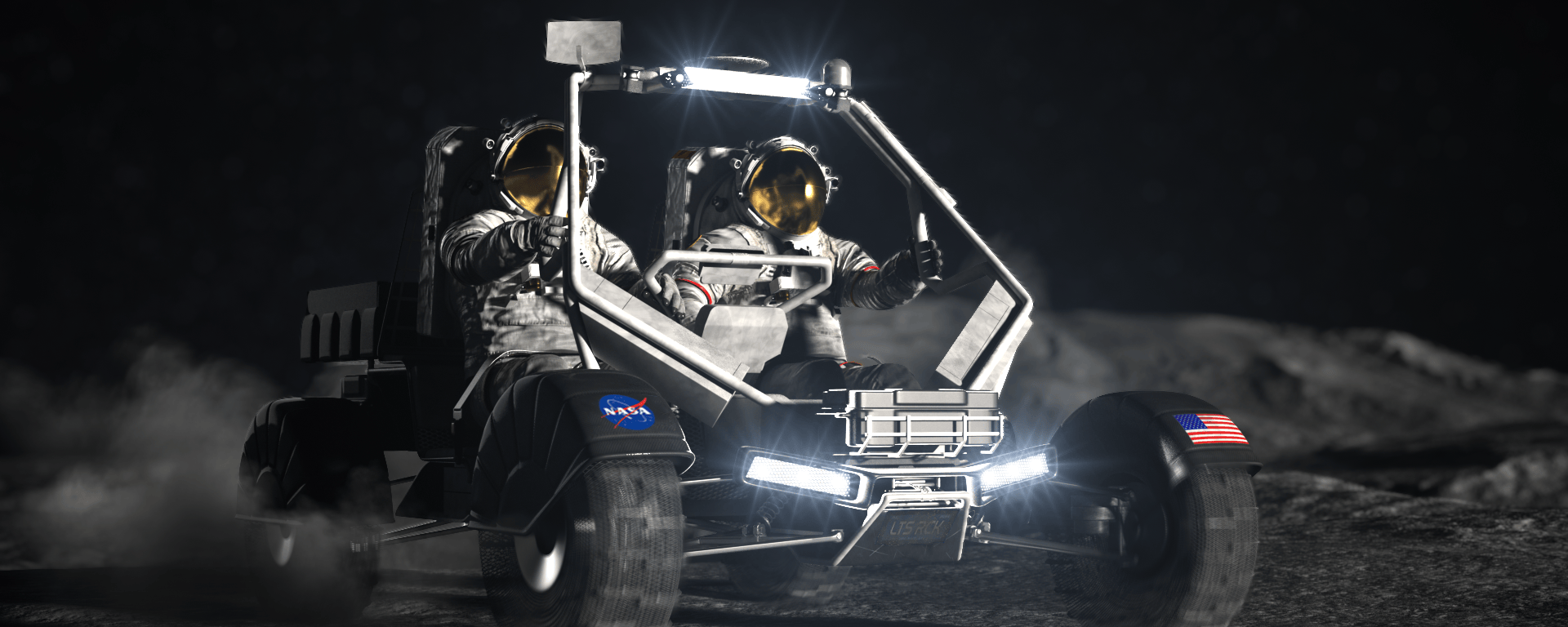
NASA is revving up for the Artemis missions with a cutting-edge lunar terrain vehicle (LTV). Recently, the space agency selected three companies to advance the LTV’s capabilities for Artemis astronauts, marking a new era of lunar exploration and scientific research. According to a NASA press release, Intuitive Machines, Lunar Outpost, and Venturi Astrolab have been chosen to develop this next-generation rover, equipped with advanced technologies to revolutionize our understanding of Earth’s celestial neighbor.
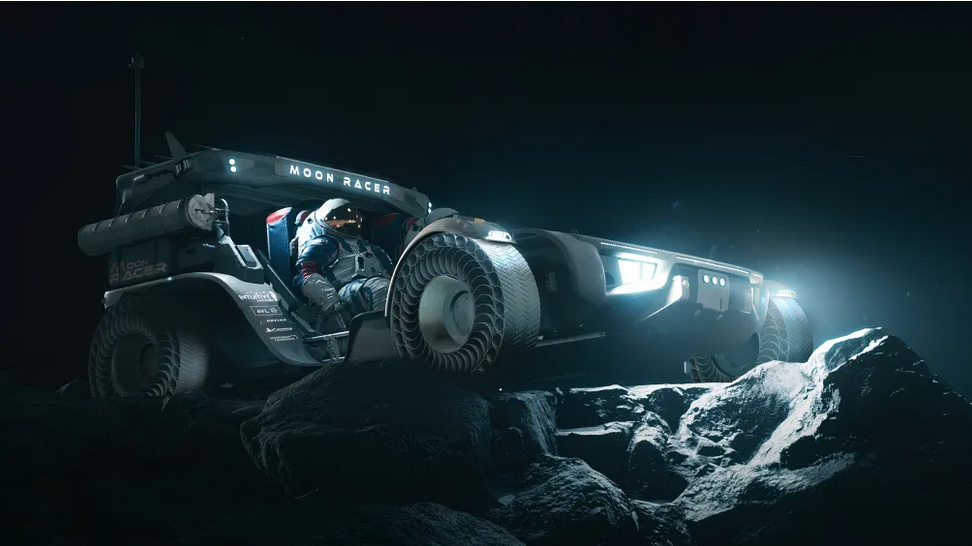
Lunar Leap: A Game-Changer for Exploration
The LTV will be designed to handle the Moon’s extreme conditions, particularly at the South Pole. This robust vehicle will feature advanced technologies for power management, autonomous driving, and state-of-the-art communications and navigation systems. Astronauts will use the LTV to travel, conduct scientific research, and collect lunar surface samples, greatly increasing their ability to explore and make new discoveries. Vanessa Wyche, director of NASA’s Johnson Space Center in Houston, said, « We look forward to the development of the Artemis generation lunar exploration vehicle to help us advance what we learn at the Moon. »
Commercial Collaboration: A Moon-light Opportunity?
NASA’s partnership with these companies will leverage their expertise to build commercial capabilities for long-term human exploration. The selected companies will have the opportunity to use their LTV for commercial lunar surface activities unrelated to NASA missions, potentially opening new avenues for lunar resource utilization and economic growth. However, critics argue that relying on commercial providers for critical mission components could pose challenges and risks, highlighting the need for careful management and oversight in these collaborations.
Paving the Way for Mars and Beyond
The LTV and Artemis missions represent a significant step forward in human exploration and settlement in space. Lunar exploration could yield economic benefits and drive technology evolution, paving the way for crewed missions to Mars. Jacob Bleacher, chief exploration scientist in the Exploration Systems Development Mission Directorate at NASA Headquarters in Washington, stated, « We will use the LTV to travel to locations we might not otherwise be able to reach on foot, increasing our ability to explore and make new scientific discoveries. »

