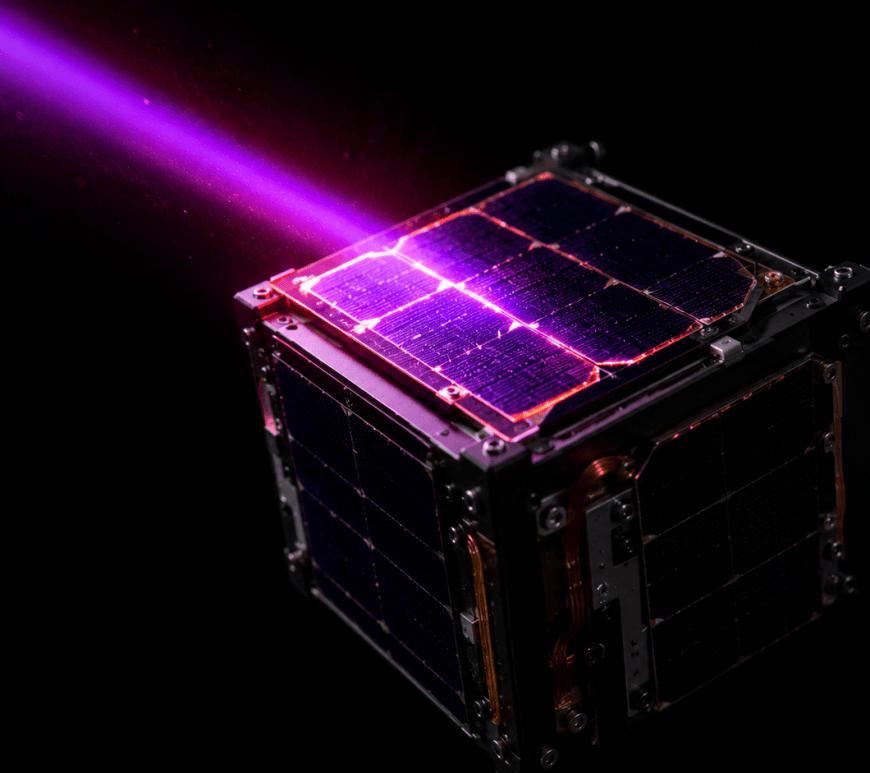


A small CubeSat floating in black space, its top solar panel lit by a narrow violet-magenta beam of light that makes the cells glow.

A Spacecraft Will Try to Power Another With Nothing but Light

Cable-free, finally. Star Catcher Industries, a US company founded in 2024, is preparing a prototype called Protostar for what it bills as a first: wireless power transfer between two spacecraft in orbit. According to Interesting Engineering, it launches in October 2026 from Vandenberg Space Force Base, aboard SpaceX’s Transporter-18 mission. Continuer de lire A Spacecraft Will Try to Power Another With Nothing but Light

A ground telescope in silhouette on a dark hillside beneath a band of violet and magenta light spreading across the night sky.

Selling Sunlight After Dark: An Old Idea Returns at Scale

In July 2026, the US Federal Communications Commission cleared Reflect Orbital to put a steerable mirror satellite into orbit, one built to bounce sunlight to the ground at night. La Nature, citing iflscience.com, reports the company wants as many as 50,000 of them, sold as light for solar farms and disaster zones. The idea is not new. In 1993 a Russian craft managed a smaller version on less than four kilograms of aluminised film. Continuer de lire Selling Sunlight After Dark: An Old Idea Returns at Scale

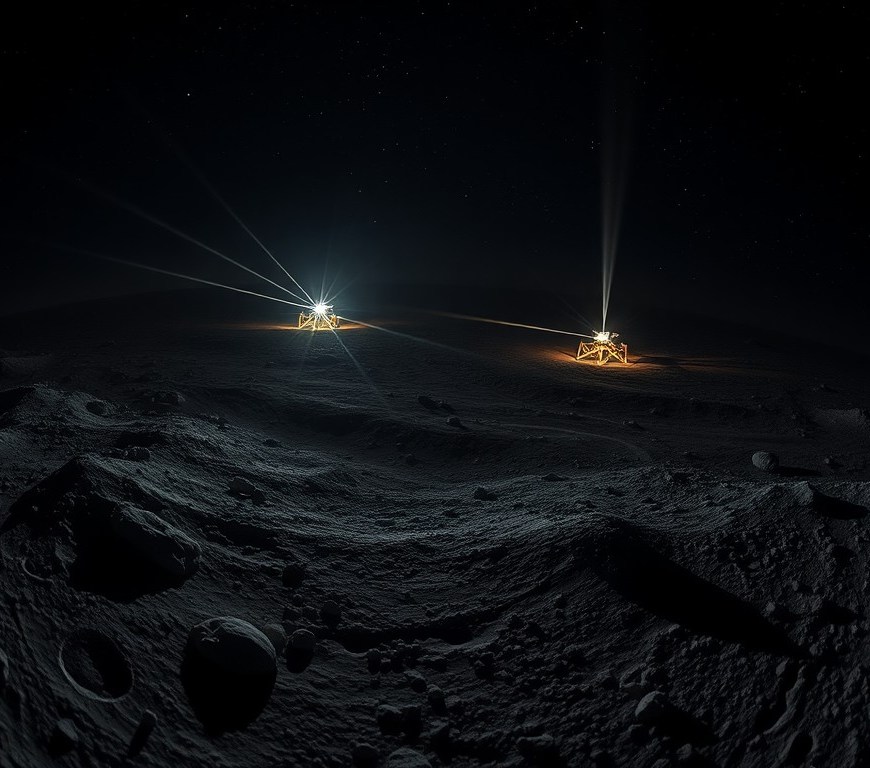
Laser Satellites to Light Up Lunar Night

Power from Above SpaceNews revealed that Canadian startup Volta Space Technologies has unveiled an innovative solution to one of the moon’s biggest challenges: providing continuous power during the long lunar night. Their LightGrid network aims to transform lunar operations through a constellation of power-beaming satellites that would transmit energy via lasers to surface vehicles and equipment. Breaking Physics Barriers The technology backing this ambitious project … Continuer de lire Laser Satellites to Light Up Lunar Night

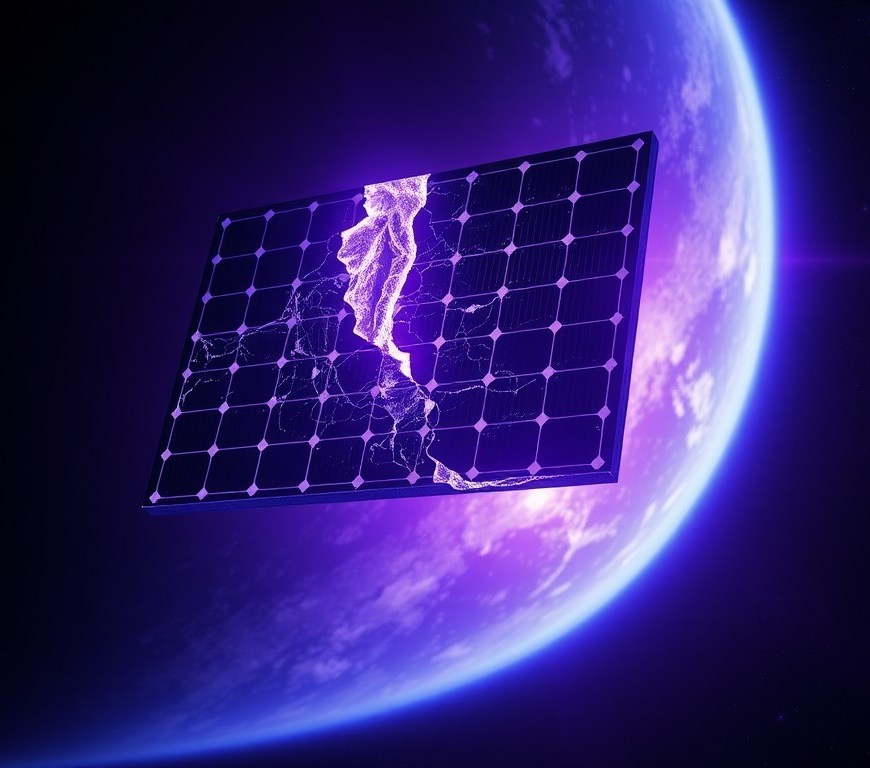
Selfhealing Solar Cells Pass Space Test

SpaceDaily reports a groundbreaking achievement in space technology as the first-ever perovskite-based solar cells successfully launched into orbit on July 9, 2024. The innovative power system, developed by researchers at the University of Potsdam, hitched a ride aboard the European Space Agency’s Ariane 6 rocket from the Guiana Space Centre. These revolutionary solar cells use perovskite – a crystal-structured material that transforms sunlight into electricity … Continuer de lire Selfhealing Solar Cells Pass Space Test

UK Startup Unleashes Nuclear Energy for Space Exploration

Atomic ambitions soar: A UK-based company is pushing the boundaries of energy solutions for space exploration. Perpetual Atomics, a spin-off from the University of Leicester, is developing cutting-edge radioisotope power systems for deep space missions. These innovative power sources could be the key to sustaining longer and more ambitious space exploration endeavors, according to Interested Engineering. Endless energy from tiny particles: The heart of Perpetual … Continuer de lire UK Startup Unleashes Nuclear Energy for Space Exploration

Mars in Half the Time: The Promise of Nuclear Rockets

Blast off to the future: Nuclear-powered rockets could revolutionize space travel, potentially cutting the journey time to Mars in half. According to The Conversation, NASA and the Defense Advanced Research Projects Agency (DARPA) are jointly developing nuclear thermal propulsion (NTP) technology, aiming to demonstrate a prototype in space by 2027. Power beyond chemical limits: NTP systems work differently from traditional chemical rockets. Instead of relying … Continuer de lire Mars in Half the Time: The Promise of Nuclear Rockets