
In April 2024 I described EcoGalactic as an AI-generated lab, half me and half machine, publishing daily content about sustainable space habitation. Two years later the intent still holds. Almost everything underneath it has moved, and the largest shift is that the project now runs on a single agent rather than a row of separate tools. This is the updated version of that note (2024).
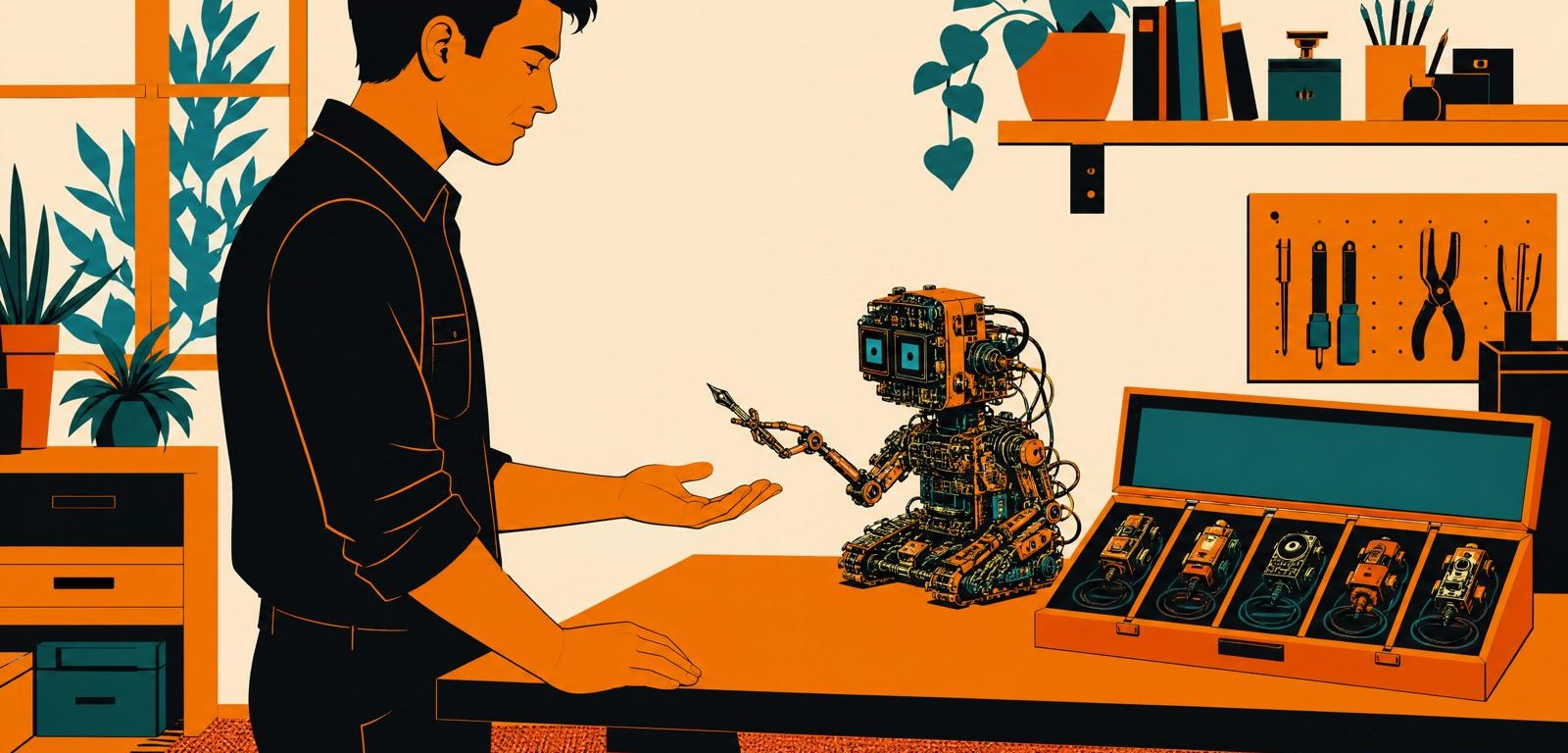
The first change is conceptual, and it is the one that reshaped everything else. In 2024 I worked with assistants. I opened a chat, prompted a model, corrected its output, then moved to the next tool: Claude wrote, Stable Diffusion illustrated, I stitched the pieces together. In 2026 I work with an agent. EcoGalactic runs on Claude Code and a harness of reusable skills, two of which I wrote for this project: one that scans the news for relevant topics, one that drafts an article and prepares its distribution. The first queries Google News, in its US and French editions, against a fixed keyword list, category by category, through sub-agents. The agent chains the steps. I no longer operate each tool by hand.
The second point is what EcoGalactic is not. It does not pose as a media outlet, and it never claimed to. It is a sector-watch tool pointed at a single theme, space sustainability, with a fixed angle and a defined tone of voice. That design is deliberately portable: the same harness could watch another sector tomorrow by swapping the topic list and the brand platform behind it.
The third point is where the human stays. The agent proposes topics; I decide which ones enter the library. It extracts the facts; I confirm which ones matter, which is the lead, which is the closing line. It drafts; I read the draft against its sources before anything moves forward. For distribution, the article goes to WordPress first, then to LinkedIn through Buffer, a scheduler: the agent writes the post and files it there as a draft; I read it and publish it myself. Nothing publishes without a human decision. The point is designed in, not bolted on: the system is built so that responsibility sits with the person who publishes and owns the agent, not with the model.
The fourth change is frugality. EcoGalactic covers sustainability, so its own production has to stay sober. I follow the Green-Claude practices: lighter, less demanding Claude models wherever the task allows, no oversized image generation, token consumption logged per session and converted into an estimated carbon cost. Same logic for video. I stopped producing it. Video generation is heavy, and for this project it was never essential.
The fifth change is the voice. The 2024 articles were enthusiastic, full of exclamation marks and words like « groundbreaking ». I have reworked the tone since: drier, more sceptical, closer to what the sources actually establish. The older articles keep their original tone, and their dates say where they come from.
EcoGalactic is a project inside the « IA personnelle » programme run by Flint, where I am learning to build an agent that manages my own knowledge base. The space-sustainability blog is the test bed. « Try, fail, try again, fail better » was the 2024 motto, and it still is. What moved is the machinery around it, and the discipline of measuring what that machinery costs.

