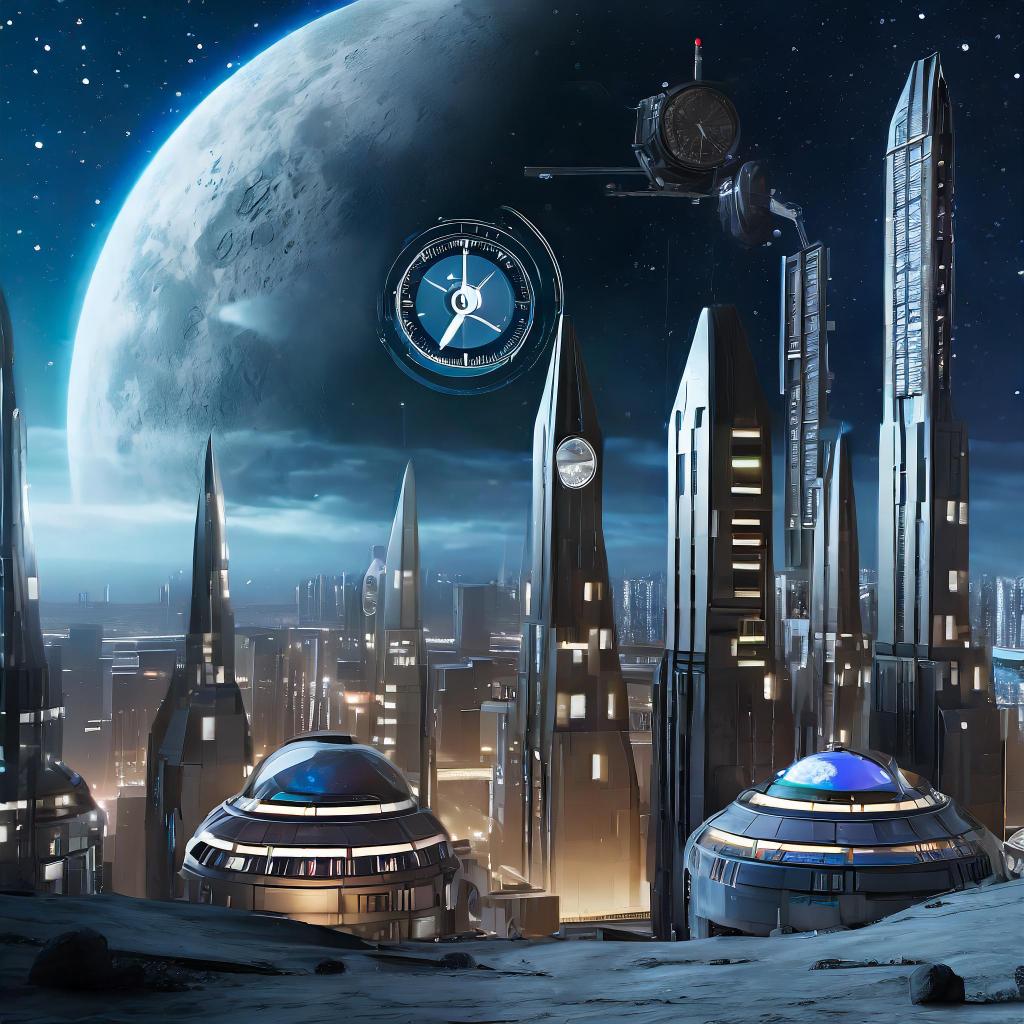


Imagine a world where time is not in sync. The White House has tasked NASA with establishing a moon-centric time reference system, Coordinated Lunar Time (LTC), by the end of 2026, as reported by The Guardian. LTC would provide a time-keeping benchmark for lunar spacecraft and satellites, ensuring secure data transfers and synchronized communications.
The Heartbeat of the Moon
« An atomic clock on the moon will tick at a different rate than a clock on Earth, » said Kevin Coggins, NASA’s top communications and navigation official. Atomic clocks may be placed on the moon to develop LTC, as they generate precise time by measuring changes in the state of atoms. On Earth, Universal Coordinated Time (UTC) relies on a global network of atomic clocks. UTC might influence how LTC is implemented, as the UN’s International Telecommunication Union defines UTC as an international standard.
Interstellar Cooperation (or Lack Thereof)
Developing LTC will require international agreements through existing standards bodies and among the 36 nations that have signed the Artemis Accords. However, China and Russia, two main US rivals in space, have not signed the accords, potentially complicating global collaboration.
Time Travel to Mars?
The establishment of LTC could have significant implications for future space exploration. A unified lunar time standard would facilitate data sharing and collaboration among spacecraft, satellites, and astronauts. Additionally, the lessons learned from creating LTC could inform the development of time reference systems for other celestial bodies, such as Mars.
The Cosmic Clock Conundrum
The creation of Coordinated Lunar Time represents a crucial step in humanity’s journey to the stars. As we continue to push the boundaries of space exploration, the development of accurate and reliable timekeeping systems will be essential for ensuring the success of our missions and unlocking the mysteries of the cosmos.