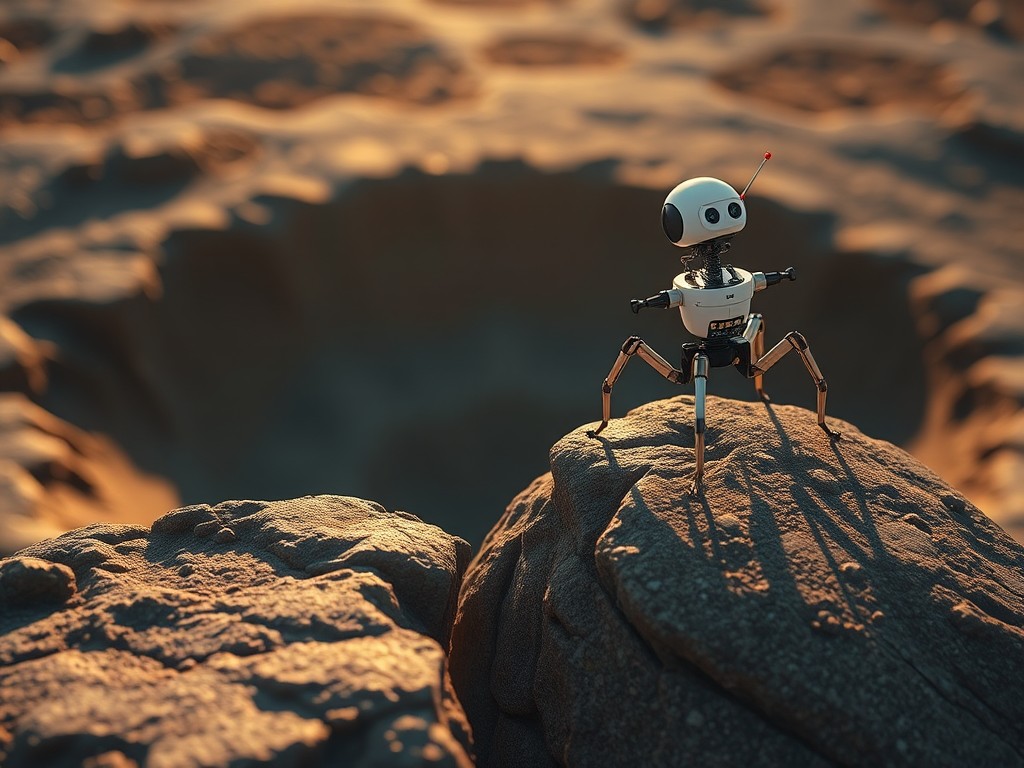

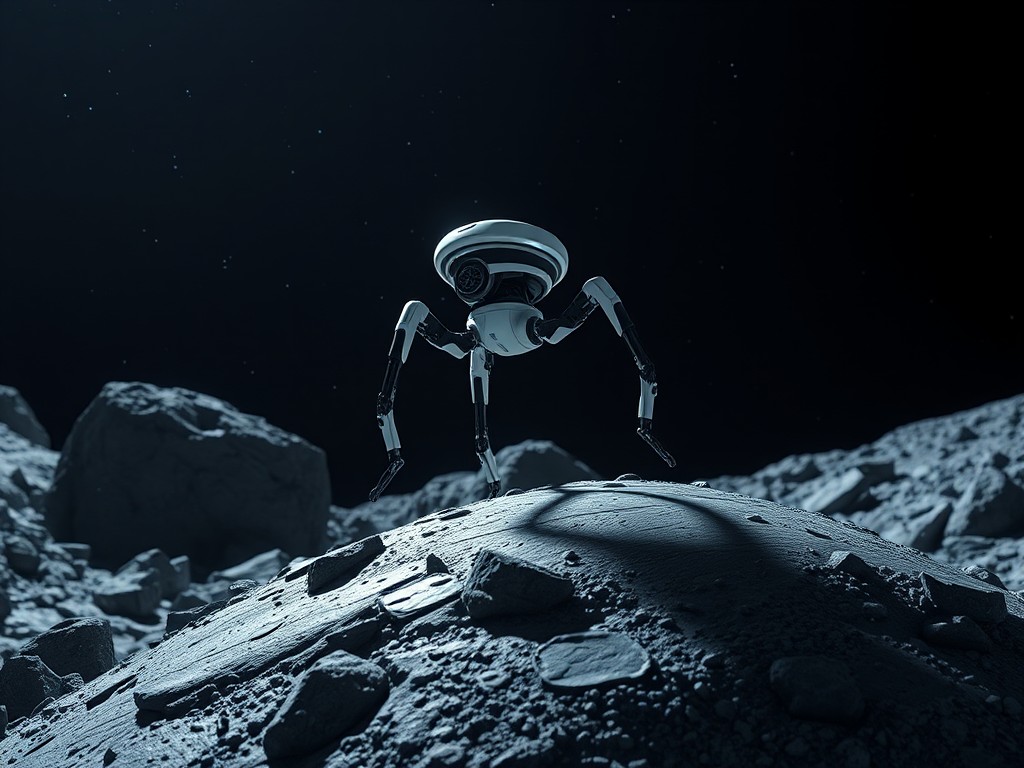
Bounce, explore, repeat: In the realm of space exploration, a new player is bouncing onto the scene – literally. SpaceHopper, a three-legged robot developed by students at ETH Zurich in Switzerland, is designed to explore microgravity environments with unprecedented control. CNN reports that this innovative robot could transform how we investigate asteroids and other low-gravity celestial bodies.
Precision in zero-G: SpaceHopper’s unique design allows it to navigate asteroid surfaces with remarkable precision. Unlike previous explorers that relied on uncontrolled bounces, this robot can direct its movements with intention. « So, when we want to go to that crater, we can go to that crater, » Valerio Schelbert, a masters’ student and systems engineer on the project, told CNN. The robot’s three-legged structure enables it to bend and propel itself off the ground, while its ability to reorient mid-air ensures a stable landing. This level of control sets SpaceHopper apart from its predecessors, such as Japan’s Ryugu rovers or the Germany-France developed MASCOT, which relied on more basic hopping mechanisms.
From pebbles to boulders: The next giant leap
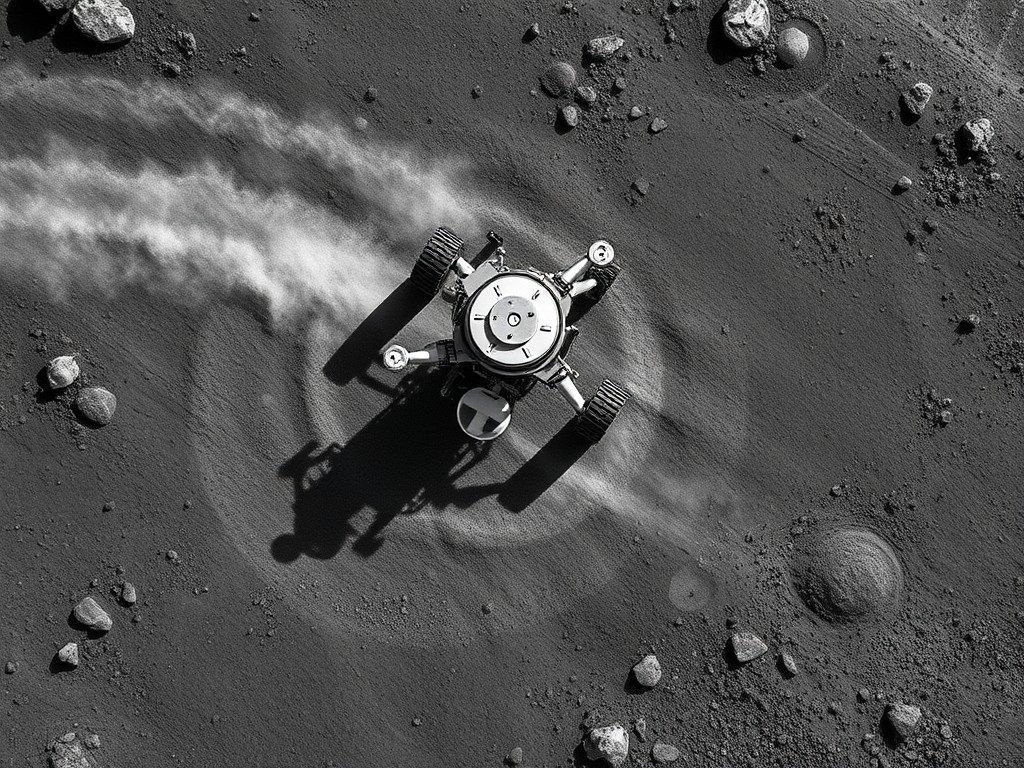
Lunar ambitions: The success of SpaceHopper has paved the way for its lunar counterpart, LunarLeaper. Selected by the European Space Agency (ESA) as a potential lunar explorer, this 10-kilogram tripod robot aims to scout the moon’s surface ahead of human missions. As CNN reports, « ESA plans to send the first European astronaut to the moon by 2030, and it’s using robots as scouts to prepare. » LunarLeaper’s mission could include exploring a pit potentially connected to a subsurface lava tube – a feature that scientists believe could house future lunar bases.
Robots paving the way: The implications of this technology extend far beyond simple exploration. On the moon, LunarLeaper could help identify safe locations for human habitation, protected from the harsh lunar environment. « We just can’t just send humans into space to do tasks that might be dangerous, » Schelbert explained to CNN. « But we can build robots that could do this task for us. »