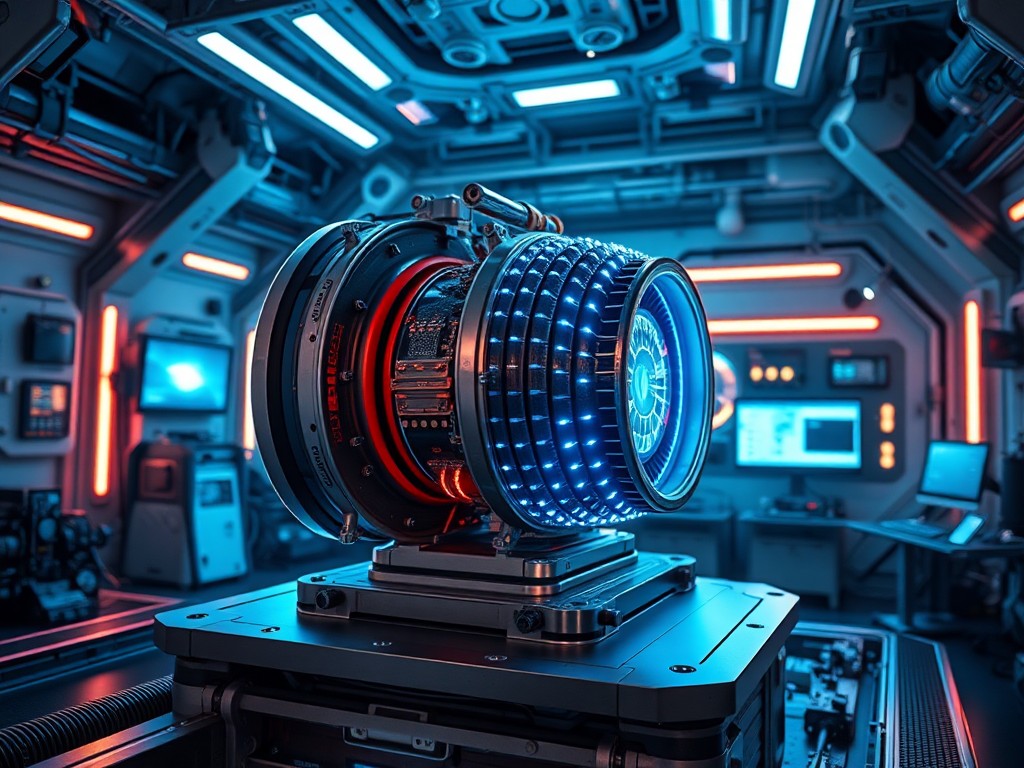
A giant leap for propulsion A revolutionary propulsion system could slash the time needed to reach the furthest regions ever explored by human technology, according to research presented at the 75th International Astronautical Congress in Milan. As reported by Phys.org, scientists from the Initiative for Interstellar Studies have designed an advanced ion engine system that could reach the solar gravitational lens – a point where our sun’s gravity acts as a giant magnifying glass – in just 13 years.
Riding the electric wave Unlike traditional rocket engines that burn chemical fuel, ion engines work by electrically charging particles and accelerating them to create thrust. While current ion engines are already highly efficient, the proposed system would push their capabilities to new extremes. The research suggests boosting power generation from today’s 100 watts per kilogram to an ambitious 1,000 watts – comparable to upgrading from a household light bulb to a microwave oven. « The development on these technologies is stalled not because we can’t make drives with better specific impulse but because we can’t produce power plants that support them yet, » explains the research paper published by the Initiative for Interstellar Studies.
When Physics Meets Reality
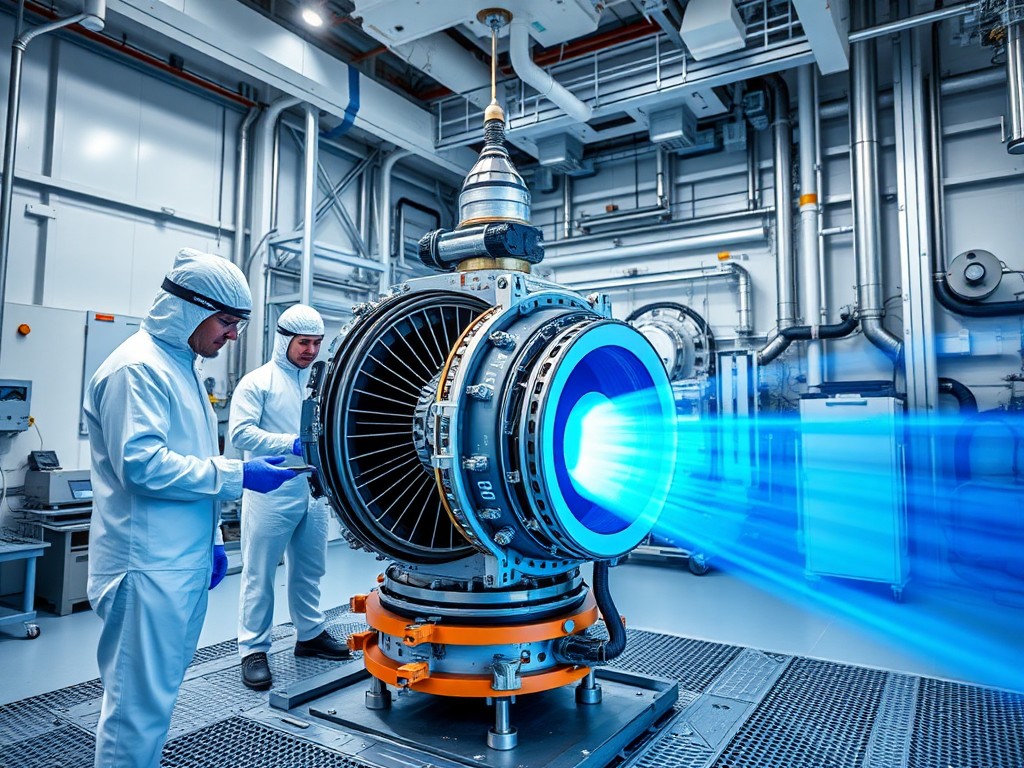
The power puzzle The biggest hurdle isn’t the ion engine technology itself – it’s creating a power plant small and light enough to fit on a spacecraft while generating massive amounts of energy. Current systems would need to become ten times more powerful while maintaining their compact size. Some space engineers question whether such dramatic improvements are achievable with near-term technology.
The final frontier beckons Despite these challenges, the potential payoff is enormous. « The authors calculate that it could deliver a payload of almost 18,000 kg to the solar gravitational lens in just 13 years, » reports Phys.org. This breakthrough would mean sending a probe weighing as much as a city bus to a distance of 550 astronomical units – far beyond where any human-made object has ever ventured.