

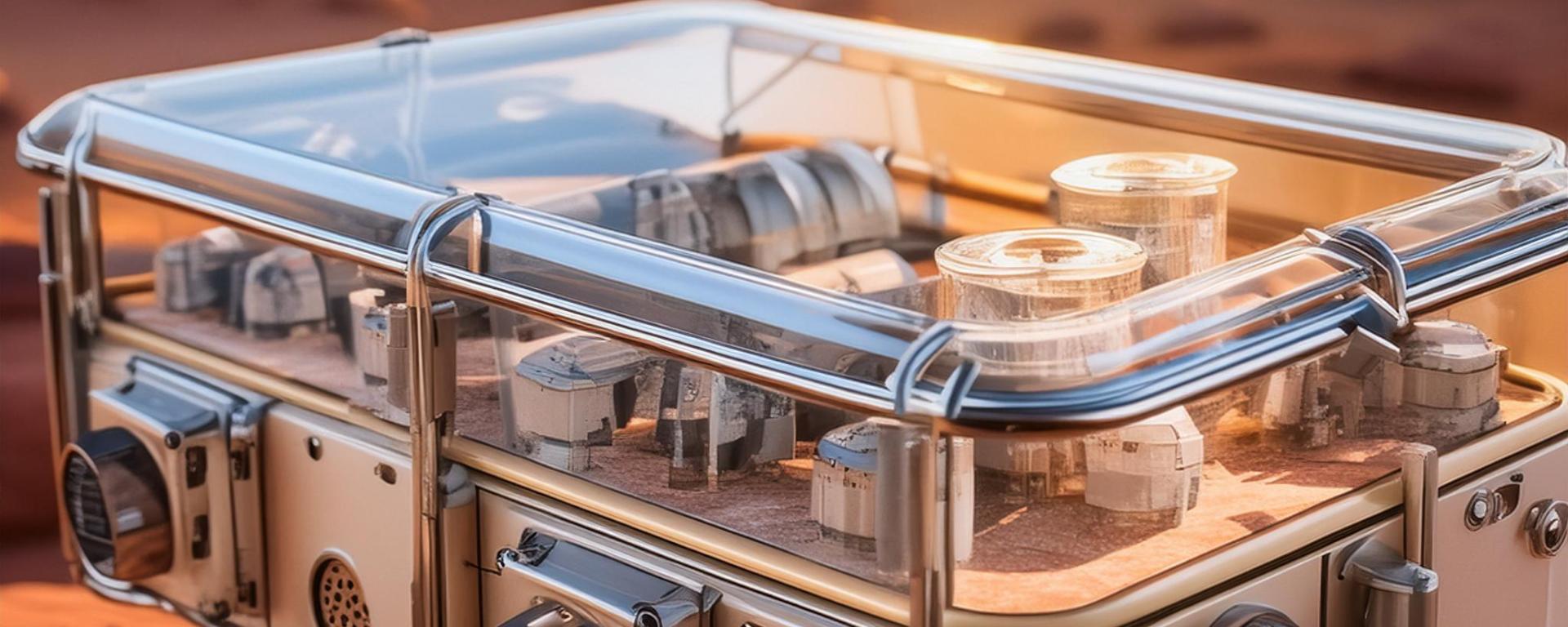
The race to unravel the secrets of Mars is on! Scientists and engineers are working tirelessly to bring pristine Martian samples back to Earth. A recent report by Aviation Week reveals a promising proposal that aims to tackle the technical and costly nature of a Mars Sample Return mission. Retired NASA scientist James Green has put forward a solution using the Artemis program’s powerful Space Launch System (SLS) rocket and an innovative Hypersonic Inflatable Aerodynamic Decelerator.
Green’s One-Launch Plan
A single launch mission could revolutionize the Mars Sample Return process. Green’s proposal involves delivering a 20-metric-ton payload to the Martian surface, including an inflatable descent aero shell, a propulsive descent module, a two-stage Mars Ascent Vehicle (MAV), a fetch rover, and a sample canister and encapsulation system. The MAV will launch the collected samples into Mars orbit, while the fetch rover gathers samples cached by the Perseverance rover and transfers them to the MAV.
The Multi-Mission Mars Quandary
The joint NASA/ESA Mars Sample Return strategy, involving multiple missions, has faced cost and timeline restrictions. Green’s single launch concept aims to tackle these challenges. However, potential limitations persist, such as mission complexity and reliance on the SLS rocket. Green emphasized the importance of exploring various options during his presentation at the Explore Mars 2024 Humans to Mars Summit: « You have to explore a large number of options. You have to be able to create partnerships and do international coordination » (Aviation Week).
The Future of Mars Exploration
The successful implementation of Green’s proposal could revolutionize future Mars Sample Return strategies and broader space exploration efforts. The Mars Sample Return mission is crucial not only for scientific research but also for paving the way for human exploration of Mars. As Aviation Week reports, reaching Mars with the MAV and lifting off for Earth « also will inform development of a strategy for returning human explorers from the red planet to Earth. »

