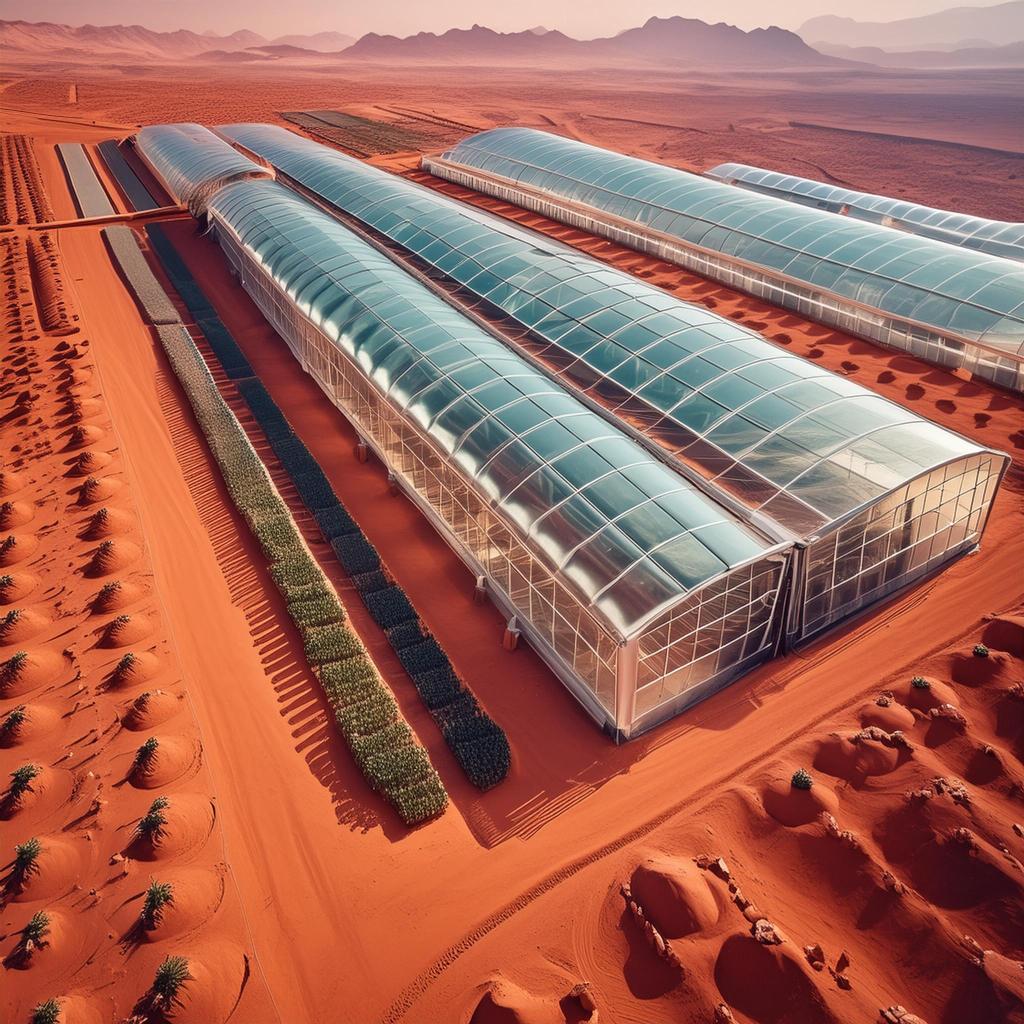

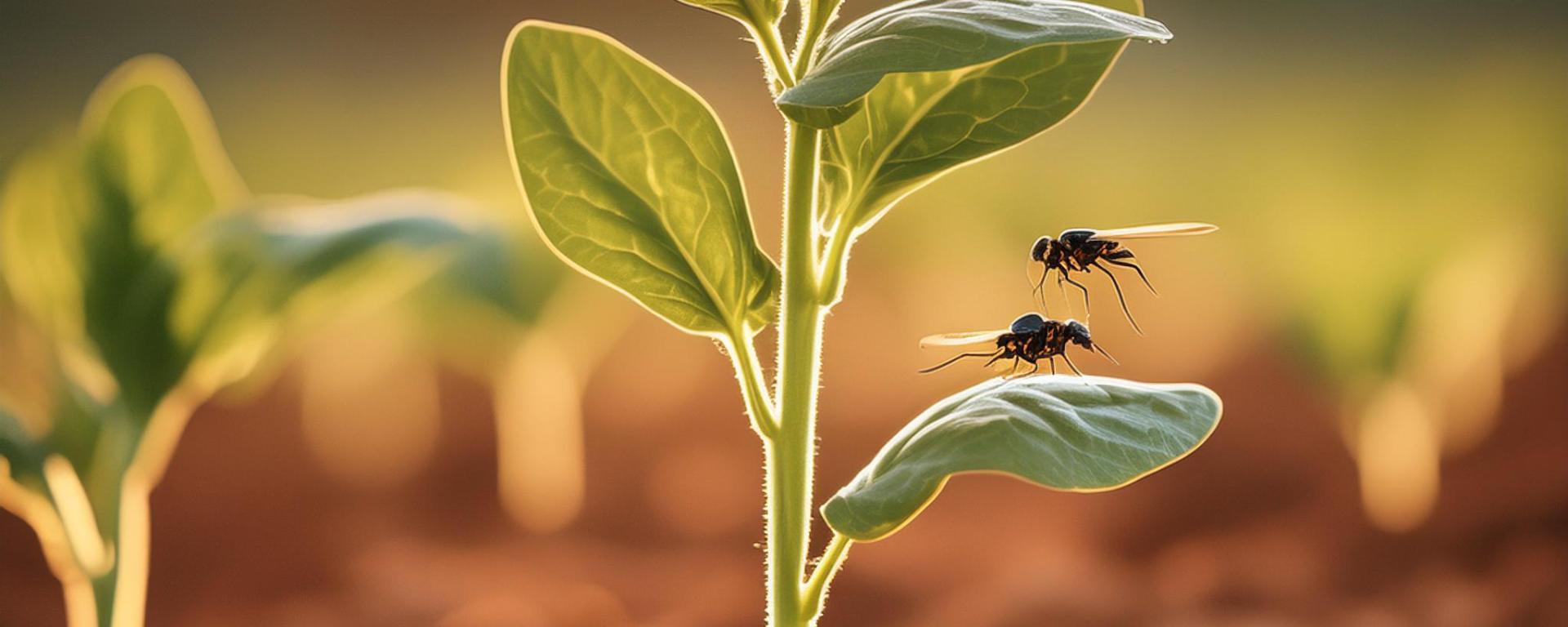
Farming on Mars may soon become a reality, thanks to an unlikely hero: the black soldier fly. Researchers at Texas A&M University have made a groundbreaking discovery that could revolutionize space agriculture and pave the way for sustainable habitation on the Red Planet.
Buzz off, hunger!
Emmanuel Mendoza, an aerospace engineering student at Texas A&M, has successfully grown pea plants in simulated Martian soil using black soldier fly waste, known as frass, as a supplement. This innovative approach combines entomology, agriculture, and space exploration, offering a potential solution for future space settlers to grow their own food. Frass, a polite term for insect excrement, is rich in nutrients and acts as a natural fertilizer.
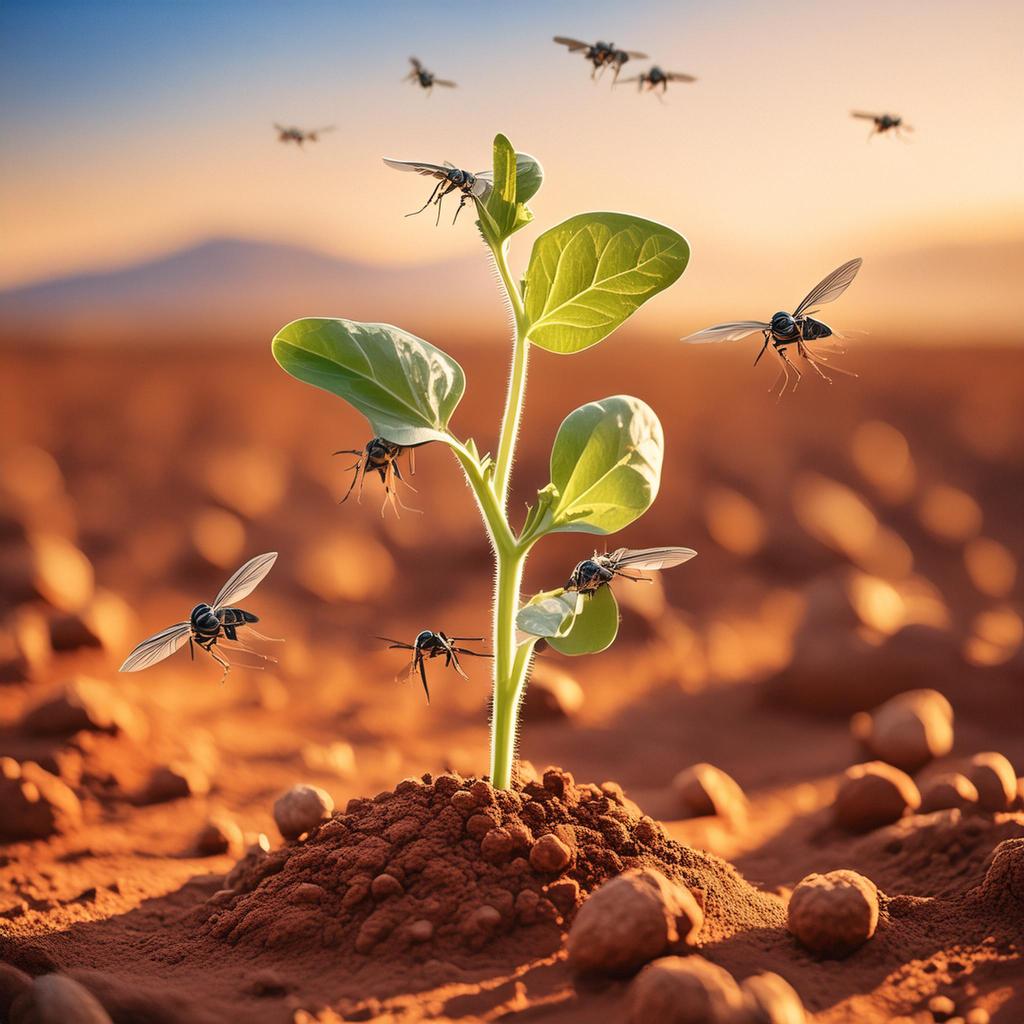
When Flies and Peas Join Forces
The experiments revealed that a 10% concentration of fly frass in Martian regolith provides optimal conditions for plant growth. Mendoza explained to Texas A&M University, « It definitely shows that the Martian regolith is not so inert that plants will not grow. It’s showing us that there is a certain functionality, a certain usefulness in Martian regolith. »
Houston, we have a salad
Despite these promising results, scaling up this technology for large-scale food production in space faces significant hurdles. Previous attempts to cultivate plants in Martian soil simulants have often failed, highlighting the complexity of the task. However, Mendoza’s research offers a new direction for overcoming these challenges.
One small step for flies…
The next crucial step is testing this innovative growing method in zero-gravity conditions. Remarkably, some plants showed growth even in 100% Martian soil without any frass supplement. « That was really interesting. It shows that plants are super resilient. They can learn to thrive and grow in even the most austere conditions, » Mendoza told Texas A&M University. This breakthrough could have far-reaching implications for long-term space missions and potential Martian settlements, transforming the barren Martian landscape into a thriving agricultural environment.