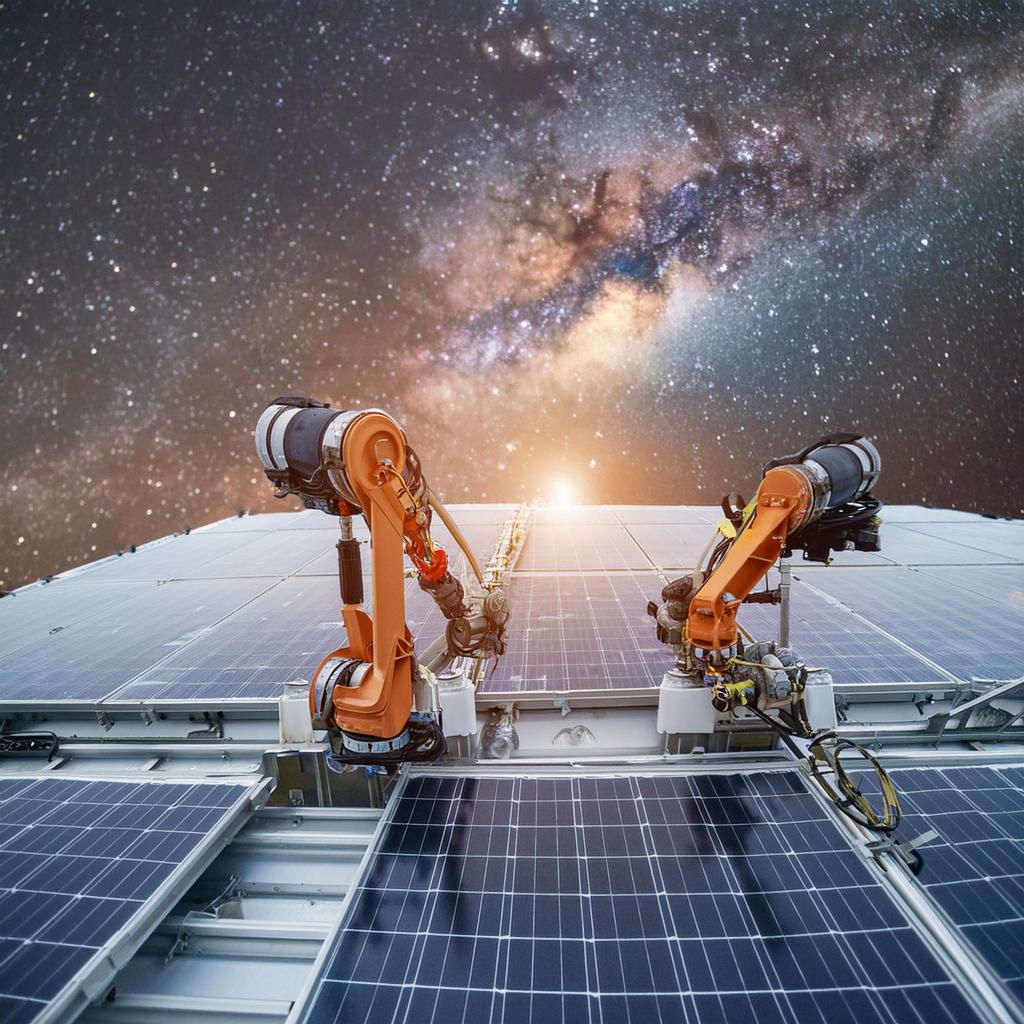


Space-based solar power, once a sci-fi dream, is inching closer to reality. According to Fast Company, Virtus Solis, a pioneering startup, aims to launch its first commercial space-based solar power system by 2030.
This ambitious project could redefine how we power our world, offering a constant, renewable energy source unaffected by weather or day-night cycles.
LEGOs in orbit
At the heart of Virtus Solis’ innovation lies a sophisticated blend of space technology and energy transfer. The company plans to use robots to assemble large solar arrays in medium Earth orbit, creating a modular power plant in space.
Ed Tate, cofounder and chief technology officer at Virtus Solis, explained to Fast Company: »We take the sunlight and we convert it into radio frequency beams. The beams then are transmitted very narrowly to a target on the ground. »
This method, the company claims, is far more efficient than traditional terrestrial solar farms. To prove their concept, Virtus Solis intends to launch a pilot project in 2027.
Houston, we have a problem… or do we?
The path to space-based solar power is not without hurdles. A recent NASA report cast doubt on the commercial viability of such systems, citing prohibitive costs. Virtus Solis counters these concerns, pointing to rapidly decreasing launch expenses and advancements in robotic technology.
« Robotics completely changes the equations and drops the cost radically for building anything in space, » Tate told Fast Company. This debate underscores the challenges and potential of this groundbreaking technology.

Not Alone in Space
Virtus Solis isn’t alone in this cosmic endeavor. UK’s Space Solar, the European Space Agency’s Solaris program, and government initiatives in other countries are all exploring similar technologies.
This global interest highlights the potential impact of space-based solar power on meeting growing energy demands while reducing reliance on fossil fuels.