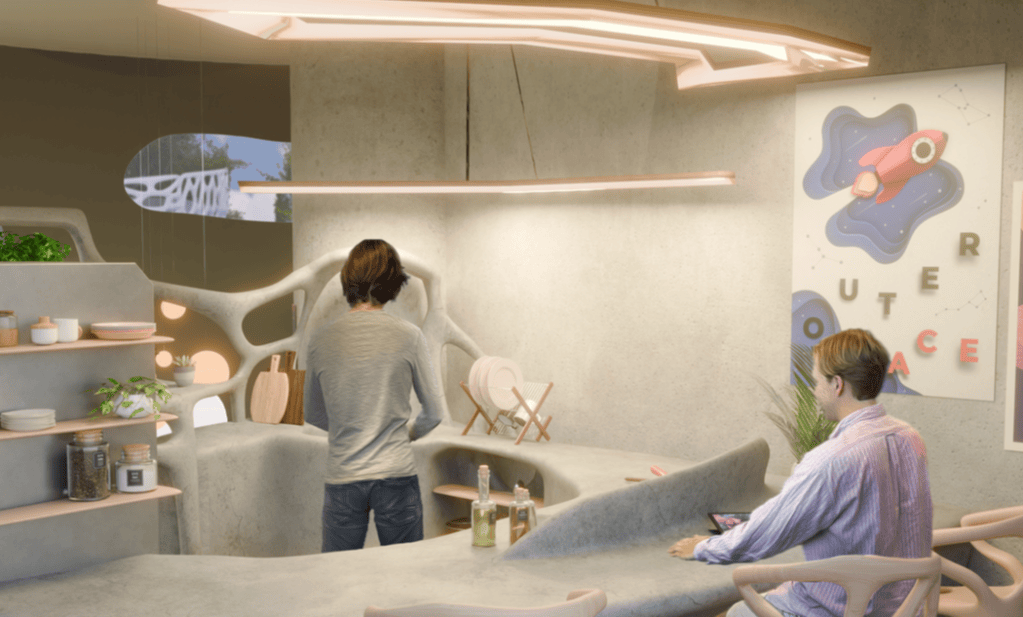

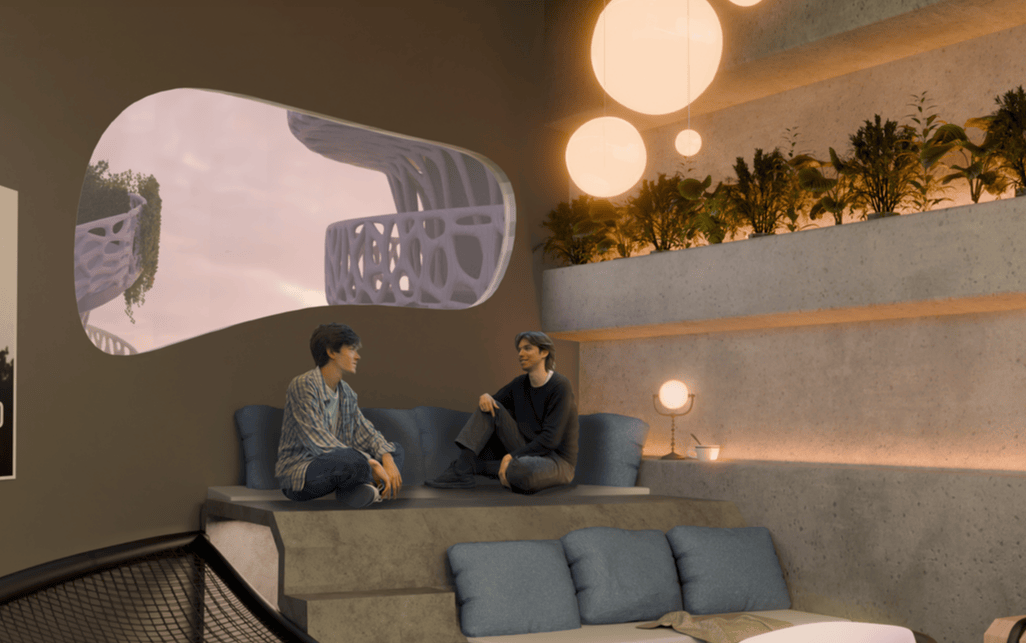
A team of innovative students from Delft University of Technology has unveiled a groundbreaking design for a self-sufficient lunar village that could house 150 residents in comfort and style. As reported by Innovation Origins, this visionary project, dubbed « Space Oasis Delft, » draws inspiration from nature to create sustainable habitats that balance cosmic challenges with Earth-like comforts.
Nests and shells in space?
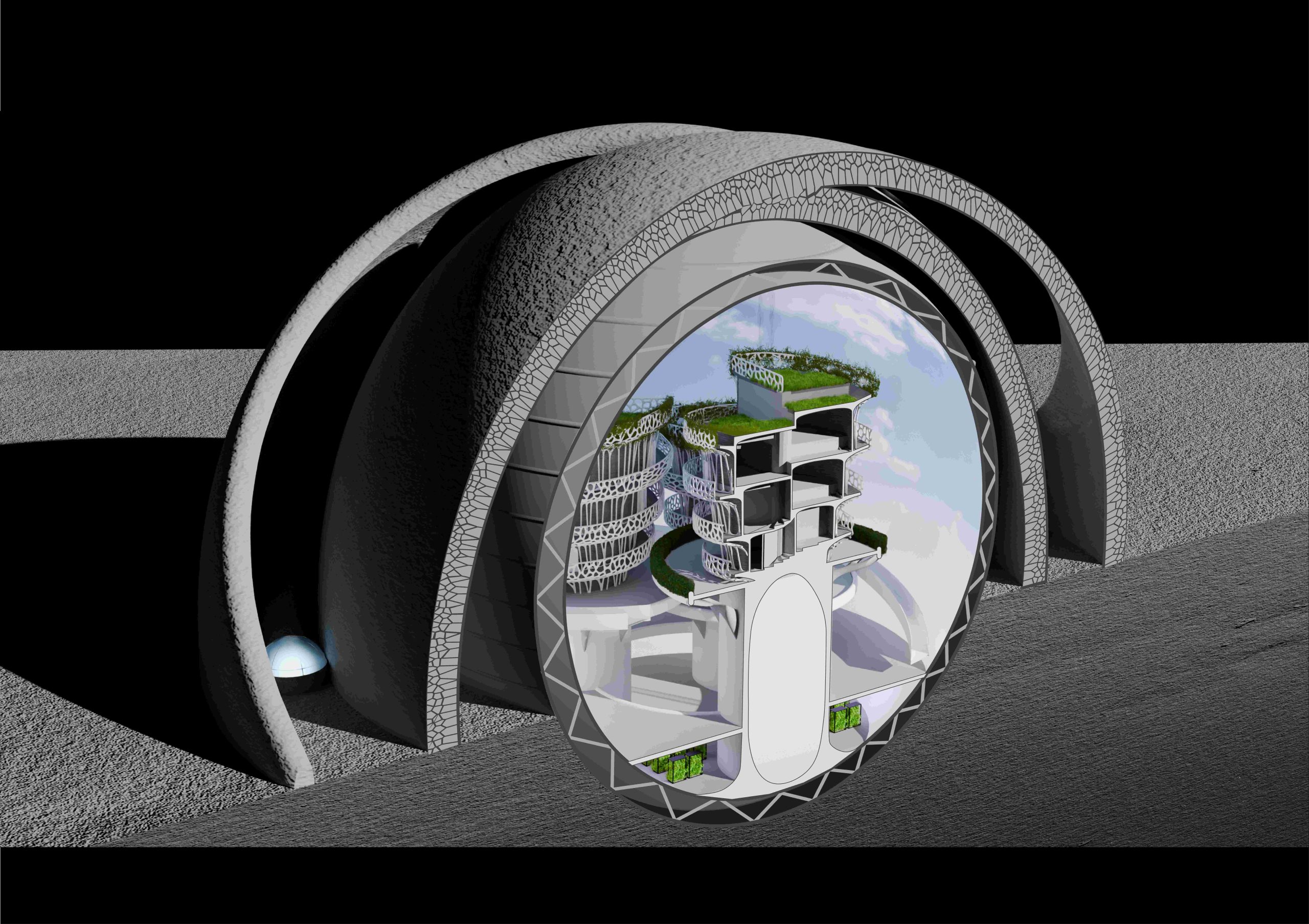
The design features individual dwellings for eight people, each equipped with its own radiation shield. These shields take their cue from the nests of ruddy oven birds, while the interior layout mimics the spiral structure of seashells, providing both stability and a sense of community. The shields incorporate lunar regolith, reducing the need for Earth-transported materials.
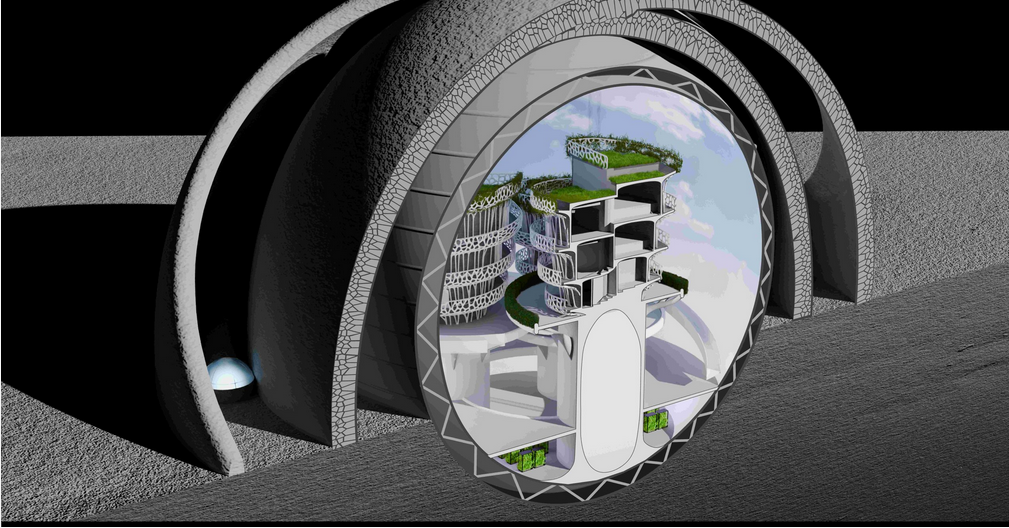
Space Oasis’s design. Credits TU Delft.
Moonwalkers’ Paradise: Where Waterfalls Defy Gravity
At the heart of each habitat lies a self-sustaining ecosystem, designed to minimize dependency on supply missions from Earth. « A key premise of the design was that the inhabitants not only survive on the moon but also enjoy their unique conditions, » explains Innovation Origins. Projection screens simulate Earth’s day-night cycles and seasons, while a low-gravity waterfall serves the dual purpose of humidifying plants and providing aesthetic value.
Space-age sustainability?
The Space Oasis Delft project offers valuable insights into sustainable space habitation. Marit Vegt, Team Manager Space Oasis Delft, declared to Innovation Origins, « Seeing how different perspectives and disciplines come together in our project is so nice. There is plenty of room for new insights and creativity within our team. » This balance between cutting-edge technology and human-centric design could serve as a blueprint for future space habitation projects, addressing key challenges of long-term space presence.