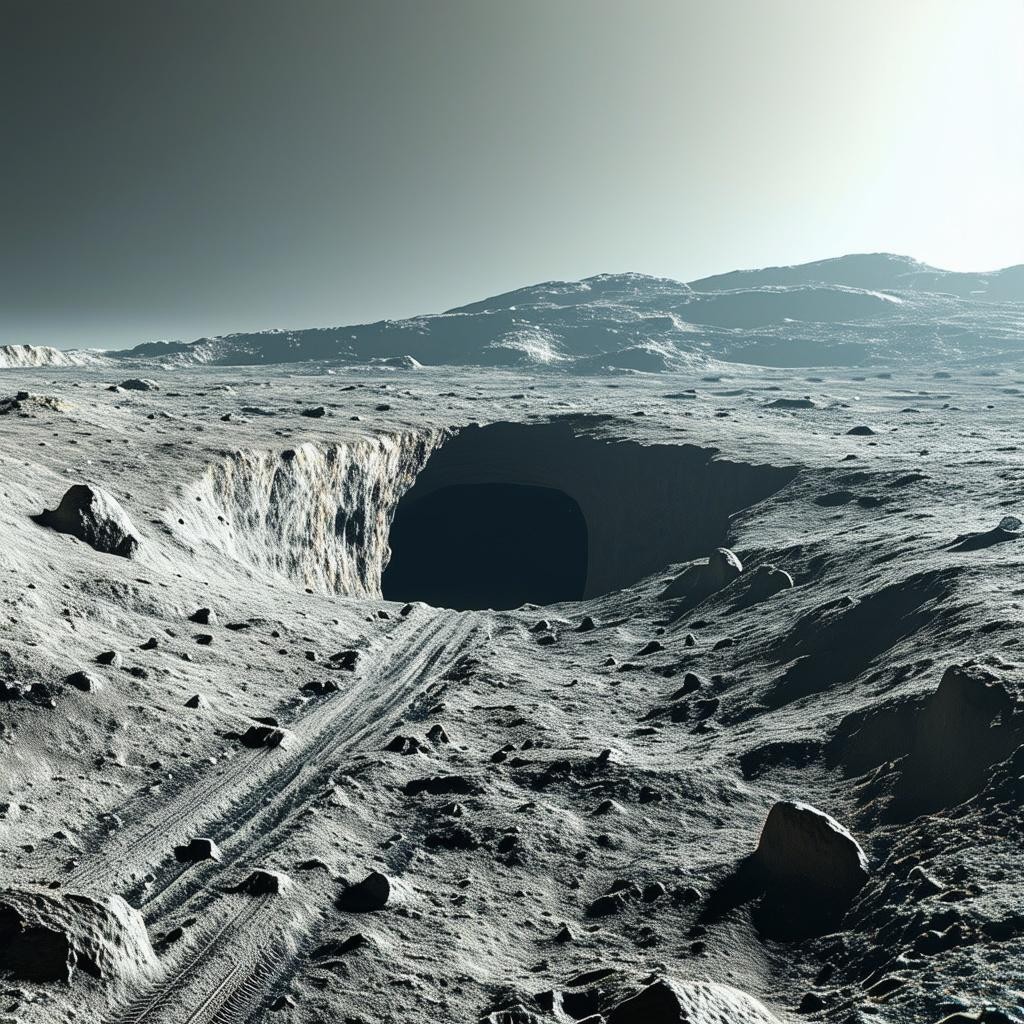

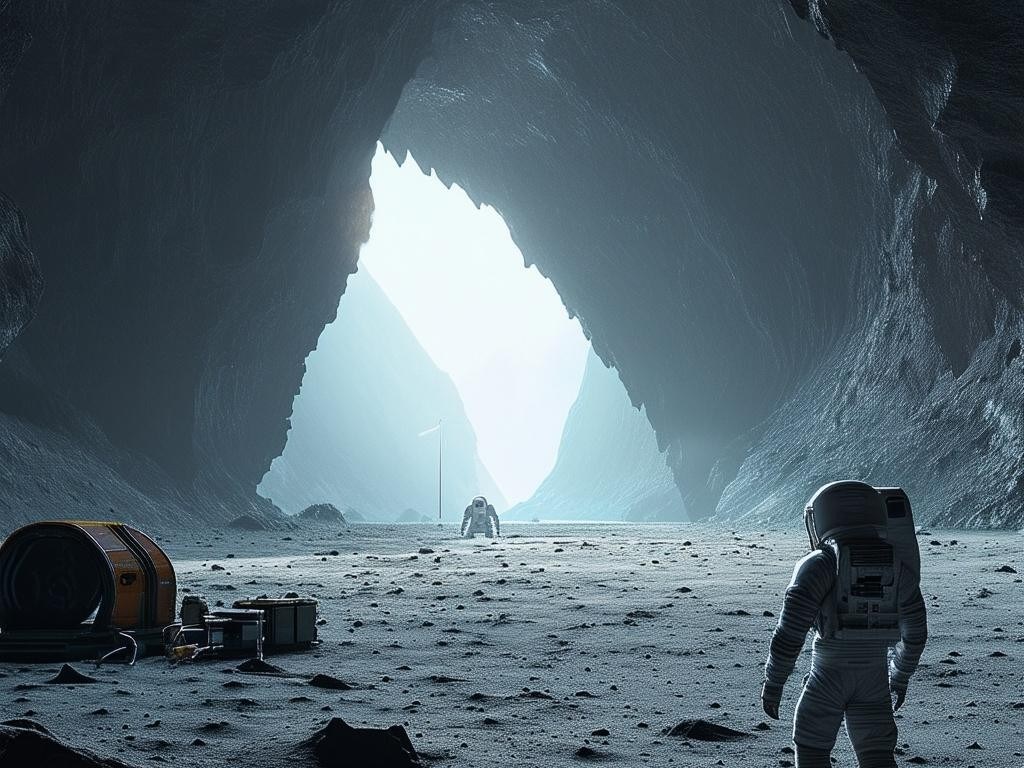
Scientists have made a groundbreaking discovery that could revolutionize future lunar missions. A large cave system has been found near the historic Apollo 11 landing site, as reported by The Conversation. This finding, based on radar images from NASA’s Lunar Reconnaissance Orbiter, opens up exciting possibilities for human settlement on the Moon.
Natural moon bunker, anyone?
The cave, accessible through a pit in Mare Tranquillitatis, boasts impressive dimensions. With a width of about 100 meters and a depth between 130 and 170 meters, it’s the deepest known lunar pit to date. These underground spaces could serve as natural shelters for future lunar bases, protecting astronauts from cosmic rays, extreme temperature fluctuations, and small asteroid impacts. The cave system, estimated to be 30-80 meters long and around 45 meters wide, could potentially house several « lunar houses. »

Lunar real estate boom?
While the discovery is promising, obstacles remain. The Mare Tranquillitatis location lacks easy access to water ice, crucial for sustainable lunar presence. Technical hurdles also exist, such as developing safe methods for astronauts to enter and exit these deep pits. « The walls of the pit are a sheer drop and are over 100 metres tall, meaning future explorers will need to find a safe way to descend into the caves and ascend when they are exploring the surface, » explains the article in The Conversation.
Polar caves: the lunar jackpot
Despite these challenges, the discovery suggests similar structures might exist in more suitable locations. Finding comparable caves near the lunar poles, where water ice is likely present, would be a game-changer. The Conversation notes, « Even better than the cave at Mare Tranquillitatis, would be the discovery of other such structures near either of the lunar poles. » Such a find could significantly reduce the cost and difficulty of establishing a long-term lunar presence.