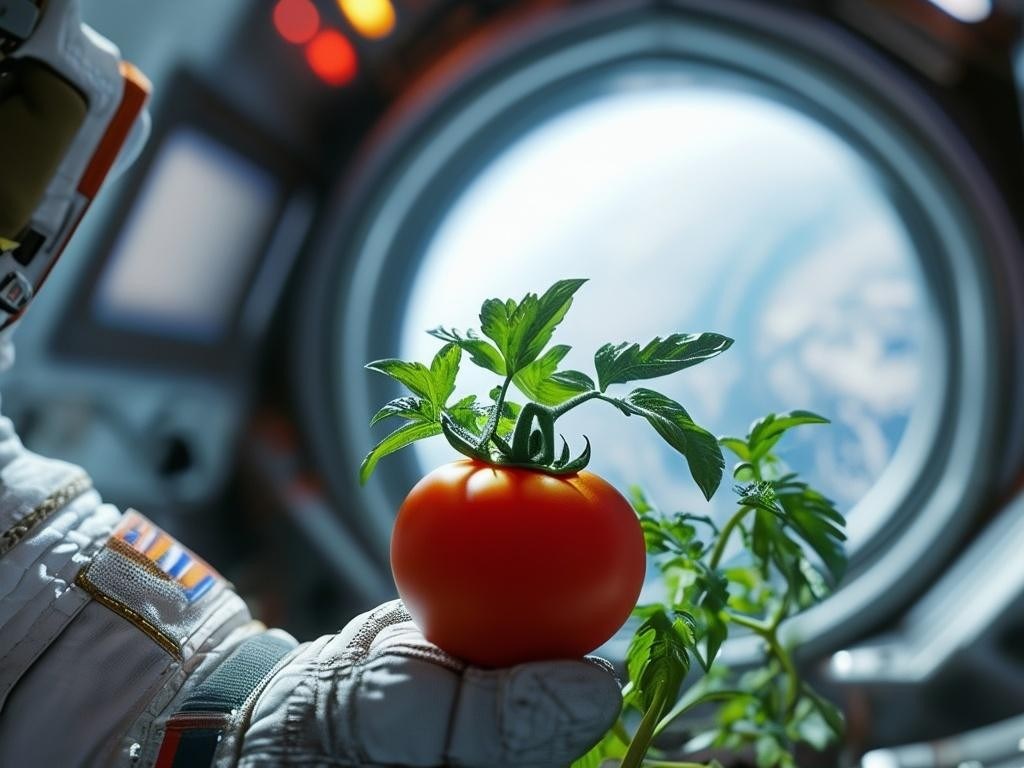
Tiny leaves, big dreams. According to UC Riverside, a miniature tomato plant is preparing for an out-of-this-world journey. This genetically engineered crop, standing just a few inches tall, is poised to make history aboard the International Space Station (ISS), orbiting 260 miles above Earth. Currently under observation at NASA’s Kennedy Space Center in Florida, its seeds are slated for a payload flight within the next year, marking a significant milestone in space agriculture.
From seed to fruit and back again. The upcoming mission will break new ground in extraterrestrial horticulture. For the first time, scientists will attempt a « seed-to-seed-to-seed » experiment in space. Robert Jinkerson, an associate professor at UCR’s Marlan and Rosemary Bourns College of Engineering, explains, « It’s going to be a seed-to-a-seed-to-a-seed, which has never been done before in space. » This means the seeds will germinate in the station’s Advanced Plant Habitat laboratory, produce fruit, and then those seeds will be planted again, creating a second generation of space-grown tomatoes.
Honey, I Shrunk the Tomatoes!
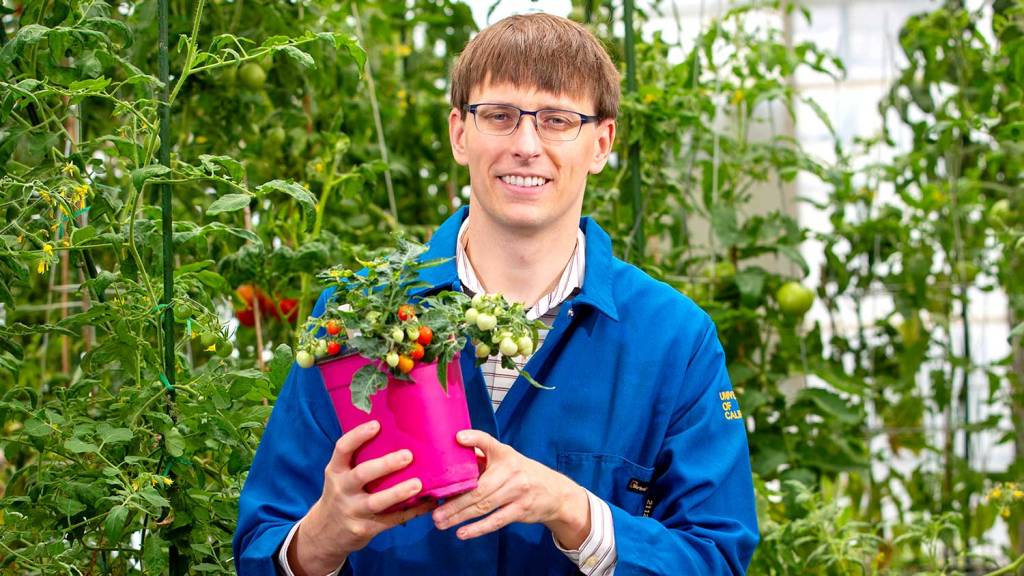
CRISPR to the rescue. This compact tomato is the result of years of meticulous research and genetic engineering. Martha Orozco-Cárdenas, director of the Plant Transformation Research Center at UCR, used CRISPR-Cas9 gene-editing technology to downsize ordinary tomato plants, optimizing the ratio of fruit to leaves and stems. The project, supported by an $800,000 grant from the NASA-funded Translational Research Institute for Space Health, aims to provide a sustainable food source for astronauts in the confined spaces of space stations and future settlements.
Beyond tomatoes: a cosmic smorgasbord. But tomatoes are just the beginning of this cosmic culinary adventure. Jinkerson and his team are expanding their research to include other food sources suitable for space cultivation. Their innovative work on growing edible yeast, green algae, and mushrooms in space recently earned them a $250,000 prize as runners-up in NASA’s Deep Space Food Challenge. This international competition challenged scientists to develop compact food production systems for the ISS, with strict size and power consumption limits.
Photosynthesis? That’s so Earth-centric. The UCR team’s approach goes beyond traditional growing methods. They’re pioneering techniques to grow crops in the dark, using acetate as an alternative energy source instead of relying on photosynthesis. « With our system, we estimate we can get about 4,000 calories per day, » Jinkerson states, highlighting the potential efficiency of this method compared to traditional photosynthesis-based growth.
As these tiny tomatoes prepare for their space debut, they could represent a giant leap in sustainable space exploration.