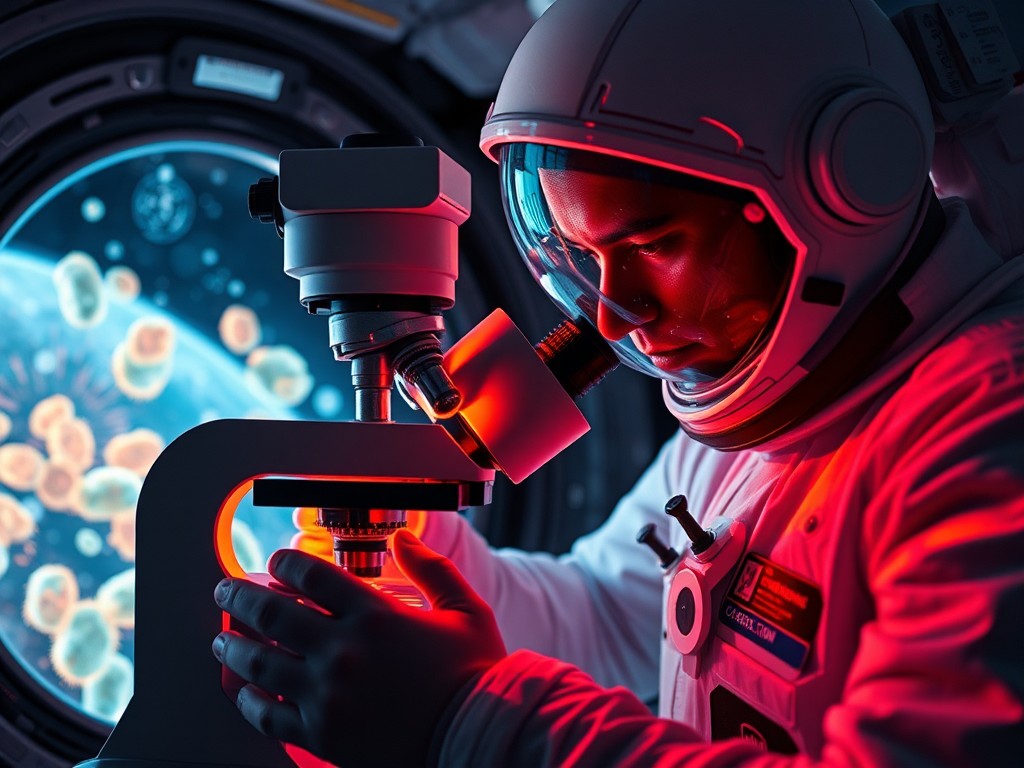
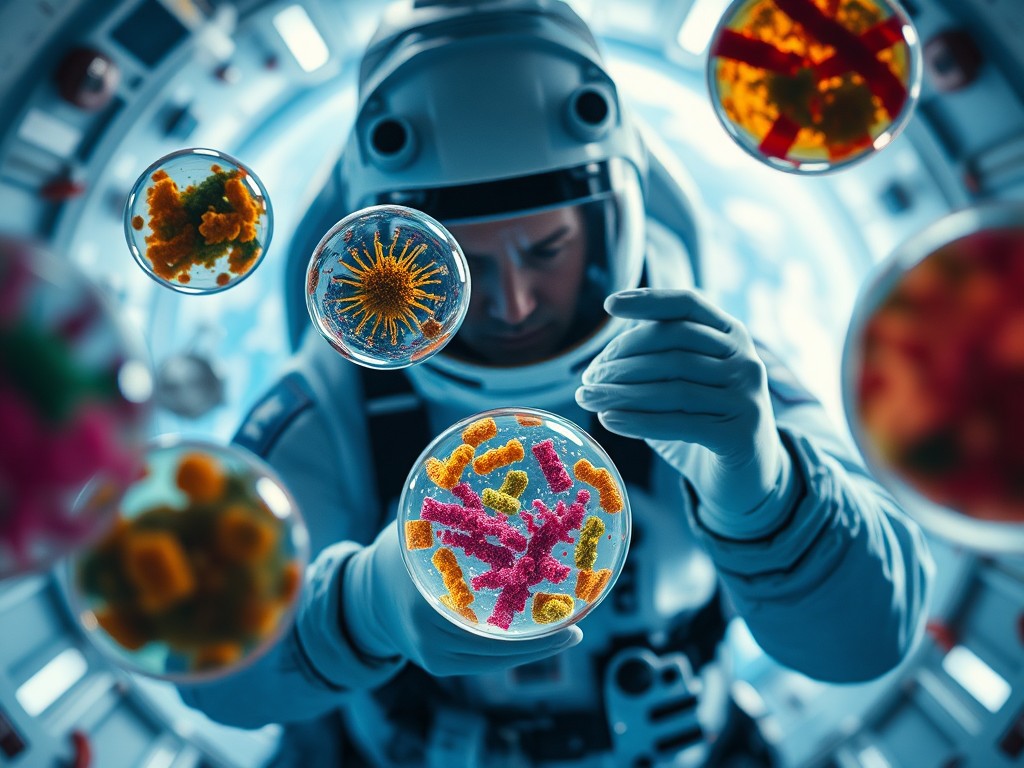
Tiny hitchhikers, big impact. As humanity ventures further into space, we’re not going alone. Universe Today reports on a study published in the journal Biofilm that sheds light on an often-overlooked aspect of space travel: biofilms. These microscopic communities of bacteria and fungi, ubiquitous on Earth, are hitching rides on our spacecraft and could play a significant role in the future of space exploration.
Friend or foe? It’s complicated. Biofilms pose unique challenges in the confined environments of spacecraft. They can wreak havoc on wet surfaces like water reclamation systems and fuel tanks, potentially compromising critical life support systems. Even dry surfaces aren’t immune, as biofilms can form on air filters and frequently touched areas. More concerning is the potential impact on human health, with risks ranging from infections to allergic reactions. Adding to the complexity, scientists are still grappling with how microgravity affects biofilm formation and the virulence of pathogens.

From Menace to Marvel: Harnessing Biofilms in Space
Not all biofilms wear capes, but some might save the day. While the challenges are significant, biofilms could also be powerful allies in space exploration. Researchers are exploring their potential for in-situ resource utilization. Imagine biofilm reactors extracting valuable nitrogen from the Martian atmosphere, paving the way for sustainable off-world settlements.
The future is microscopic. As we chart our course to the stars, understanding and managing biofilms will be crucial. The development of advanced biosensors to monitor biofilm health in real-time is a top priority for future missions. However, much work remains to be done. Scientists stress the need for more research on how these microscopic communities behave in the unique environment of space.