

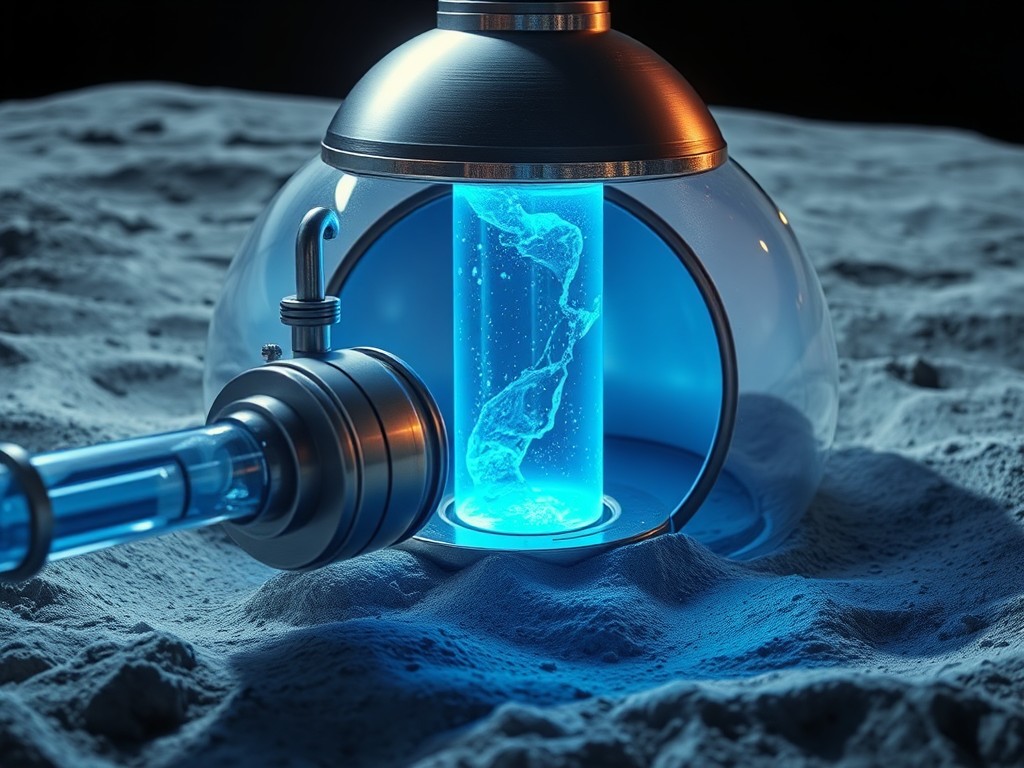
Lunar bartender wanted. A Waterloo-based company is stirring up the space industry with an ambitious plan to serve drinks on the moon. WaterPuris, named a semi-finalist in the Canadian Space Agency’s Aqualunar challenge, has designed an innovative heated dome system that could extract water from lunar soil using solar energy. This groundbreaking technology aims to quench the thirst of future moonwalkers and fuel their missions, quite literally. As reported by CBC News, the company is at the forefront of a new space race – not to plant flags, but to pour the first glass of moon water.
From Moondust to Moonshine
Squeezing water from moon rocks might sound like science fiction, but WaterPuris is determined to make it a reality. The company’s goal is to extract at least 70% of water present in lunar soil and purify it to drinking standards. Robert Liang, chief technical officer of WaterPuris, told CBC News, « The hydrogen can be used for fuel sources and oxygen can be used to support life systems. » This dual-purpose approach could enhance space exploration, enabling food production on the moon and providing a source for rocket propellant.
One small sip for astronauts, one giant leap for space exploration
However, the path from concept to cosmos is paved with challenges. The technology must be rigorously tested in low-gravity environments, such as the International Space Station, before it can be deployed on the lunar surface. This crucial testing phase is expected to unfold over the next several years, as engineers grapple with the unique conditions of space. Despite these hurdles, the potential benefits are significant.

Bringing space tech down to Earth, WaterPuris sees applications beyond the moon’s cratered surface. The company envisions adapting this technology to benefit remote communities right here on our home planet. « In Canada, we have the First Nations and Indigenous populations that live in remote communities, and it’s important for us to connect with them and also develop new ways of thinking to provide water to these rural areas, » Liang explained.

