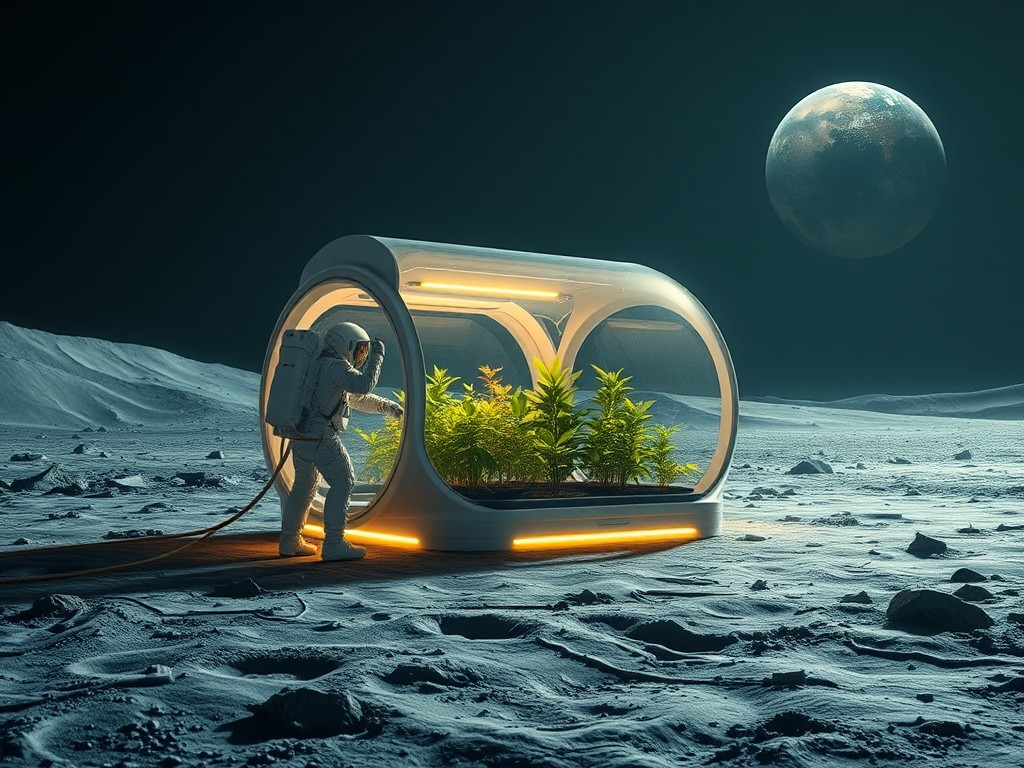
Tiny seeds, giant ambitions. Three humble Earth plants are about to embark on a journey that’s out of this world. Nautil.us reports that NASA’s Artemis III mission will soon transport a mustard cress, a brassica, and a duckweed to the moon as part of the groundbreaking LEAF project. These botanical pioneers will call the lunar surface home, nestled inside a specially designed « growth chamber » that provides air, heat, and light.
Cosmic challenges await. The lunar environment poses unique hurdles for our leafy explorers. With radiation levels 200 times stronger than on Earth and gravity only one-sixth as strong, these plants will face a true trial by fire – or rather, by cosmic rays. « What we are really looking at is the effects of lunar radiation on plant growth, » explains to Nautil.us Marshall Porterfield, a biological engineer at Purdue University and one of the LEAF project leaders. This research is crucial for developing « bioregenerative » life support systems, potentially transforming long-duration space missions.
The great lunar divide
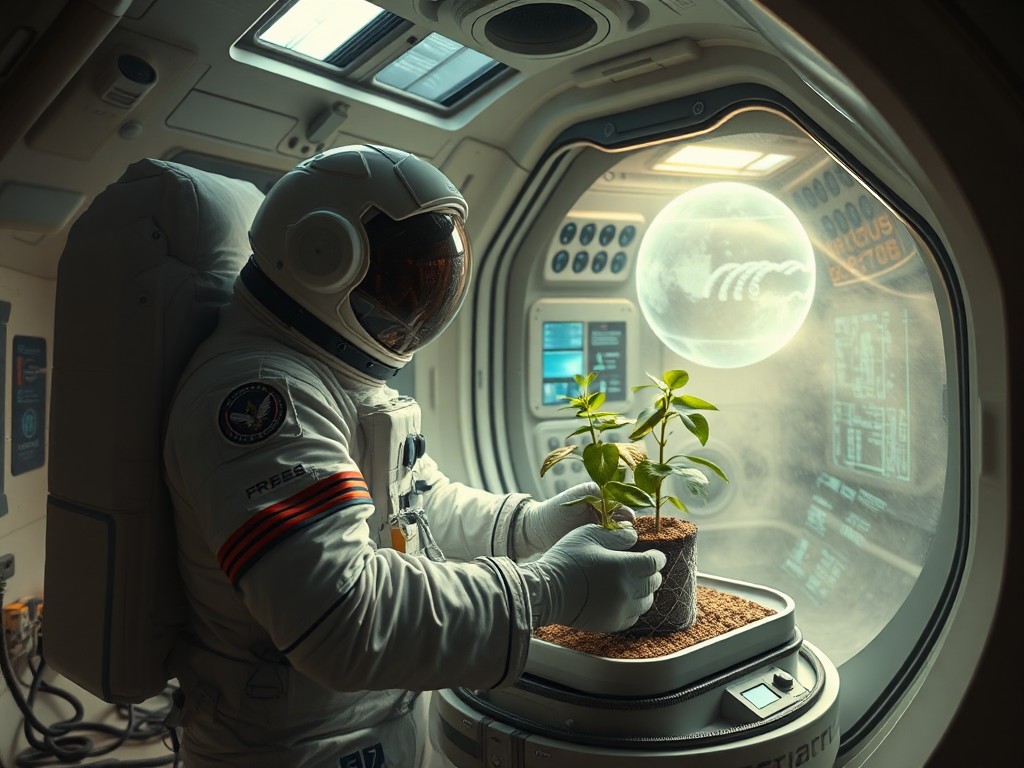
A tale of two plantings. While the astronauts explore, the plants will be quietly growing in their lunar nursery. After about a week, the growth chamber will be split. Half the plants will return to Earth for intensive study, while their lunar counterparts remain behind. These stalwart botanical astronauts will be monitored via video, likely until the harsh two-week lunar night brings their experiment to a frigid end.
Not your typical moon dust garden. The LEAF project isn’t about creating lunar farms from raw regolith. « We’re not going to go up there and start planting plants on the moon, » Porterfield clarifies. Instead, future lunar agriculture will likely rely on hydroponic systems. These soil-free setups can be lightweight and highly efficient, maximizing plant growth in the challenging lunar environment.
Jane Shevtsov, a systems ecologist at UCLA, highlights the significance: « This project and others like it will certainly be helpful in growing supplementary crops for astronauts on the moon. » While unprocessed lunar regolith lacks the nutrients for plant growth, hydroponics offers a promising alternative.