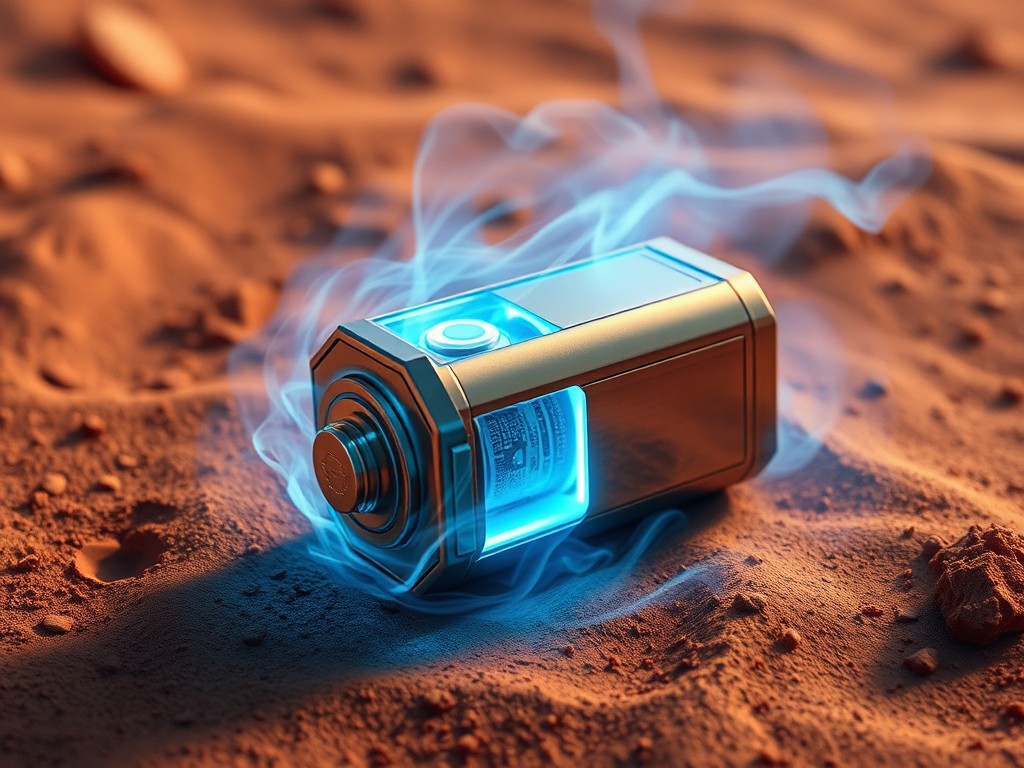
Chinese scientists have created a battery that can be recharged using Mars’ atmosphere. This innovative power source, designed to withstand the Red Planet’s extreme conditions, could revolutionize future Mars exploration missions. Newsweek reports that researchers at the University of Science and Technology of China have developed this technology, boasting an impressive operational lifespan of over 1,350 hours – equivalent to two Martian months.
Defying the deep freeze: What sets this power source apart is its ability to function in Mars’ harsh environment, where temperatures can plummet to a bone-chilling -142 degrees Celsius. Despite these challenging conditions, the battery can produce up to 373.9 Watt-hour per unit mass. The secret to this battery’s resilience lies in its innovative design. Incorporating thermal insulation, preheating techniques, thermal radiation, and hibernation protocols, the power source can withstand both scorching heat and freezing cold.
Red Planet Air: The New Space Fuel
Breathing Martian air: The true game-changer is the battery’s ability to utilize Mars’ atmosphere as fuel. « The Mars battery is able to use Mars atmosphere as fuel, » explained Xiao Xu, one of the researchers behind the project, in an interview with Newsweek. The battery taps into the planet’s atmospheric composition – 95.32% carbon dioxide, 0.13% oxygen, and 0.08% carbon monoxide – turning what was once an obstacle into a valuable resource.
Mission possible: This novel approach could significantly reduce mission launch costs by leveraging local resources. The high energy density of the battery also promises to enhance the capabilities of Mars missions, allowing for longer operational periods and more complex tasks. However, the path to perfection is not without its challenges. The research team acknowledges that real-time monitoring of Mars’ atmospheric components during battery operation remains a hurdle to overcome.
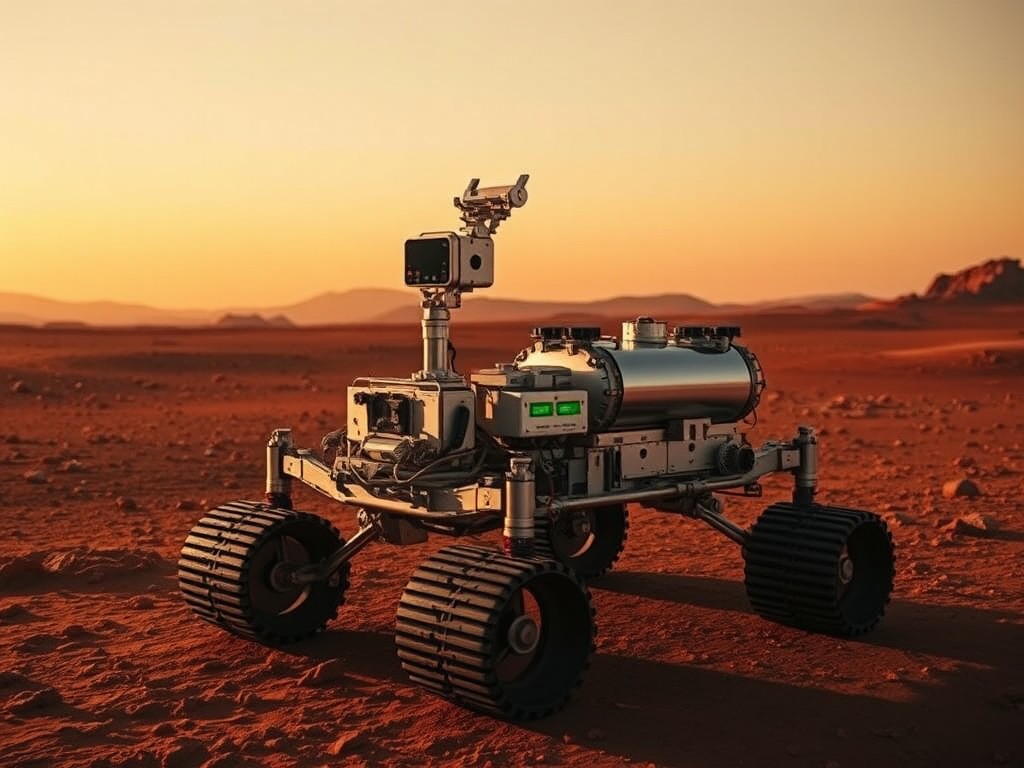
Powering the future: The development of this Mars-specific battery aims to surpass the capabilities of current lithium-ion batteries used in Mars rovers, from the 1997 American Sojourner to the 2021 Chinese Zhurong. By harnessing the power of the Martian atmosphere rather than relying solely on solar panels, future missions could achieve greater autonomy and longevity. « This work lays a foundational step toward the development of multi-energy complementary systems for future space exploration, » Xu told Newsweek.