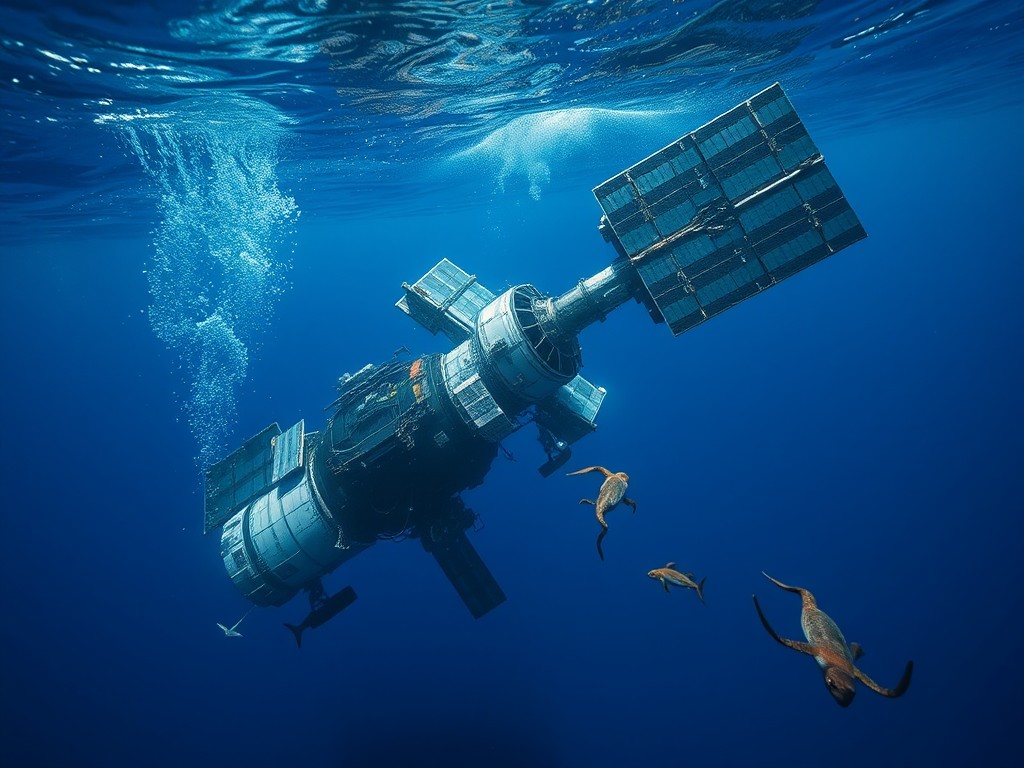
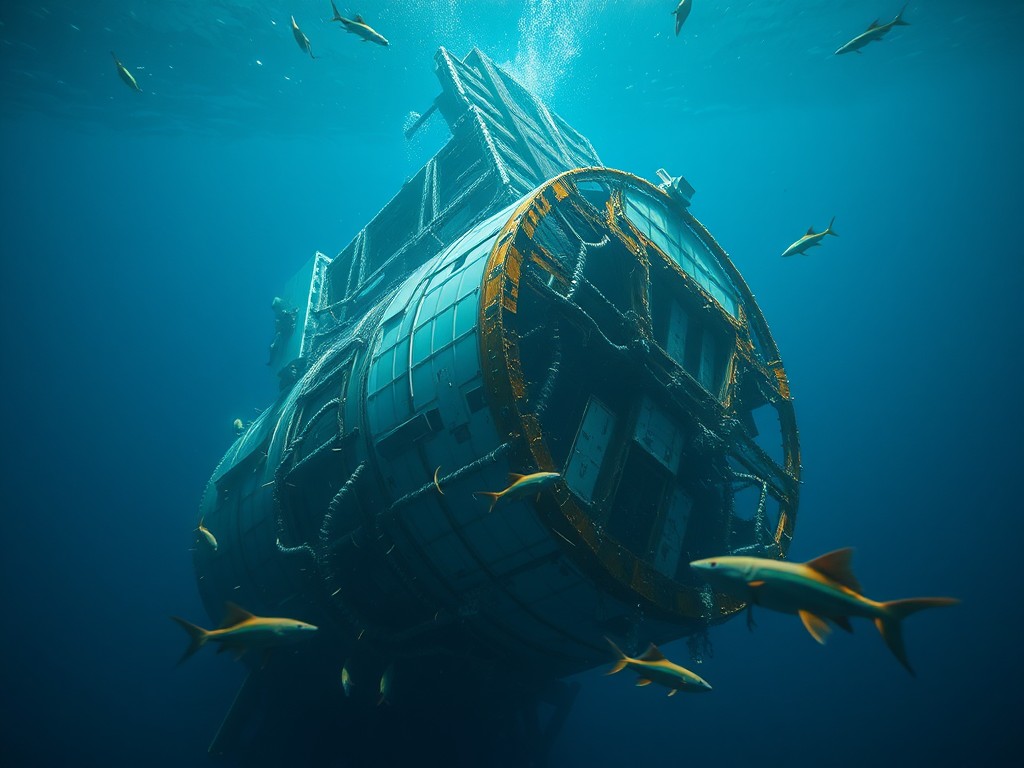
Splashdown or ecological meltdown? Environmental watchdogs are sounding the alarm over NASA’s plan to send the International Space Station (ISS) to a watery grave. As reported by SpaceNews, the space agency intends to deorbit the aging orbital outpost in early 2031, dumping over 400 tons of space hardware into the Pacific Ocean. This unprecedented operation has marine specialists concerned about potential long-term impacts on ocean ecosystems.
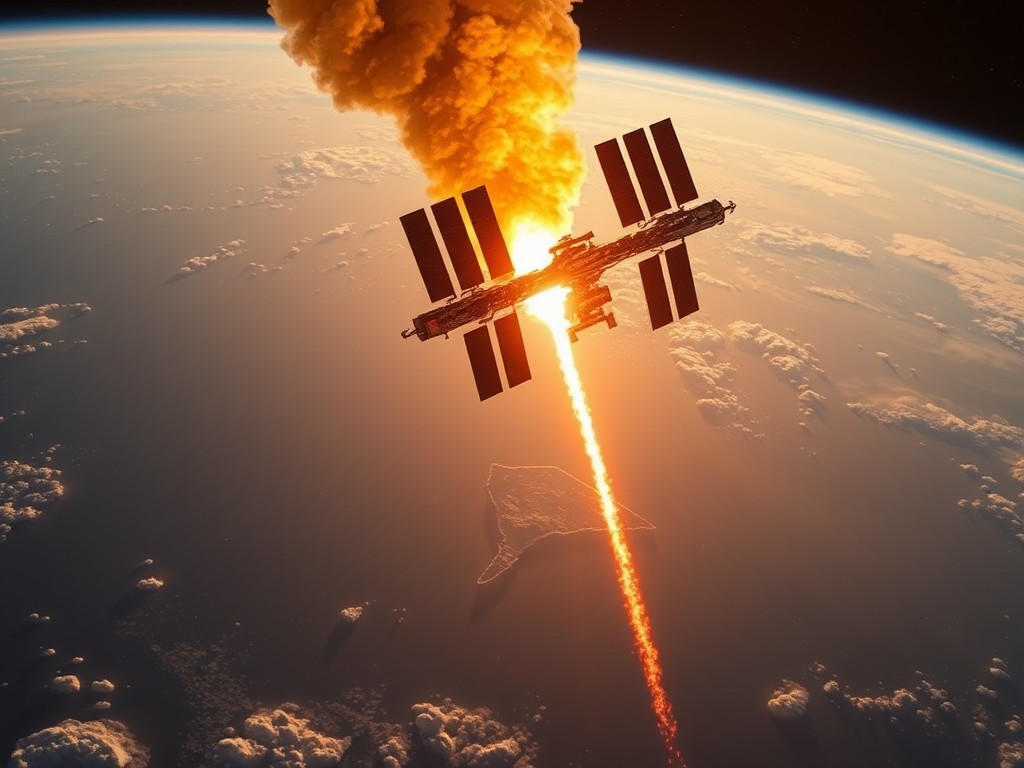
One small step for NASA, one giant splash for marine life. The final voyage of the ISS will be a spectacular sight, with most of its components expected to burn up during reentry. However, some denser or heat-resistant parts are likely to survive the fiery descent. NASA has identified Point Nemo, Earth’s most remote oceanic location, as the target splashdown site for these remnants. While this « pole of inaccessibility » is already used as a spacecraft cemetery, the sheer scale of the ISS disposal raises new questions about environmental consequences.
Space Junk: The Final Frontier?
Regulators in uncharted waters. As the clock ticks towards the ISS’s retirement, the U.S. Environmental Protection Agency (EPA) is grappling with the complex task of regulating this unique disposal operation. Despite these concerns, some experts argue that ocean disposal remains the « least worst option » for retiring the station. Ewan Wright, a Ph.D. candidate at the University of British Columbia, notes that this approach minimizes risks to people and aircraft while preventing potential collisions with space debris in orbit.
Those who forget history are doomed to repeat it. Critics of the plan draw unsettling parallels to historical ocean dumping practices that have led to long-term environmental issues. « I consider this idea very questionable, » warns Edmund Maser, a molecular biologist at the University Medical School Schleswig-Holstein. Maser compares the ISS disposal to the dumping of World War II ammunition, which decades later is corroding and releasing toxins into marine environments.
George Leonard, chief scientist of the Ocean Conservancy, adds that « the debate over the disposal of the International Space Station underlies the fact that humans often fail to plan for the end-of-life of the stuff we produce. » As the countdown to the ISS’s final plunge continues, the scientific community remains divided on whether this solution truly represents the best path forward for both space exploration and ocean conservation.