

SpaceDaily reports a groundbreaking achievement in space technology as the first-ever perovskite-based solar cells successfully launched into orbit on July 9, 2024. The innovative power system, developed by researchers at the University of Potsdam, hitched a ride aboard the European Space Agency’s Ariane 6 rocket from the Guiana Space Centre. These revolutionary solar cells use perovskite – a crystal-structured material that transforms sunlight into electricity more efficiently than traditional solar technology.
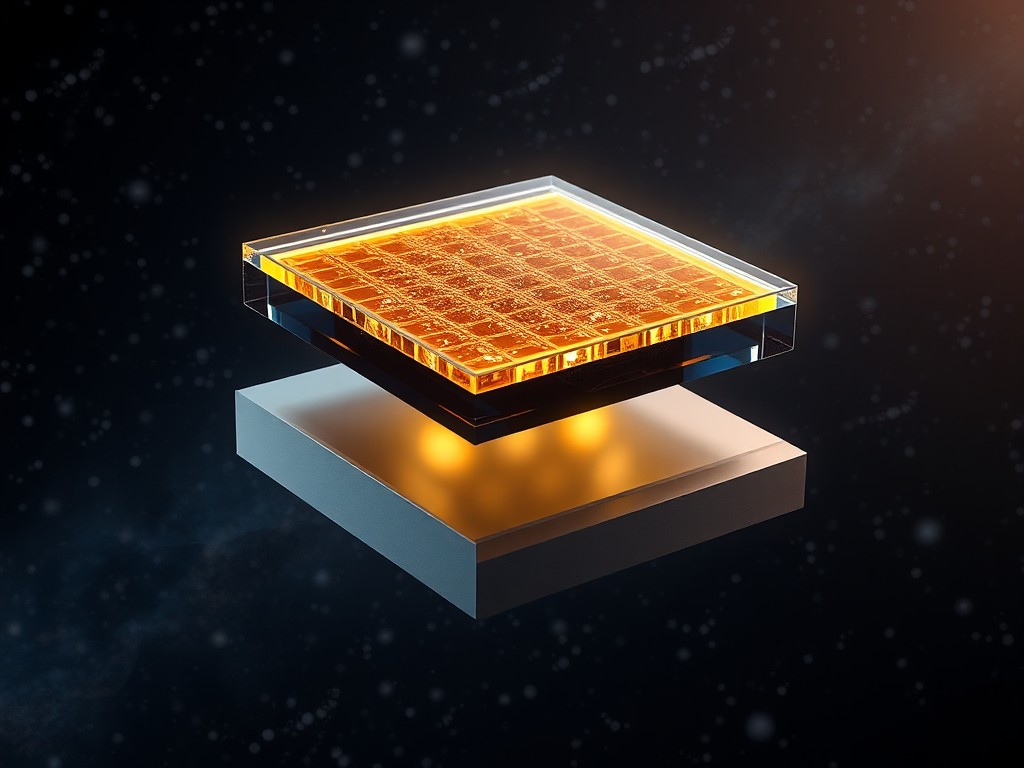
The new system works like a double-decker bus for catching sunlight. « This approach allows for the highest power conversion efficiencies, which is crucial for powering future satellites, space stations, or spacecraft, » explains to SpaceDaily Felix Lang, the project’s lead researcher at the University of Potsdam. The upper layer, made of perovskite, captures blue and green light wavelengths, while the bottom layer – made of either silicon or CIGS (a copper-based material) – picks up the remaining red and infrared light. This teamwork between layers means more solar energy gets captured and converted into usable power.
Space: Where Solar Cells Face Their Toughest Test
Space presents brutal conditions for any technology: extreme temperature swings, intense radiation, and microscopic debris moving at bullet-like speeds. However, these new solar cells might have a surprising advantage. « We hope that perovskites, which are relatively soft semiconductors, can self-heal after potential damage and thereby outperform traditional technologies, » Lang told SpaceDaily. Unlike rigid conventional solar cells, perovskite’s crystal structure can potentially repair itself after minor damage, similar to how a crystal can regrow under the right conditions.
The initial results are promising. « The solar cells have survived launch and started to produce energy, even without perfect alignment to the sun, » Lang reported after deployment. Over the next few years, researchers will monitor their performance, gathering crucial data about their durability and efficiency in the harsh space environment. This advancement could mark a significant step toward more sustainable space exploration, where efficient power generation remains a critical challenge.