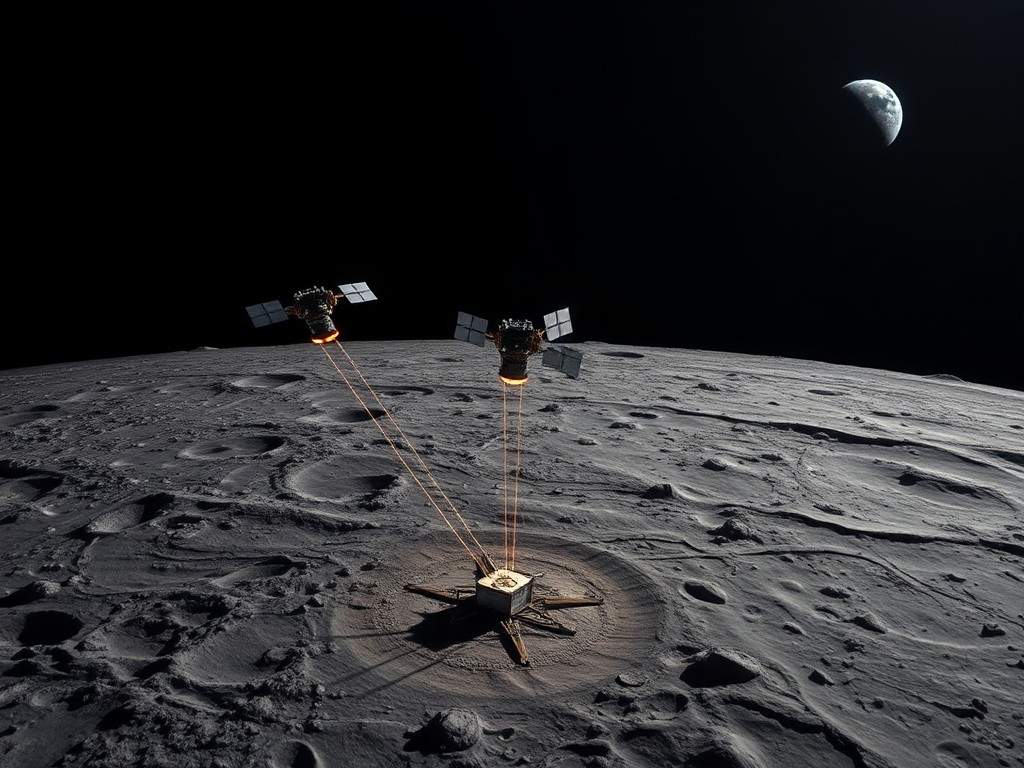

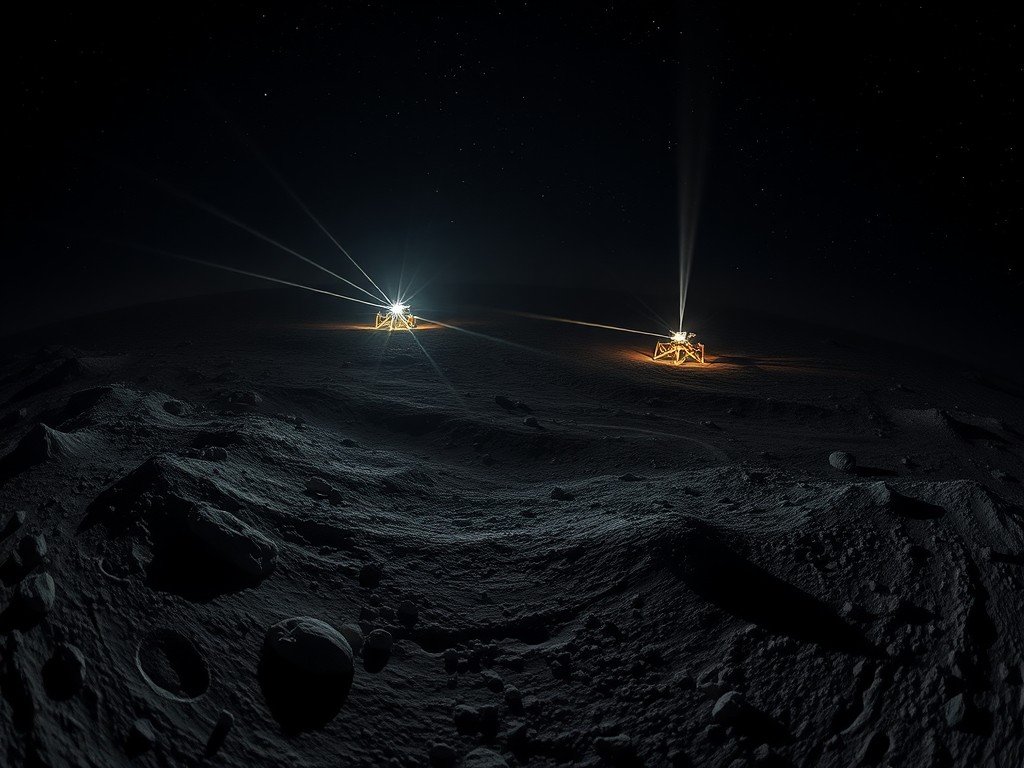
Power from Above SpaceNews revealed that Canadian startup Volta Space Technologies has unveiled an innovative solution to one of the moon’s biggest challenges: providing continuous power during the long lunar night. Their LightGrid network aims to transform lunar operations through a constellation of power-beaming satellites that would transmit energy via lasers to surface vehicles and equipment.
Breaking Physics Barriers The technology backing this ambitious project has already proven its worth. « The capability of lunar night survival and being able to operate in permanently shadowed regions is what excites our customers, » explains Justin Zipkin, Volta’s co-founder and CEO, in his interview with SpaceNews. The company has successfully tested their laser power transmission system on Earth at distances up to 850 meters, demonstrating the technology’s feasibility before scaling it for lunar applications.

When Satellites Become Power Plants
While traditional surface-based solar arrays and nuclear solutions remain viable options for lunar power generation, orbital power distribution presents unique advantages. « It’s a much simpler proposition to put a spacecraft in low lunar orbit than it is to soft-land it on the surface, » notes Paul Damphousse, Volta’s Chief Operating Officer. The initial network would require just three small satellites to provide basic service coverage, making it a relatively lightweight infrastructure solution.
The Future Looks Bright The road to lunar power delivery is clearly mapped out. Volta plans an orbital demonstration in 2026, paving the way for full deployment by 2028. This streamlined timeline could transform lunar exploration capabilities by providing reliable power to rovers exploring permanently shadowed craters and supporting extended lunar night operations.