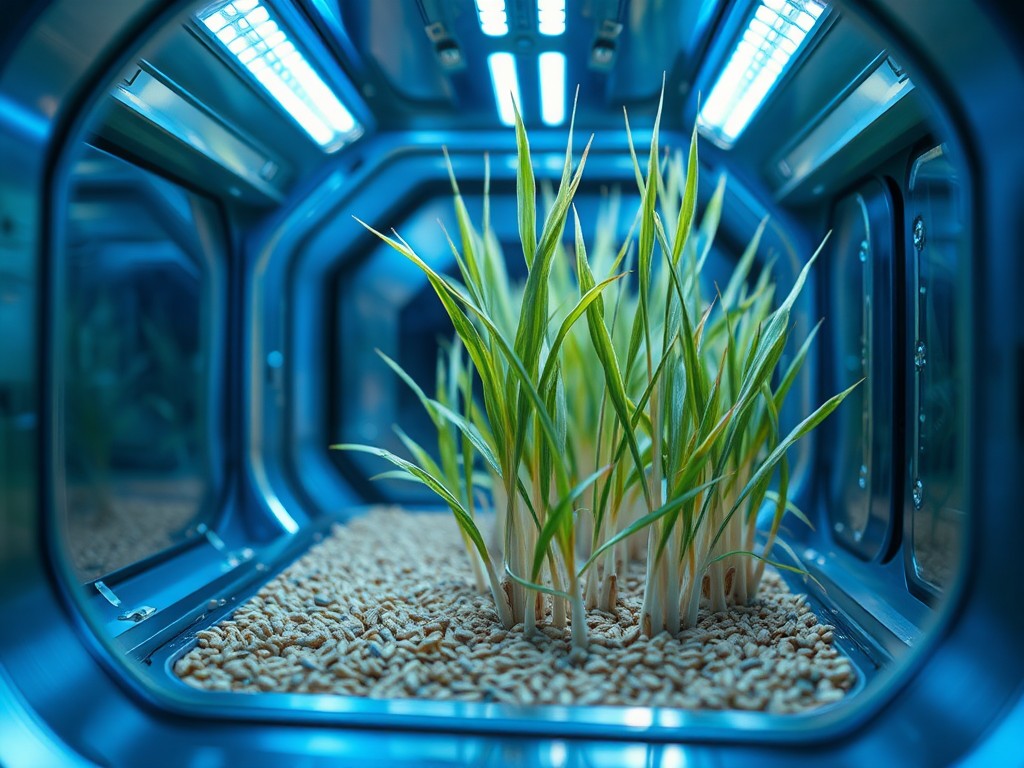
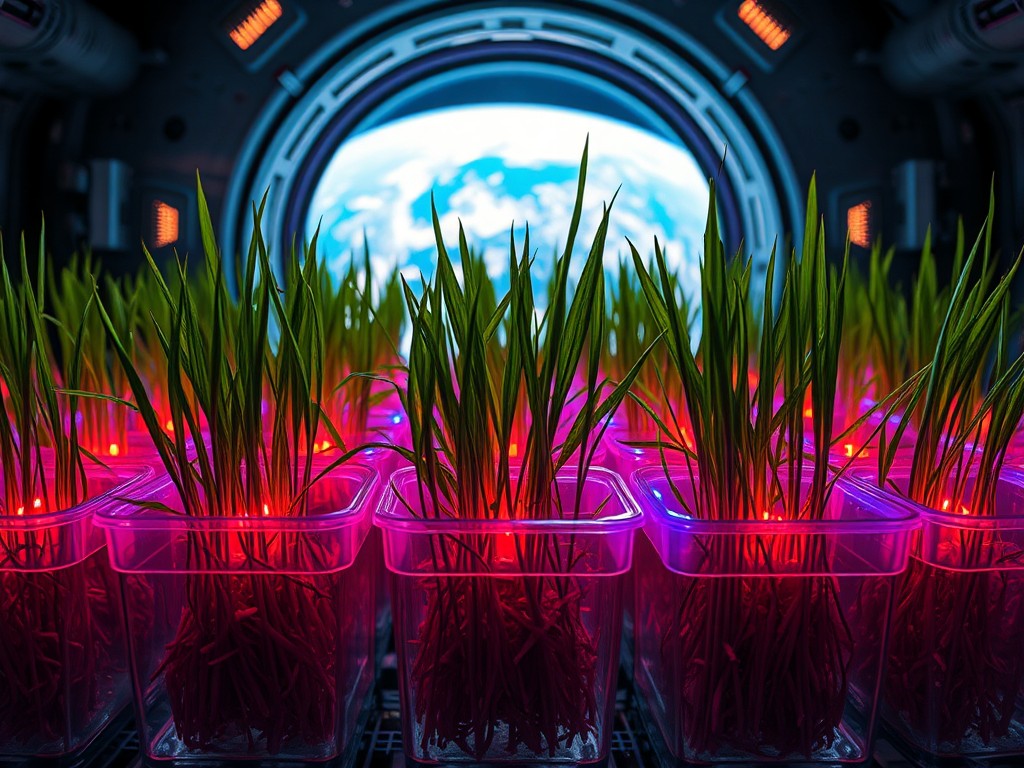
Rice got high and became sweeter! Chinese scientists have discovered that rice grown aboard the Tiangong space station contains up to six times more sugar than its earthbound counterpart. According to Xinhua news agency, this research revealed that space-bred rice also showed increased protein content, suggesting new possibilities for both space exploration and Earth agriculture.
From zero gravity to hero story. The pioneering 120-day experiment in 2022 marked the first time rice completed its entire life cycle in microgravity – from germination to reproduction. Starting with just six seeds aboard the Wentian spacecraft, scientists cultivated 59 seeds in orbit. These space-mutated seeds, once brought back to Earth, yielded an impressive 10,000 new seeds, demonstrating remarkable reproductive viability in terrestrial conditions.
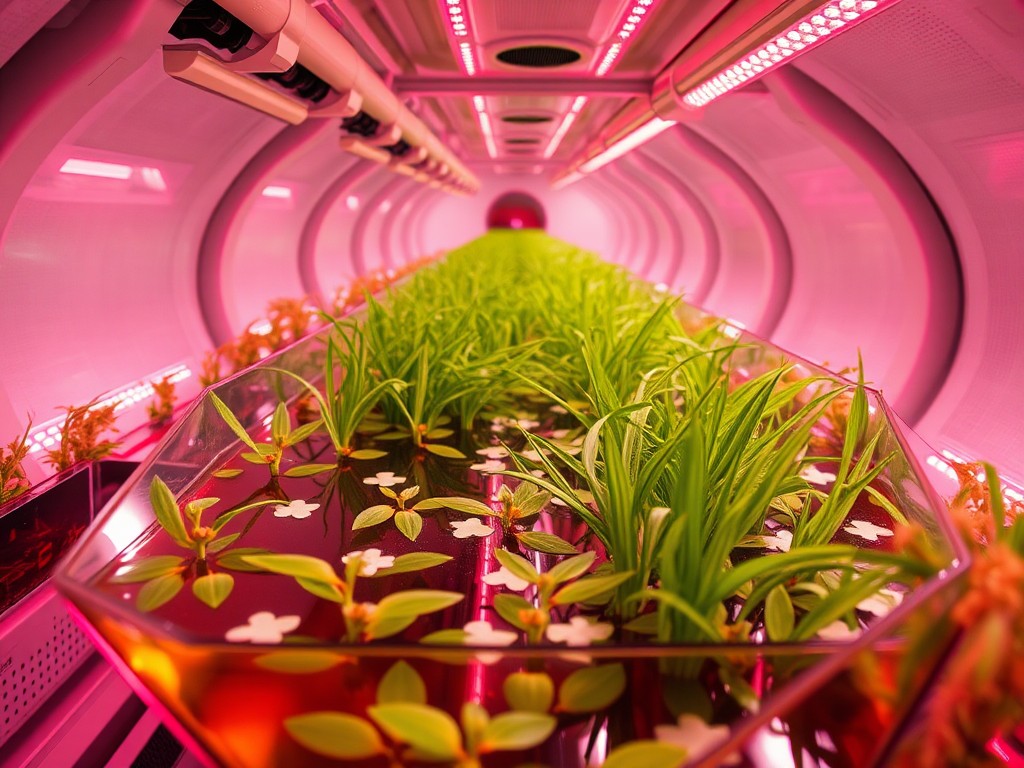
Space Farming: Not Your Grandpa’s Agriculture!
Warning: Photosynthesis in progress! While the enhanced sugar content presents exciting possibilities, space-grown rice faces unique hurdles. « Growing rice in space is much more challenging compared to growing on Earth, » explains Zheng Huiqiong from the Chinese Academy of Sciences. The artificial biosphere requires precise control of photosynthetic lighting, atmospheric composition, and water distribution. Scientists discovered that space-bred rice develops sparser leaf density, making traditional high-density planting methods ineffective.
From cosmic rays to dinner plates! This achievement builds upon China’s 35-year journey in space breeding, which began in 1987 with simple seed exposure experiments on satellites. « Unlike genetically modified food-transferring genes from other species, space-bred seeds and strains undergo a mutation of their own genes only, » states Zhao Hui from the China Academy of Space Technology. This natural mutation approach opens new possibilities for developing enhanced crop varieties both for space exploration.