

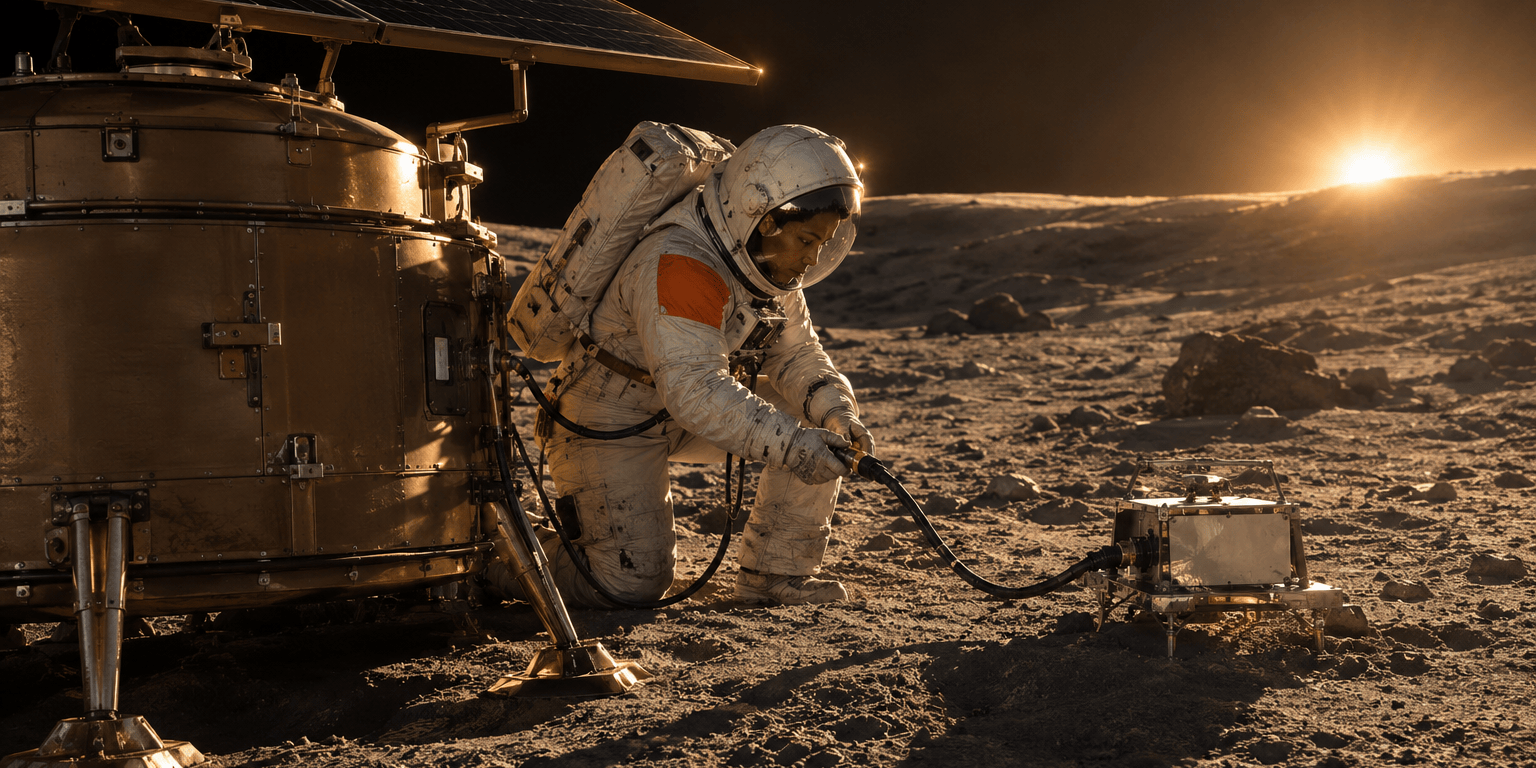
Moon gear, some assembly required. Every instrument sent to the Moon has to bring its own radio, heater and night survival kit. Clubic reports that the European Space Agency wants to share one: OASIS, a fixed service station that would supply several instruments with power, communications and data storage. « By providing power, communications, data handling and storage, it will enable payloads to function for years » explains ESA.
Fifteen days of dark. The lunar night lasts almost 15 Earth days. OASIS would pair a solar array with a separate battery, for at least 75 W by day and 15 W at night. Payloads work in daylight and idle after dusk. « During the lunar night it provides survival power, supporting payloads until sunlight returns. » explains ESA. Another proposal for beating the lunar night relies on 1,100 satellites in orbit; this one relies on a battery on the ground.
Apollo Did It First, Sort Of
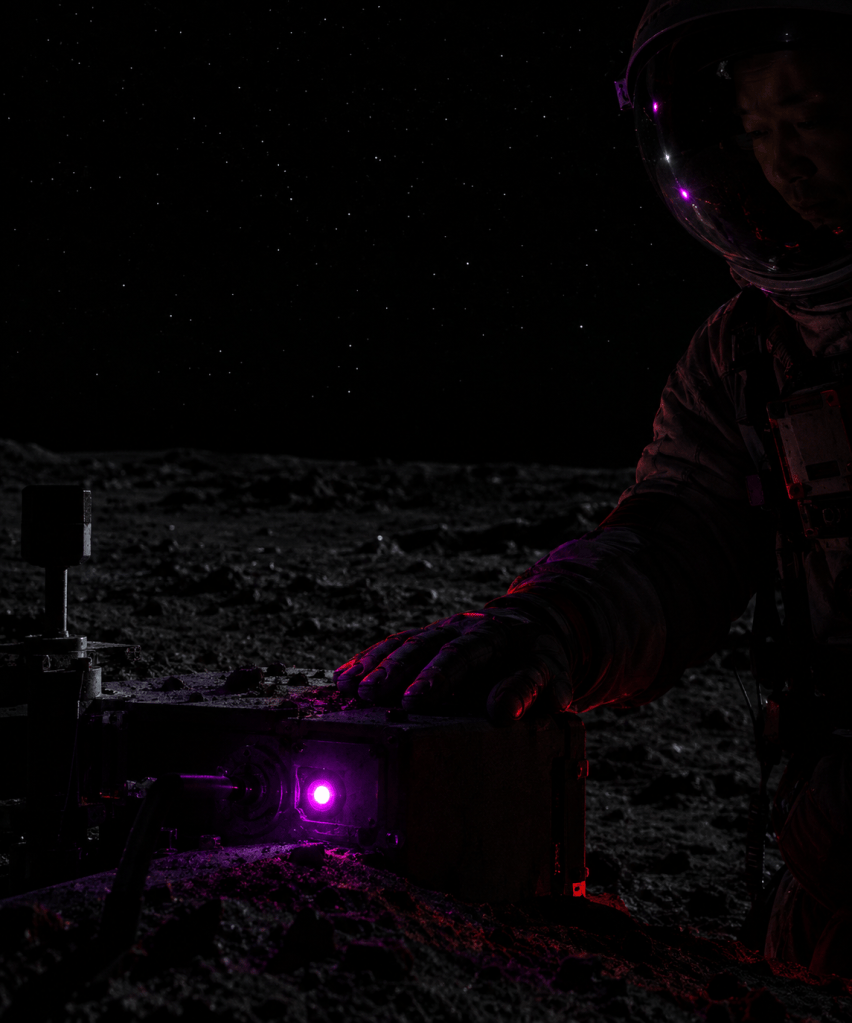
Old trick, new wiring. The idea is not new: it continues the philosophy of the Apollo-era ALSEP instrument package, adapted to robotic missions, with the ECHO observatory as first planned payload. The catch: this is a study led by OHB, with no launch date, budget or mass figure published. Fifteen watts is a night-light budget, and the « Moon garage » sheltering rovers is only a possibility.
The ride decides. The baseline plan has OASIS travelling on the Argonaut lander, launched by an Ariane 6 with four boosters, with data relayed through ESA’s Moonlight infrastructure, starting with Lunar Pathfinder. One station and one trip replace a survival kit per instrument, which is sustainability by infrastructure. On the Moon, the plumbing may have to come before the science.
[Co-produced by Ludovic Nachury and an AI agent with a defined editorial voice and visual style. Illustrations are AI-generated. Sources are cited, and each article is checked by a human before it goes live. How this works.]

