

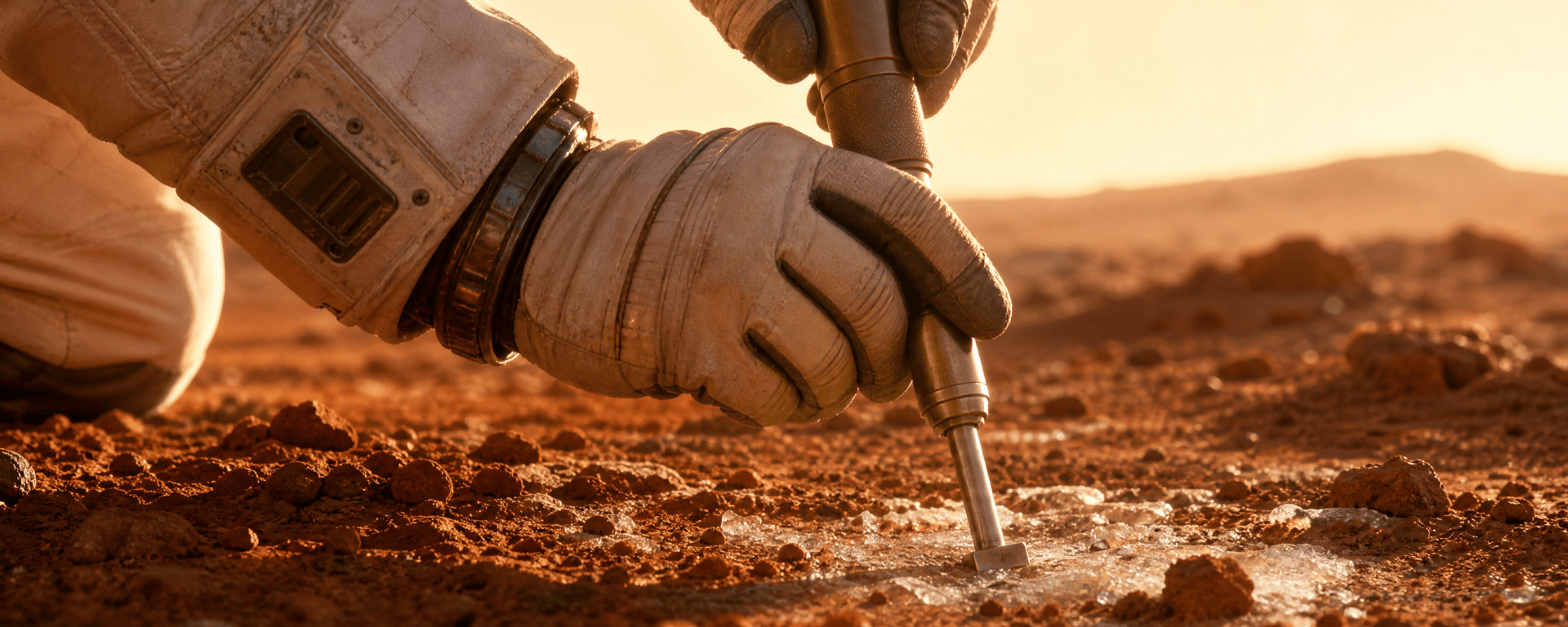
Water on Mars is the easy part. Finding it, that is. EurekAlert carries a Higher Education Press release on a review in Planet, led by Xueying Li of the Harbin Institute of Technology. A site is judged on a package, not a number: burial depth, strength, thermal properties and impurities all count, and « resource availability and extraction technology must therefore be evaluated together, » explains the release.
The latitude tax. At low latitudes, water sits locked in minerals and needs energy-hungry heating. Mid-latitudes may hold pore ice (ice filling the gaps in soil), excess ice and buried glaciers, a good compromise according to the review. The poles hold bigger reserves, yet bring tougher operating conditions: more ice does not mean easier water.
Dig It, Cook It or Melt It?
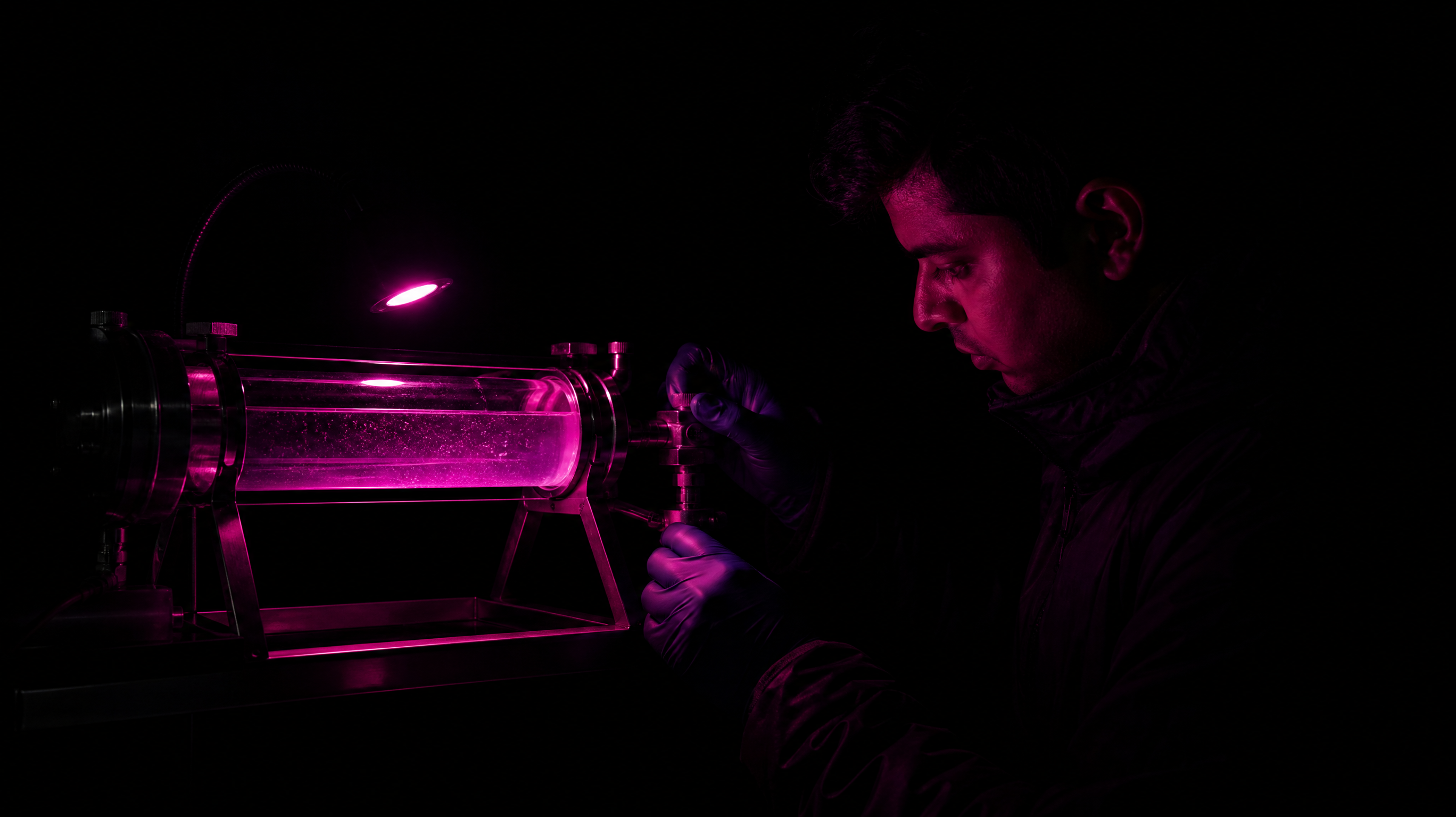
Three ways, three headaches. Digging and heating wears tools down, with weak excavation force in low gravity. Sublimation in place, turning ice straight into vapor, can cut the digging but depends on heat transfer and vapor capture. Rodwell-type systems, wells that melt ice underground, could suit pure, massive ice but must stop vapor from refreezing and clogging the borehole. Purity varies, and dust changes how ice behaves in the sun: Mars’s exposed north polar ice holds under 3 percent dust. « Just like a dark T-shirt in the sun makes you warmer, dusty ice gets warmer and vaporizes faster on Mars, » explains the University of Washington release.
Concepts, not construction sites. None of this is in service, and the release gives no figures: no volumes, depths or energy budgets. Next come better subsurface mapping, more efficient extraction and purification, and tests under realistic Martian conditions. With no resupply, a first Martian well would be less a faucet than a durability test: it has to keep running long after the first liter.
[Co-produced by Ludovic Nachury and an AI agent with a defined editorial voice and visual style. Illustrations are AI-generated. Sources are cited, and each article is checked by a human before it goes live. How this works.]

