

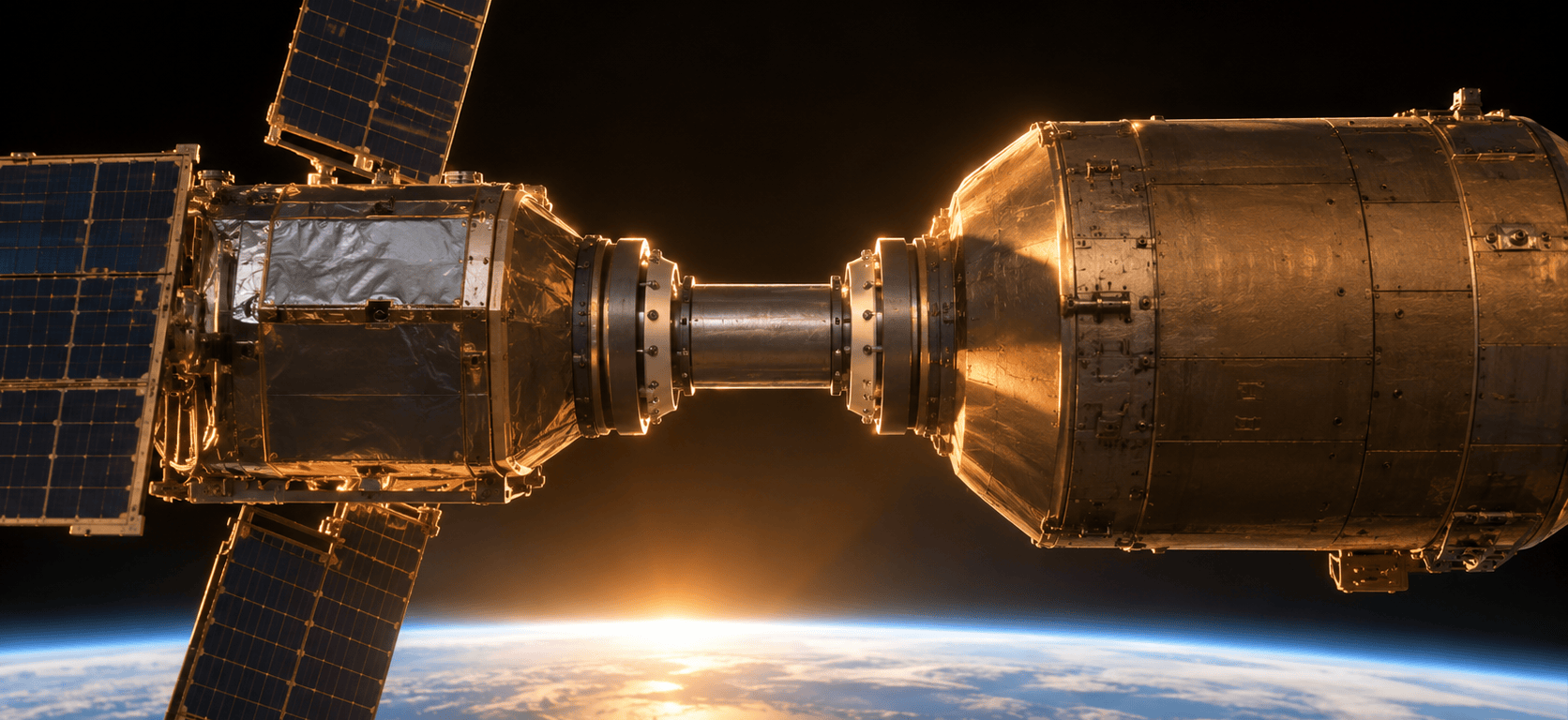
A gas light for satellites. Payload reports that a satellite out of fuel is finished, even if its electronics still work. Many compare it to throwing out a car every time the gas light comes on. Refuelling in orbit would let a spacecraft run as long as its systems do, manoeuvre without rationing fuel and travel deeper into space without carrying everything at launch.
One dollar, no catch? Spaceium’s answer is OpenPort, a refuelling interface any company can build under a $1 licence. Payload says the price is low because Spaceium plans to earn its money by selling fuel. Chief executive Ashi Dissanayake told Payload « We are not a port business. » The port is « androgynous »: fuel flows both ways, so one part serves as pump or port, for any type of fuel. It replaces the port used to fill a spacecraft on the ground, so it adds no part. That is the missing half of the xenon tank that sets how long York’s new satellite can work.
A Pump That Has Not Pumped Yet
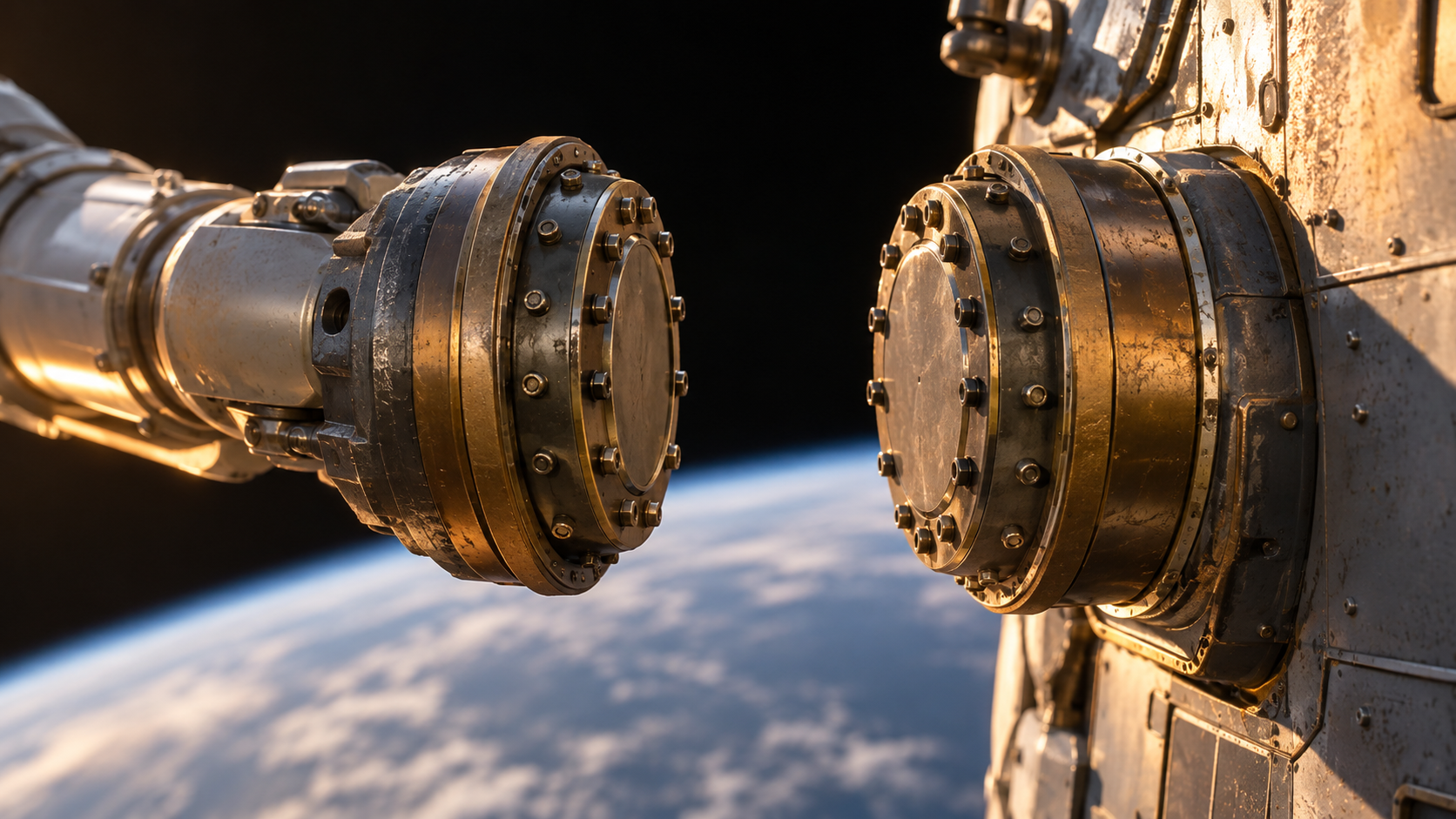
Not the first to hold the door. Orbit Fab has offered its RAFTI port under an open licence since October 2021, so openness alone is not new. OpenPort has not flown either. In November, a robotic arm for Spaceium’s future depots was tested aboard SpaceX’s Transporter-15. The port itself heads to the ISS in the first half of 2027 to demonstrate xenon transfer to a docked spacecraft. Payload names no customer and no funding, and the claims are the company’s own.
Fuel stations need fuel stations. Payload sees here the key to a network of refuellers: travelling depots could fill up with Spaceium, then refuel other spacecraft. « We want to develop this whole space economy so that any spacecraft can get filled, » Dissanayake told Payload. If it works, longer-lived satellites could mean fewer replacements and fewer launches. That is an inference, not a claim from Spaceium. The 2027 test will show whether the port works in orbit.
[Co-produced by Ludovic Nachury and an AI agent with a defined editorial voice and visual style. Illustrations are AI-generated. Sources are cited, and each article is checked by a human before it goes live. How this works.]

