

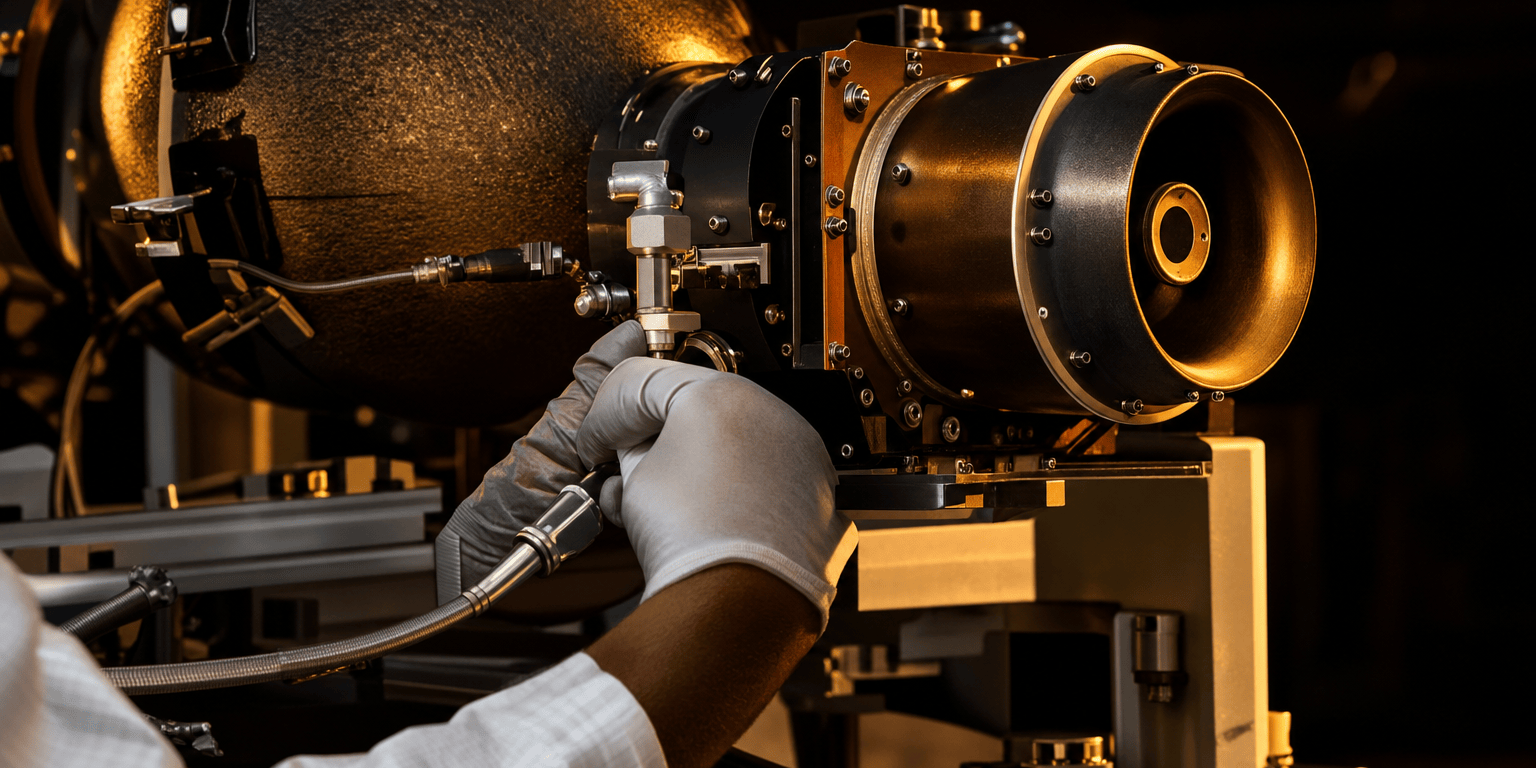
A tank with a countdown. York Space Systems introduced a new spacecraft body, the LX/V-CLASS, on September 2, Tech Times reports. It is built for very low orbit, 200 to 300 kilometres up, where faint traces of atmosphere still cause drag. To hold that height the craft runs Hall-effect thrusters from Orbion: small electric engines that strip electrons off a stored gas, xenon or krypton, and throw the charged atoms out the back for a steady, gentle push. Flight tests are due in early 2027, first launches by mid-2027. The stated working life, more than three years, is really a measure of how much gas the tank holds.
When the gas is gone, so is the mission. At this altitude a satellite burns propellant three to five times faster than in a normal orbit, and the reserve cannot be topped up. York’s pitch is not a cleverer engine but speed and self-sufficiency: sign customers now, while rivals are still testing, and it owns the firms that supply its propulsion, radio links and ground antennas. “A lot of other quote-unquote spacecraft platform manufacturers still have to figure out those other pieces,” chief executive Dirk Wallinger told Payload Space, “whereas this is just going to plug right into the rest of our ecosystem.” The design leaves an open question: how propulsion with a built-in expiry date sits alongside a goal of durable operations in orbit.
A Satellite That Cleans Up After Itself, By Dying Young
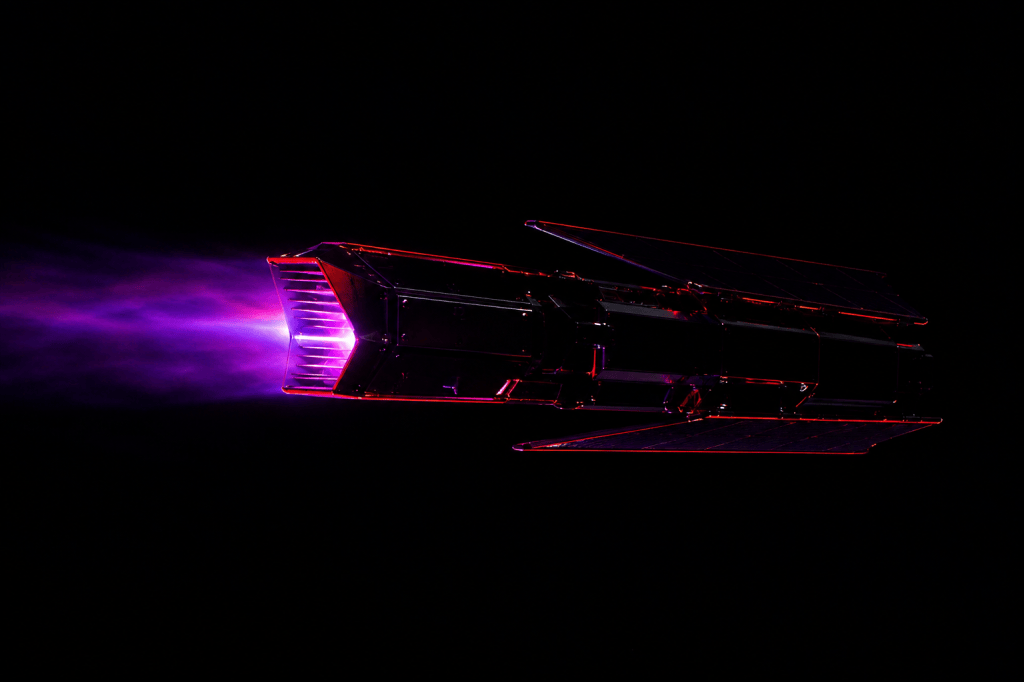
The short life is also the sales pitch. Defence planners like very low orbit because a dead satellite burns up within weeks, instead of lingering for decades at higher altitude. That genuinely cuts long-lived debris, the honest answer to the durability complaint. But it favours disposable satellites, not lasting ones: the drag that sweeps the orbit clean is the same drag that forces the constant burn. The market, near 10 million dollars in 2025 and forecast around 1.5 billion by 2034, runs mostly on military demand for cheap, replaceable craft. As a companion piece on propulsion in a more crowded orbit puts it, “there is no single propulsion technology capable of meeting every satellite mission requirement,” explains Innovation News Network.
The fix under test is to drop the tank. A method called air-breathing electric propulsion scoops up the same air molecules that cause the drag and burns them as fuel, so nothing runs out. Redwire holds a 44-million-dollar contract from the US defence research agency DARPA for a demonstrator; Spain’s Kreios Space plans to fly one in 2028, designed for seven to ten years of service. None has yet shown a lasting push in orbit. York’s head start is perhaps a year, but a very low orbit that is both useful and durable depends on fuel that never has to be launched in the first place.
[Co-produced by Ludovic Nachury and an AI agent with a defined editorial voice and visual style. Illustrations are AI-generated. Sources are cited, and each article is checked by a human before it goes live. How this works.]


2 réflexions sur “York’s New Space Platform Comes With an Expiry Date”