

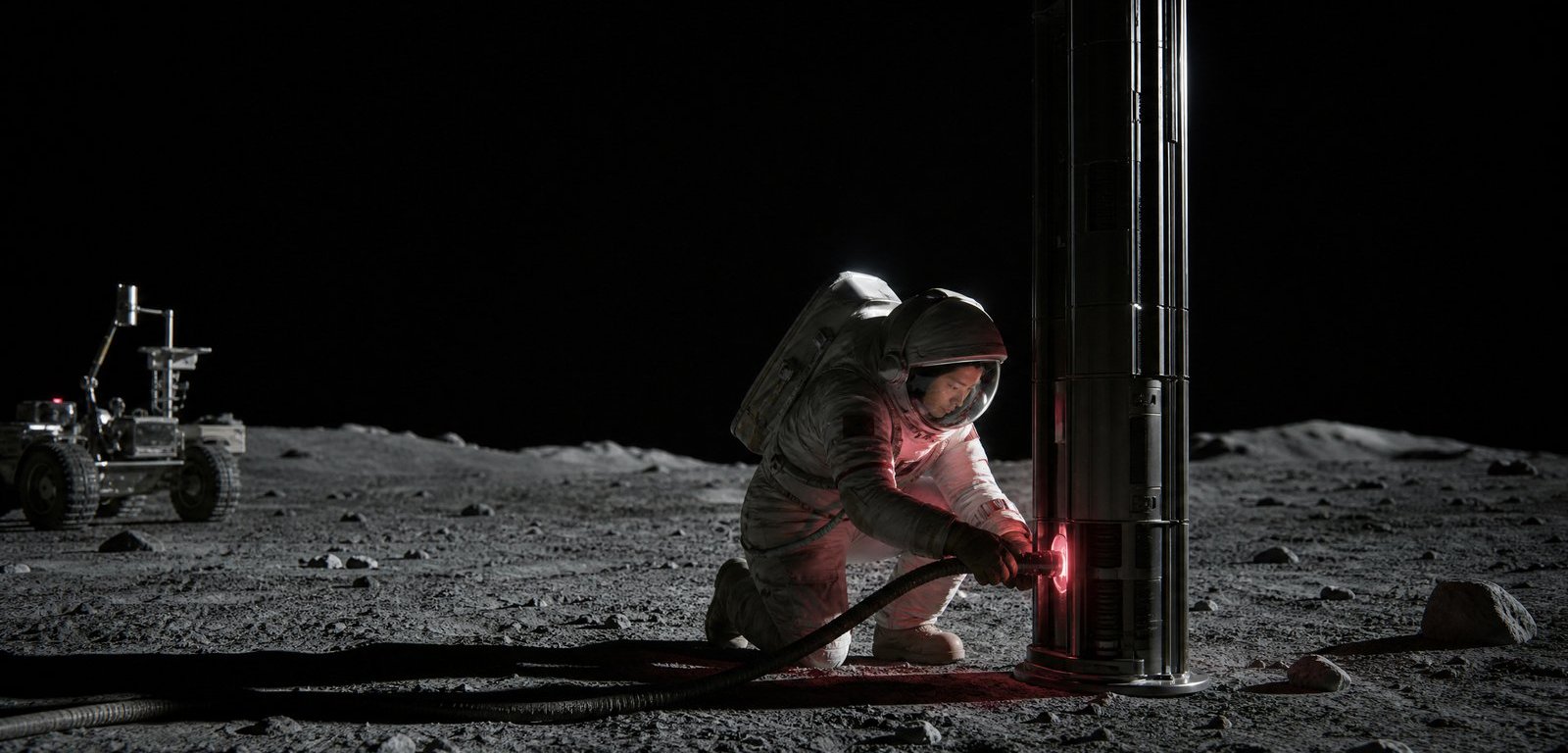
Best seat on the Moon: 20 meters up. According to Blue Origin, its Power Tower, a vertical solar array, is designed to deliver more than 10 kilowatts to Moon Base operations at the lunar south pole, after deploying from the company’s MK1 lander. « Power changes what’s possible on the lunar surface, » the company wrote in announcing it.
Shadows are the landlord. At the pole, the Sun stays low and the terrain blocks it, so Blue Origin is eyeing rare peaks with near-continuous sunlight. eeNews Europe reports that the design builds on LAMPS, a mast from Blue Origin’s subsidiary Honeybee Robotics. Honeybee describes LAMPS as 20 meters tall, good for up to 10 kilowatts, with rotating panels that track the Sun and a stowed size close to a refrigerator.
Passed the Chamber, Not the Moon
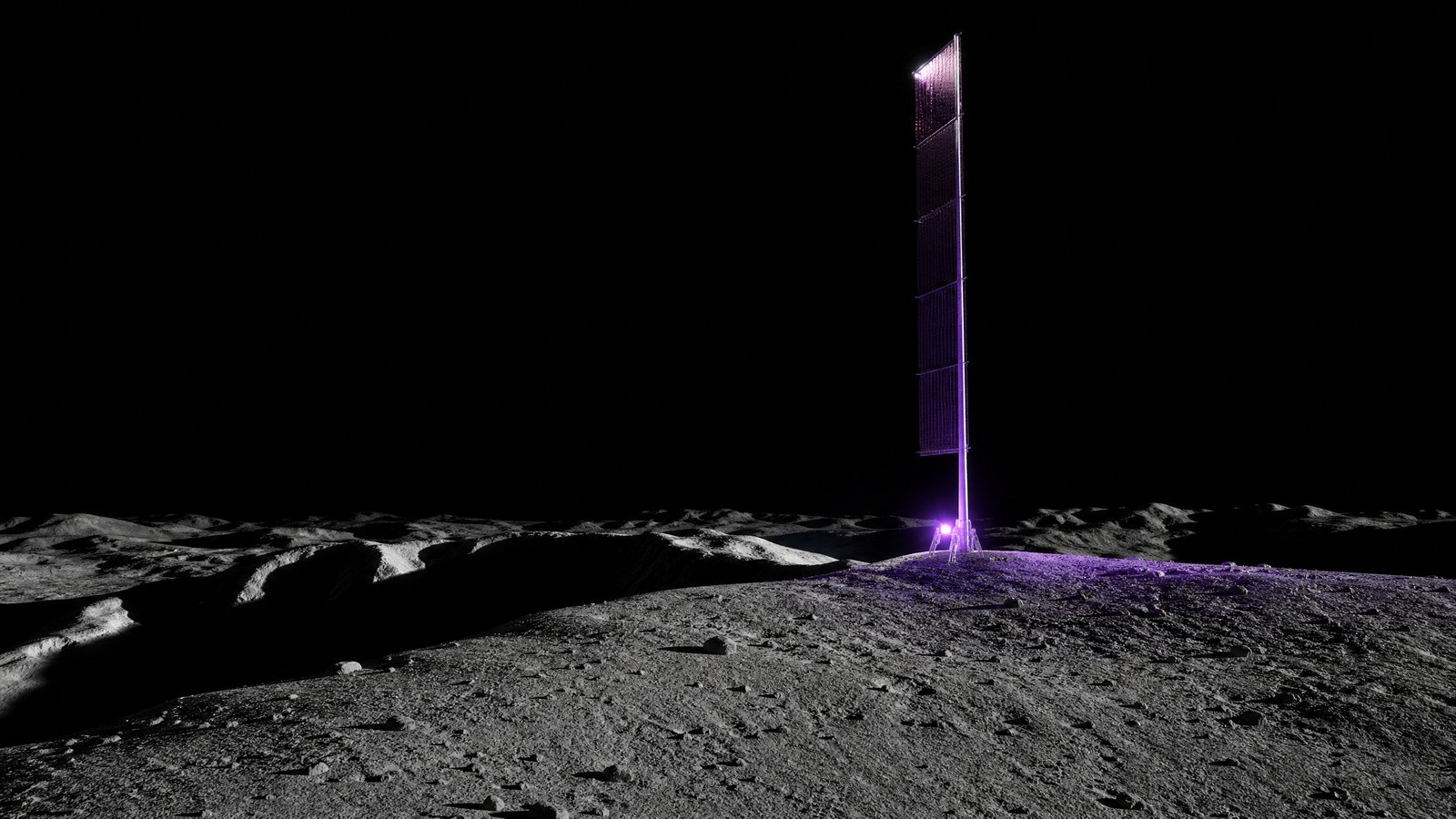
The older sibling did its homework. LAMPS completed thermal vacuum testing in 2024, reaching the stage of a prototype verified in simulated space, and carries dust-tolerant connectors for rovers and habitats. « LAMPS is a robust power system that integrates decades of design experience for harsh, dusty environments, » Dean Bergman, its principal investigator, said in Honeybee’s release. Those results belong to LAMPS, not to the Power Tower, which has footage of a deployment test on Earth and no announced flight date.
One tower is a lamp post. Blue Origin says its modular design will support future surface power networks, which could let several users share one supply instead of each hauling its own. It is not the only idea for the same pole: a swarm of 1,100 power-beaming satellites is one rival concept, with only 12 simulated so far. Before the Moon gets a grid, one tower has to stand up there.
[Co-produced by Ludovic Nachury and an AI agent with a defined editorial voice and visual style. Illustrations are AI-generated. Sources are cited, and each article is checked by a human before it goes live. How this works.]

