

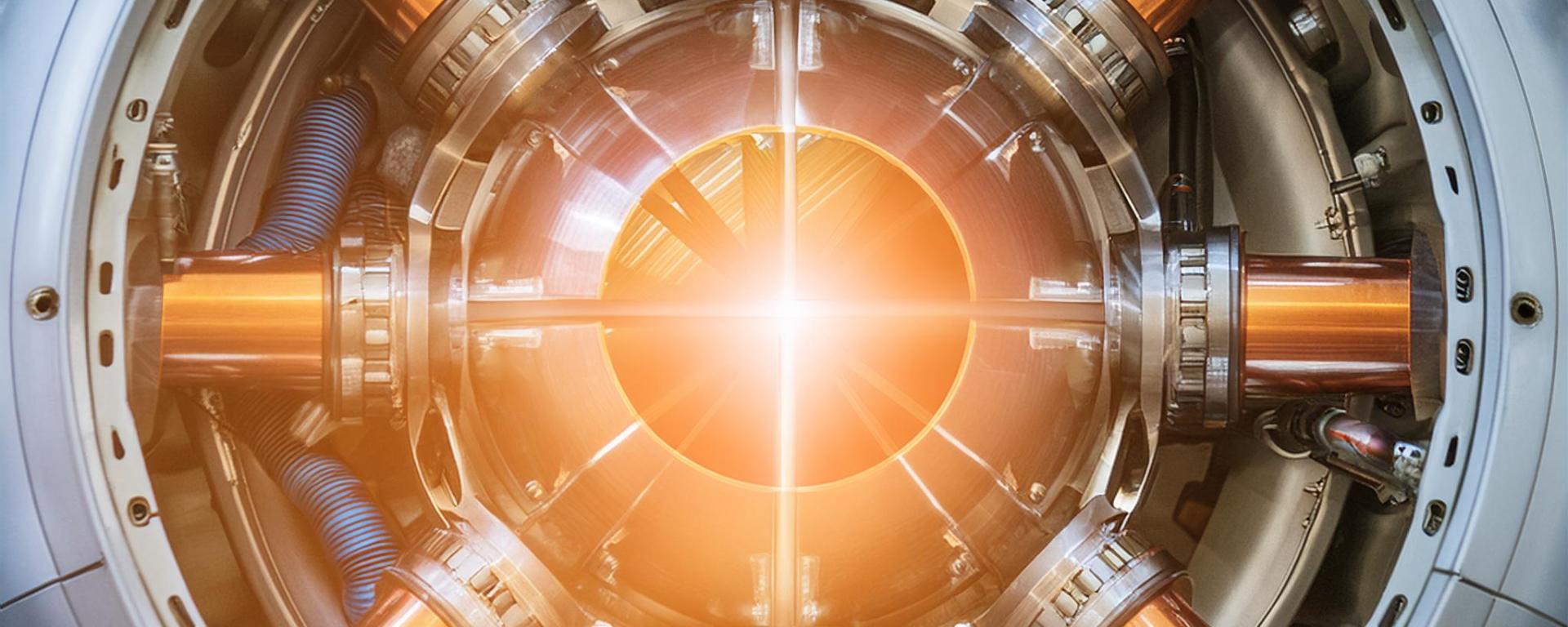
Interested Engineering reports that the dream of sending astronauts and cargo to Mars is getting closer to reality. NASA, in collaboration with Howe Industries, is developing a cutting-edge propulsion system called the Pulsed Plasma Rocket (PPR). This innovative technology promises to transform space exploration by significantly reducing travel time to Mars and enabling missions beyond the Red Planet.
The Power of Pulsed Plasma Rocket
The PPR is an evolution of the Pulsed Fission Fusion concept, which combines nuclear fission and fusion to generate powerful energy for spacecraft propulsion. At the core of the PPR is a fission-based nuclear power system that obtains energy from the controlled splitting of atomic nuclei.
This advanced propulsion system produces up to 100,000 newtons of thrust, which is the force that propels a spacecraft forward. It also has a specific impulse (Isp) of 5,000 seconds. Specific impulse is a measure of a rocket engine’s efficiency – the higher the Isp, the less fuel is needed to produce the same amount of thrust. To put it into perspective, most chemical rockets have an Isp between 200 and 500 seconds.
The PPR’s impressive Isp makes it an ideal candidate for deep space missions. To ensure the safety of astronauts during long-duration space travel, the PPR will be equipped with a high-tech protective shield against galactic cosmic rays.
Nuclear Power: A Double-Edged Sword?
The potential benefits of the PPR are immense. Faster travel times to Mars would not only make manned missions more feasible but also reduce the exposure of astronauts to the hazards of space travel. « The exceptional performance of the PPR, combining high Isp and high thrust, holds the potential to transform space exploration, » mentioned the NASA press release published by Interested Engineering.
However, the development of nuclear-powered propulsion systems raises some environmental concerns. For instance, the risk of nuclear accidents during launch or space travel, the long-term storage and disposal of nuclear waste generated by the PPR, and the potential for nuclear proliferation if the technology falls into the wrong hands are all valid concerns that must be addressed.
Mars and Beyond
The ongoing NASA Innovative Advanced Concept (NIAC) study of the PPR technology is focused on assessing the system’s capabilities and designing the necessary subsystems. If successful, this groundbreaking technology could bring us closer to realizing our Martian dreams. Moreover, the PPR’s advanced propulsion capabilities open up new possibilities for missions beyond Mars, such as exploring the Asteroid Belt.