
According to an article in Popular Science, NASA has big plans for space farms and astrobiologists have ideas for the best crops to grow on Mars. But what planting methods could boost yields? New experiments found that growing different crops together could boost yields of some plants in Martian conditions. The findings were published in the journal PLOS One, a peer-reviewed open access scientific journal published by the Public Library of Science.
To optimize future extraterrestrial farms, scientists are exploring planting methods to boost yields on Mars. The findings could also have implications for life on Earth.
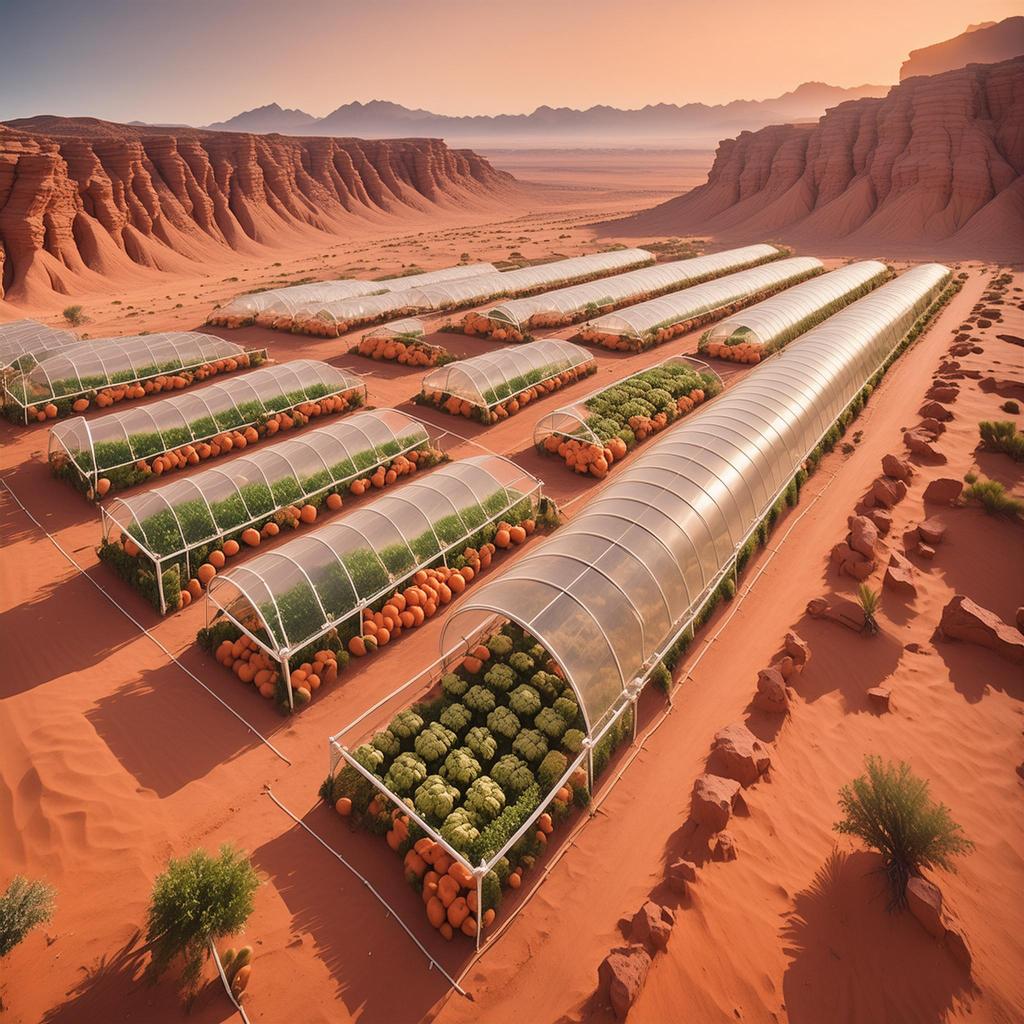
The best Martian environment is actually simply a greenhouse
For humans to survive on Mars, nutritious food is essential. To learn how to best grow food on Mars, scientists on Earth must simulate the unique conditions. Mars’ atmosphere is mostly carbon dioxide, nitrogen, and argon gases. Future Martian colonies will need controlled enclosures similar to greenhouses.
Intercropping: The Ancient Planting Technique with a Futuristic Twist
The team used greenhouses at Wageningen University & Research to simulate a Martian growing environment. They tested how crops fare in simulated Martian regolith, with standard potting soil and sand as controls. Organic Earth soil and nutrients were added to improve water retention and root holding.
For the fake Martian farm, the team selected peas, carrots, and tomatoes. All three could grow in Martian regolith. The team wanted to know how companion plants and intercropping could boost crop yields.
Intercropping Boosts Tomato Yields in Martian Conditions
All three species grew fairly well in Martian regolith, producing just over half a pound of produce. Tomatoes grew better when intercropped with peas and carrots, with higher biomass and potassium.
However, intercropping in Martian regolith decreased yields for carrots and peas. In future experiments, the team hopes to increase yields when intercropping is used.
The team was surprised by how intercropping benefited two of the three plant species in the sandy soil control group. This finding could be applied to agricultural systems on Earth, where climate change is making some soils more sandy.
The Future of Martian Agriculture
In future studies, the team hopes to reach, according to Popular Science, « a completely self-sustainable system using 100% of the local resources on Mars. » This would make future settlements more financially viable and less dependent on resupply missions.