

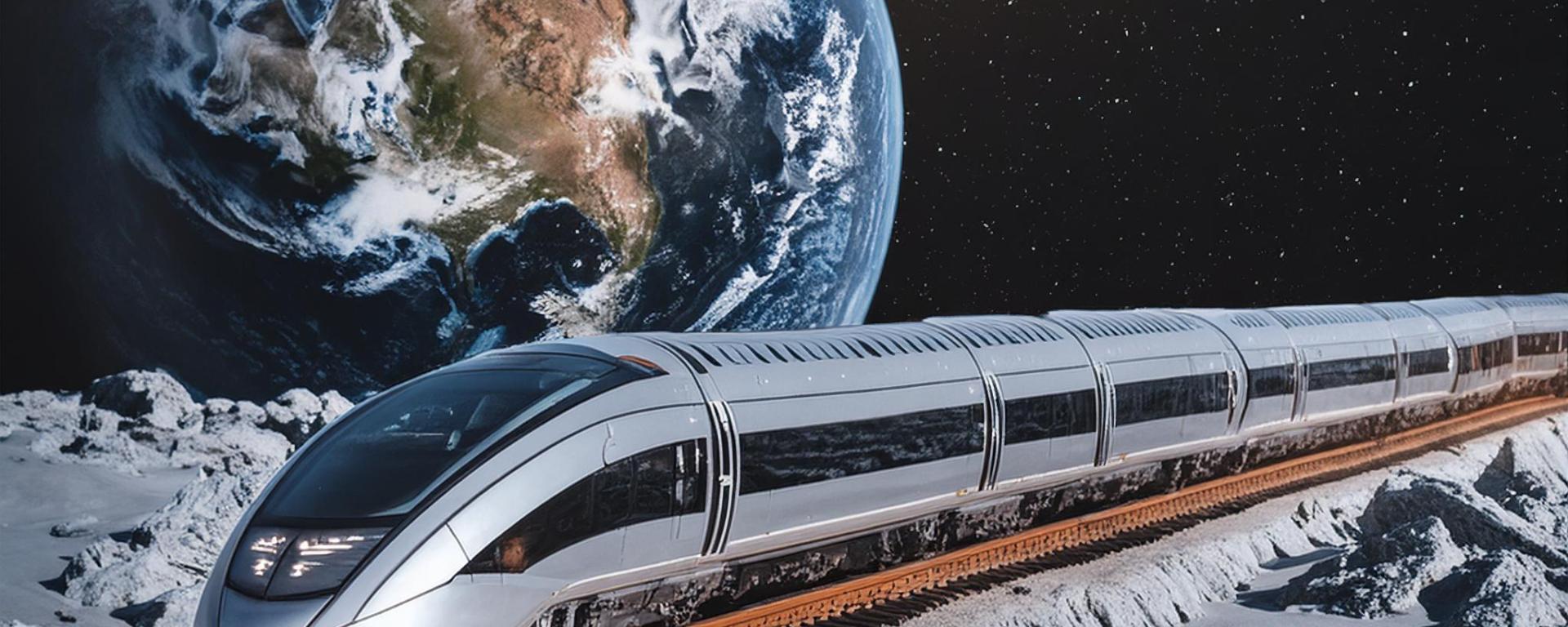
Imagine gliding across the Moon’s surface on a futuristic magnetic hover train. This isn’t a scene from science fiction; it’s a real proposal from NASA. According to Popular Science, NASA is exploring Ethan Schaler’s innovative FLOAT (Flexible Levitation on a Track) project.
Schaler, a NASA mechanical engineer, envisions magnetic robots hovering over a specialized track, revolutionizing how cargo could be transported on the Moon. “Our goal is to demonstrate FLOAT’s fundamental usefulness as a novel transport system—similar to a railway or conveyor belt—that is well-suited for the Moon,” Schaler tells Popular Science.
Cutting-edge space tech
The FLOAT system utilizes cutting-edge technology to achieve this vision. The track is composed of three layers, each with a specific function. The first layer, made of graphite, creates a magnetic field that allows the robots to levitate. The second layer, known as a flex-circuit, controls the robots’ movement using electromagnetic force. An optional third layer of solar panels can convert sunlight into electricity, powering the system.
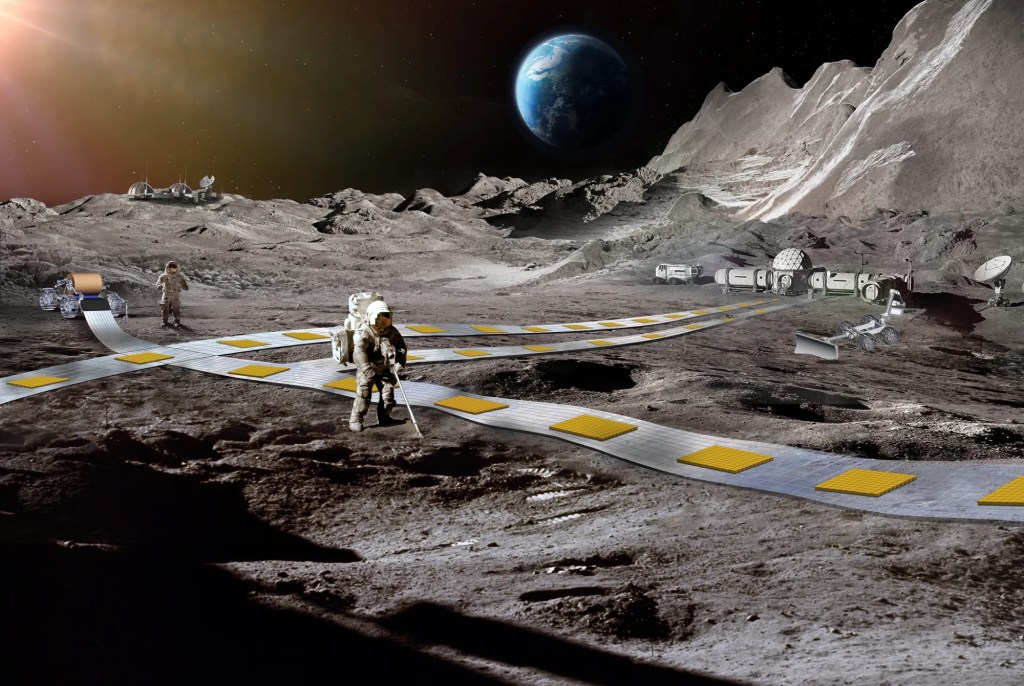
This design minimizes wear and tear from lunar dust and eliminates the need for heavy construction, as the tracks can unroll directly onto the Moon’s surface. « FLOAT robots have no moving parts and levitate over the track to minimize lunar dust abrasion / wear, unlike lunar robots with wheels, legs, or tracks, » explains Popular Science.
Magnetic Robots vs. Moon Dust
Currently, NASA’s Innovative Advanced Concepts (NIAC) program is funding FLOAT through its Phase II initiative. Over the next two years, Schaler and his team will build small prototypes and test them in environments simulating the Moon’s harsh conditions, such as extreme temperatures and radiation.
These tests will help researchers understand the challenges and refine the design. While traditional wheeled lunar rovers have proven effective, they are susceptible to dust and wear. In contrast, FLOAT’s levitating robots promise a more durable and efficient alternative, though they come with their own set of engineering challenges.
The Moon today, Mars tomorrow?
Looking ahead, the potential of FLOAT extends beyond the Moon. If successful, this technology could support sustainable lunar bases by providing a reliable transportation system for essential supplies like water and building materials. Ethan Schaler dreams of seeing FLOAT technology used not only on the Moon but also in other space environments. As he optimistically states, « I do hope to see the technology in FLOAT fly to the moon, space, or another planet in the future. »

