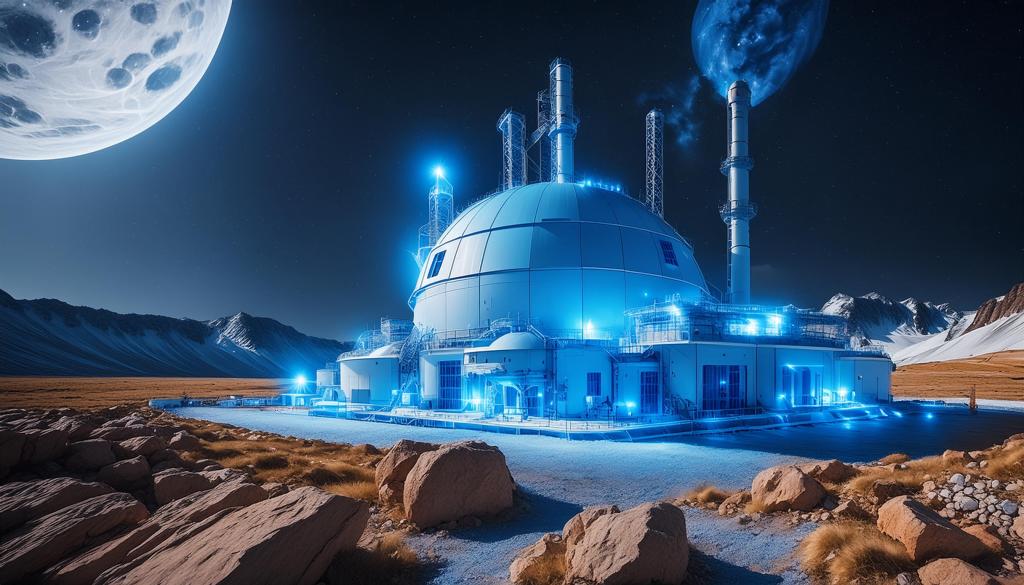


In a bold leap for lunar exploration, Russia and China are joining forces to power the moon’s future. As reported by TechTimes, Roscosmos and China’s National Space Administration (CNSA) have embarked on the ambitious project of developing a nuclear power plant for a joint lunar base.
This collaboration represents a significant stride towards establishing a sustainable human presence on the moon, relying on nuclear energy to overcome the limitations of solar power.
Solar Power Can’t Cut It
Solar energy faces significant challenges on the moon. The lunar surface experiences extended periods of darkness, making solar panels insufficient for continuous power needs. To address this, Roscosmos and CNSA plan to deploy automated stations—« Smena-6, » « Smena-7, » and « Smena-8 »—as preparatory steps towards the lunar base.
These technological advancements are crucial for creating a reliable energy infrastructure, ensuring that future lunar settlers have a consistent power supply. “Nuclear energy on the moon would be capable of powering future lunar settlements,” explains TechTimes, quoting Yuri Borisov.
Nuclear Power: Boom or Doom?
However, the history of nuclear power is not without its risks. Accidents like Chernobyl and Fukushima have highlighted the potential dangers, raising concerns about the use of nuclear energy in space. Despite these risks, experts like Dr. Natan Eismont, a prominent figure in Russian space research, emphasize the expertise and technological advancements that mitigate these dangers.
In contrast, projects like NASA’s Lunar Gateway rely on solar power, demonstrating a successful alternative. Yet, Russia and China’s focus on nuclear energy stems from the need for a more robust and uninterrupted power source on the moon. « Roscosmos’ prior experience in space-based nuclear technology lends credibility to the endeavor, » explains TechTimes.
Future Power Plays
Looking ahead, Roscosmos and CNSA have set an ambitious timeline. The nuclear power plant is expected to be operational between 2033 and 2035, with initial groundwork starting as early as 2026. This project underscores the strategic partnership between the two nations, aiming to revolutionize lunar exploration.
As humanity reaches further into space, international cooperation and sustainable technology will be pivotal in ensuring safe and enduring habitation beyond Earth.