


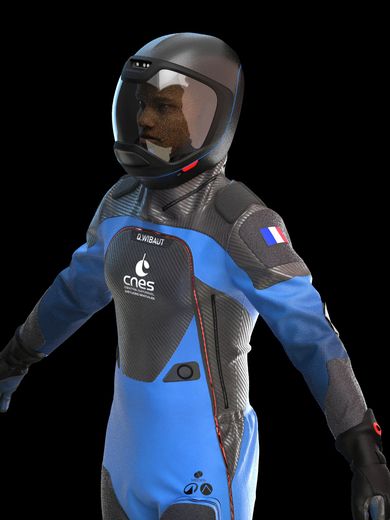
The CNES, alongside Spartan Space, Decathlon, and MEDES, is spearheading the development of a European intra-vehicular space suit (IVA). Announced by CNES, this collaborative project aims to enhance astronaut safety during critical mission phases like launch and landing. By leveraging diverse expertise, this initiative promises to deliver an innovative IVA suit tailored for space. « With the ambition of contributing to future space missions with its own crews, France, strong in its skills and technological know-how, wishes to contribute to this growth by proposing, among other things, an IVA space suit, » explains the CNES.
Teamwork Makes the Dream Work!
The project’s success hinges on the strengths of its partners. CNES leads the initiative, with Spartan Space coordinating the efforts. Decathlon, renowned for its sports textile technology, applies its expertise to meet the stringent demands of space suits. MEDES, the Institute of Space Medicine and Physiology, brings over 35 years of experience, ensuring the suits are adapted to the physiological needs of astronauts. This multi-disciplinary approach underscores the project’s innovative nature.
Space Suit Design: Not Just Another Fashion Statement!
Developing an effective IVA suit comes with significant challenges. Ensuring astronaut safety during launch and landing requires meticulous design and testing. MEDES’ role is crucial here, as their extensive knowledge in space physiology helps tailor the suits to withstand the rigors of space travel. While past attempts at space suit development have faltered due to a lack of such comprehensive collaboration, this project integrates diverse expertise to overcome these hurdles effectively. « This ambitious project, led by Spartan Space, combines the textile expertise of Decathlon and the physiological insights of MEDES to create cutting-edge space suit technology, » explains the CNES.
Looking Ahead: The Future of European Space Missions
With development sessions ongoing since December 2023 at Decathlon’s research center in Lille, the project is on track to deliver a prototype by 2024. This effort represents more than just a technological achievement; it signifies Europe’s growing capability in manned space exploration. Sebastien Barde, Deputy Director of Exploration and Manned Flights at CNES, encapsulates the project’s spirit: « I am delighted that CNES is joining forces with Spartan Space, Decathlon, and MEDES to meet this exciting challenge. » This initiative sets the stage for Europe’s future missions to the Moon and Mars, paving the way for sustainable space exploration.