


Imagine a future where reaching Mars takes a mere 40 days and doesn’t require the explosive power of rockets. This vision, detailed by Business Insider, centers on a revolutionary concept: the space elevator. This cutting-edge idea promises to transform space travel by drastically reducing costs and travel time.
Japan’s Sky-High Ambitions
The Obayashi Corporation, a Japanese company renowned for constructing the Tokyo Skytree, announced plans in 2012 to build a space elevator by 2050. While construction is unlikely to start next year, the company is deeply engaged in research, design, and partnerships to make this €92 billion project a reality.

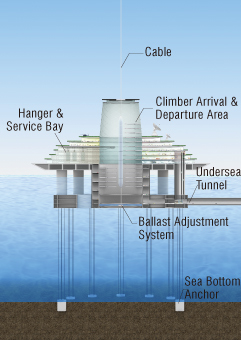
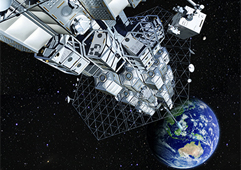
The technological innovation at the heart of this plan involves electromagnetic vehicles, known as climbers, which would transport cargo without onboard fuel. Powered remotely by solar power or microwaves, these climbers could drastically cut the cost of moving goods to space.
“A space elevator could help drop the cost of moving goods to space to €126 per kilogram,” explains Business Insider. For comparison, even SpaceX’s Falcon 9, one of the cheaper rocket options, costs around €2,700 per kilogram.
A Real-Life Beanstalk or Just a Pipe Dream?
However, the dream of a space elevator is not without significant challenges. The most daunting obstacle is the need for a material stronger than steel to construct the tether. Carbon nanotubes, known for their strength and light weight, have been proposed, but current production techniques can only create nanotubes a few meters long, far short of the 35,000-kilometer requirement.
Christian Johnson, who published a report on space elevators last year in the peer-reviewed Journal of Science Policy & Governance, notes to Business Insider, “If you try to build it out of steel, you would need more steel than exists on Earth.” Additionally, the tether would be under immense tension, and environmental factors like lightning and extreme weather could pose additional risks.
Reducing our Carbon Footprint
Despite these challenges, the potential benefits of a space elevator are immense. Beyond cost savings, the use of zero-emission vehicles could revolutionize how humanity approaches space travel, significantly reducing our carbon footprint. Obayashi Corporation envisions this as a groundbreaking public works project that benefits all humankind. However, as Johnson points out, the optimistic timeline and technological hurdles mean that achieving this vision will require sustained innovation and international collaboration.