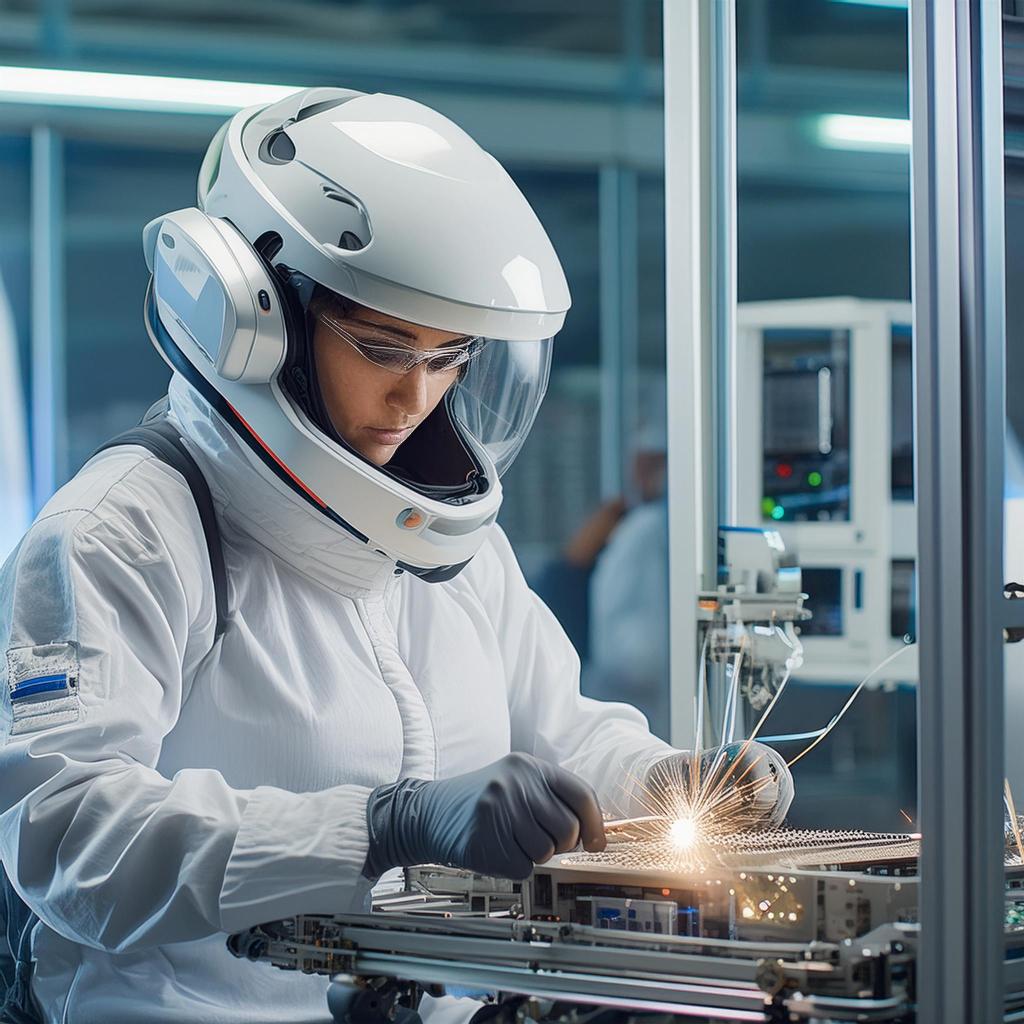


In a groundbreaking development reported by 3DNatives, engineers at the University of Wisconsin-Madison have 3D printed functional RAM devices in zero gravity – a major milestone towards self-sustaining space missions. This sci-fi dream is becoming reality thanks to an ingenious new electrohydrodynamic (EHD) 3D printing technique.
Defying Gravity’s Grasp
Traditional 3D printing relies on gravity, but UW’s EHD approach leverages electrical forces to precisely propel liquid inks through an ultra-fine 30-micrometer nozzle. « Under this small scale, the surface tension prevents liquid outflow, until we apply an electrical force to break that tension, » explained Professor Hantang Qin who led the research.
Your Grandma’s 3D Printer Ain’t Got Nothing on This
While NASA has explored additive manufacturing for basic structures on the International Space Station, fabricating delicate electronics is far more challenging. Current zero-gravity 3D printing is limited to polymers and metals. UW’s EHD printing, however, deposited specialized semiconductor and insulating inks to construct over a dozen high-quality micro/nano RAM units during weightless flights.
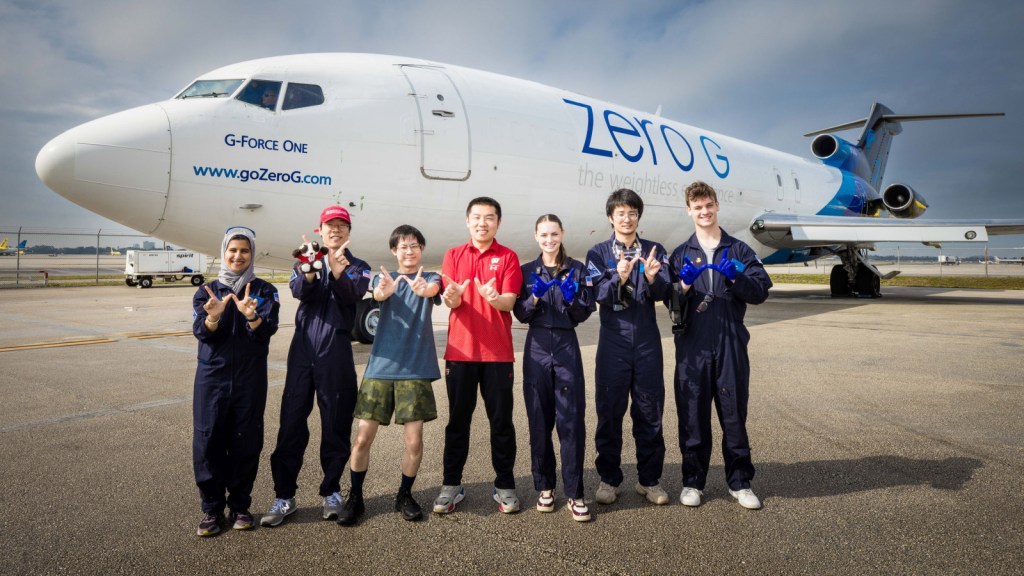
« Student engineers Rayne Wolf and Jacob Kocemba manually controlled the printing process, » 3DNatives reported. This breakthrough eliminates the need to launch backup components for every scenario. Astronauts could simply print replacements on-demand, massively reducing resupply demands and enabling custom devices for evolving mission needs.
A Self-Sustaining Model
Beyond just RAM, EHD printing could manufacture sensors, actuators, antennas and other vital electronics. This self-sustaining model radically enhances deep space exploration feasibility. Future Mars explorers could establish self-sufficient settlements with compact EHD printers without massive pre-launched stockpiles.
While printer miniaturization and ink stability require further development, this UW innovation brings closer the dream of humans sustainably inhabiting new worlds by manufacturing essential technology as needed on-site. The implications for sustainable, autonomous, and economical space exploration are profound.