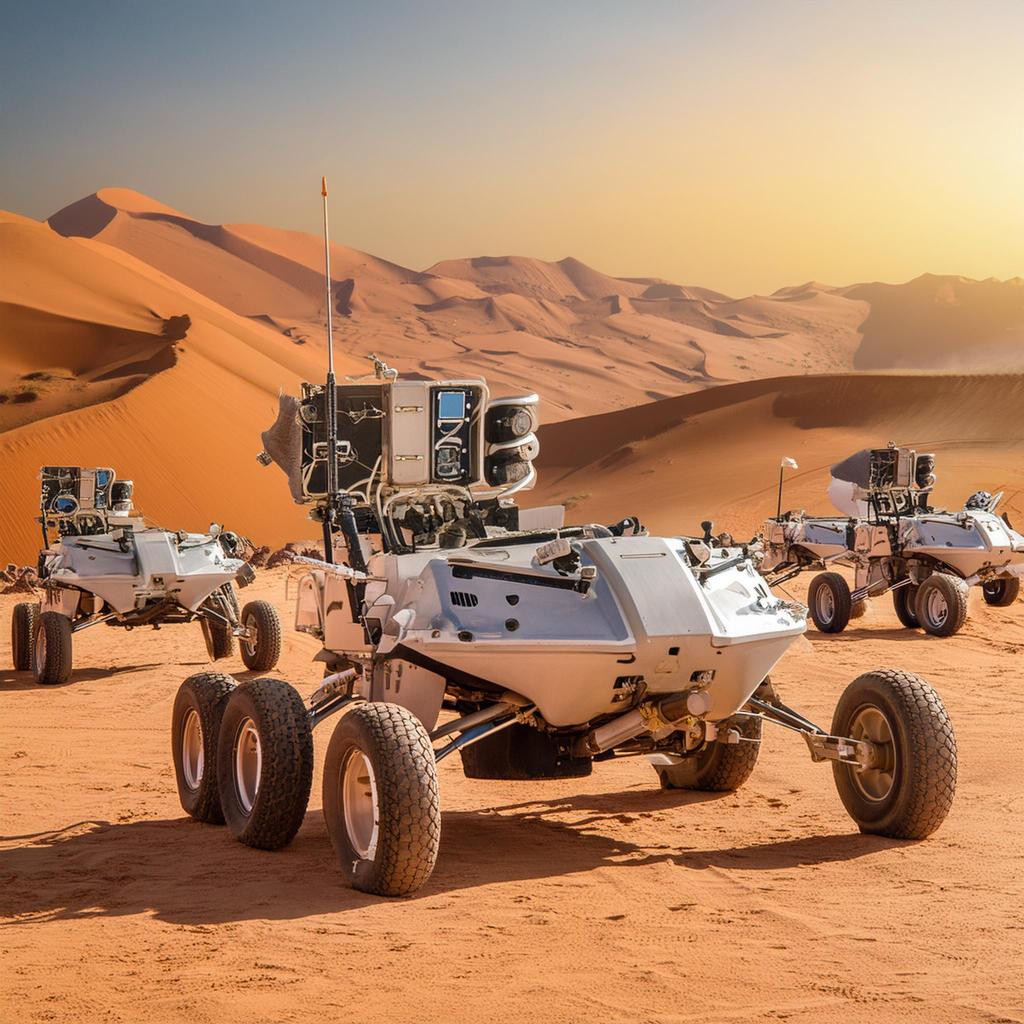

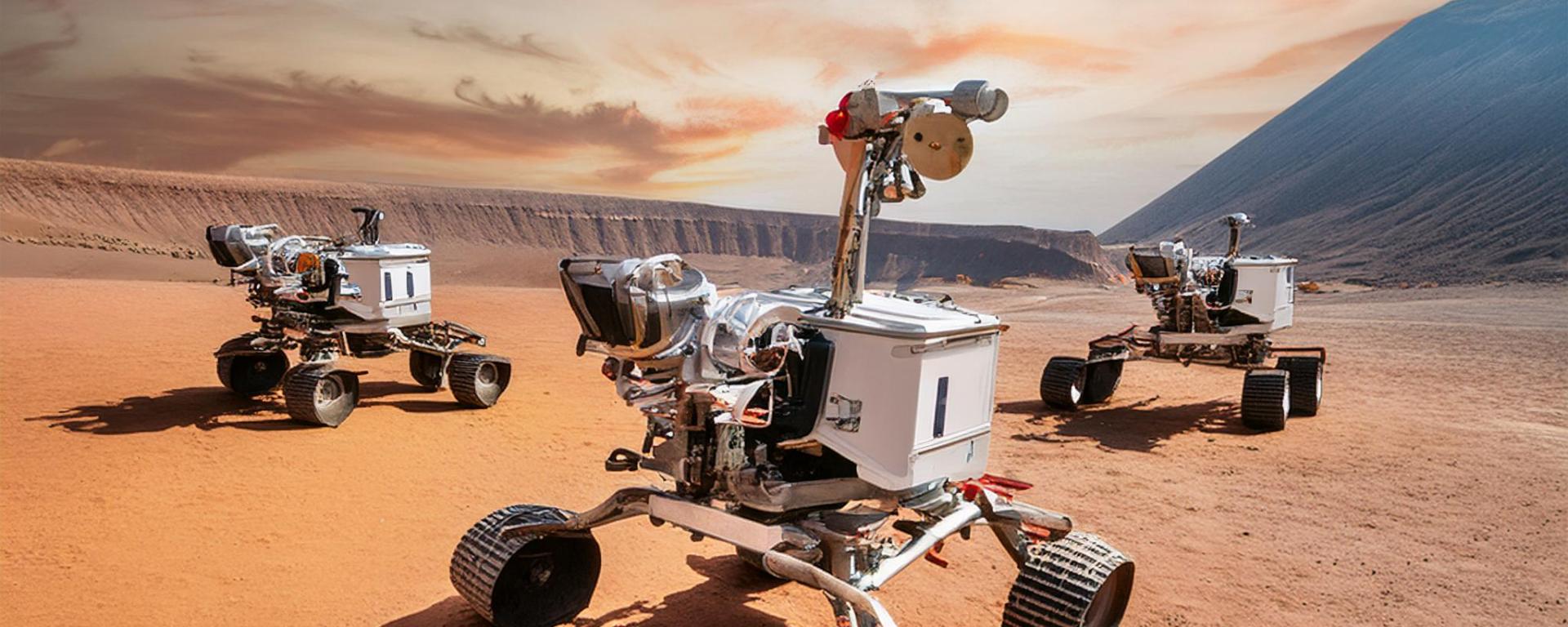
As reported by Interested Engineering, charting safe paths across the harsh Martian terrain has long stymied even our most capable robotic emissaries. While behemoths like Curiosity and Perseverance have illuminated many Red Planet mysteries, their sheer size limits where they can safely roam. However, an innovative multi-rover approach pioneered by researchers promises to revolutionize extraterrestrial exploration.
A Chorus of Robot Scouts
« The approach proposed in the study successfully enables safe and efficient autonomous exploration of a 3D environment using a team of planetary exploration rovers, » Interested Engineering explains. Rather than a single explorer, this methodology harnesses the power of multi-robot teams. Rovers ingest data from orbital imaging, probability maps, and their own sensors to collaboratively map surroundings and compute optimal paths.
Rovers With a Twist: Drill Sergeant, Shutterbot, and Hauler
Each rover specializes – scouts to blaze trails, drillers to extract samples, analysts to study alien landscapes, and carriers to ferry discoveries. Sophisticated algorithms choreograph their movements, ensuring each stays within safe operating limits while prioritizing the smoothest viable routes across hostile terrain.
Red Dust Proving Ground
To validate this robotic teamwork, researchers modeled the rugged 22,500m2 Jezero crater region. Five robotic pathfinders dispersed across the simulated Martian surface, with robust systems preventing collisions. « According to the study, collision-free autonomous exploration can be carried out efficiently over an area of 22500m2 in an average time of 38.26 minutes, » the article states. This swarm mapped the full area swiftly, with individual rovers clocking over 650m – rivaling historic solo treks.
As our multi-planetary ambitions rise, innovations enabling sustainable exploration grow ever more crucial. Envision these robotic scouts dispersing across Mars, meticulously mapping future settlement sites before human pioneers follow.