


Space Shipping: Outpost’s Container-Sized Revolution. As reported by Payload, Outpost, a Los Angeles-based Earth return company, is preparing to launch and return Carryall, a spacecraft the size of a standard shipping container. This innovation could revolutionize space manufacturing and cargo return, potentially transforming the economics of space utilization.
Houston, we have a solution. The current space return highway is more of a costly, narrow path. Traditional Earth return technology relies on ablative heat shields, large propellant stores, and heavy parachutes. These systems limit cargo capacity and skyrocket costs, hampering the growth of in-space manufacturing. Outpost’s approach, however, is quite different.
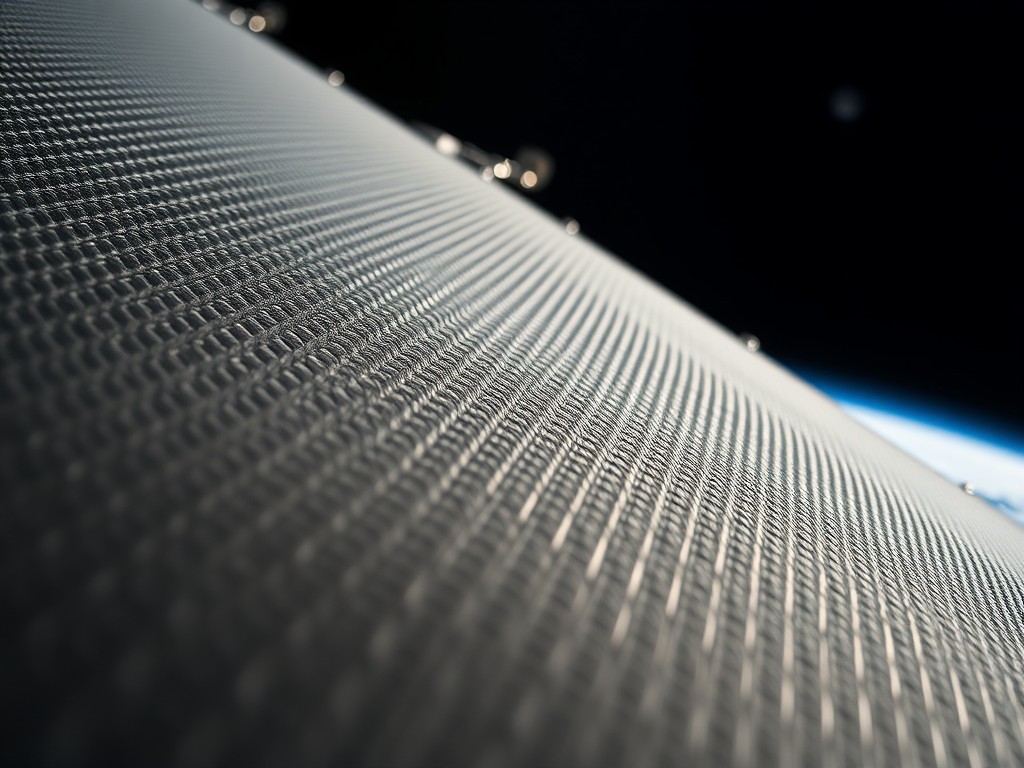
Their system ingeniously combines a satellite bus, a unique heat shield, a spacious container, and a robotic paraglider. The star of this show is their innovative heat shield, utilizing 3D woven carbon fiber fabric that unfolds in orbit. This technological marvel not only protects the payload but also significantly decelerates the vehicle during reentry.
Space Delivery Isn’t Rocket Science Anymore
Bullseye from the heavens. Pinpoint accuracy in space cargo delivery is no longer the stuff of science fiction. Outpost’s system boasts the ability to provide point-to-point delivery anywhere on Earth with remarkable precision. This claim isn’t just hot air – the company has conducted over 100 flight tests to hone their accuracy. In one impressive demonstration, their test craft deployed a paraglider wing from a weather balloon at 20 km altitude, flying over 180 km to land on a mere 5-meter target.

However, some industry experts remain skeptical about the scalability and reliability of such a system in varied orbital scenarios. Despite these challenges, Outpost has gained significant traction. They’ve secured a $1.7 million deal with the Department of Defense and partnered with NASA to develop spacecraft for various missions, including support for the International Space Station.
Space manufacturing: no longer a pie in the sky. Outpost’s technology aims to dramatically reduce the cost of manufacturing in space. By enabling efficient return of larger payloads, it could open doors for new industries and research opportunities in microgravity environments. Additionally, this system has the potential to decrease space debris by facilitating the return of defunct satellites and other orbital clutter.

