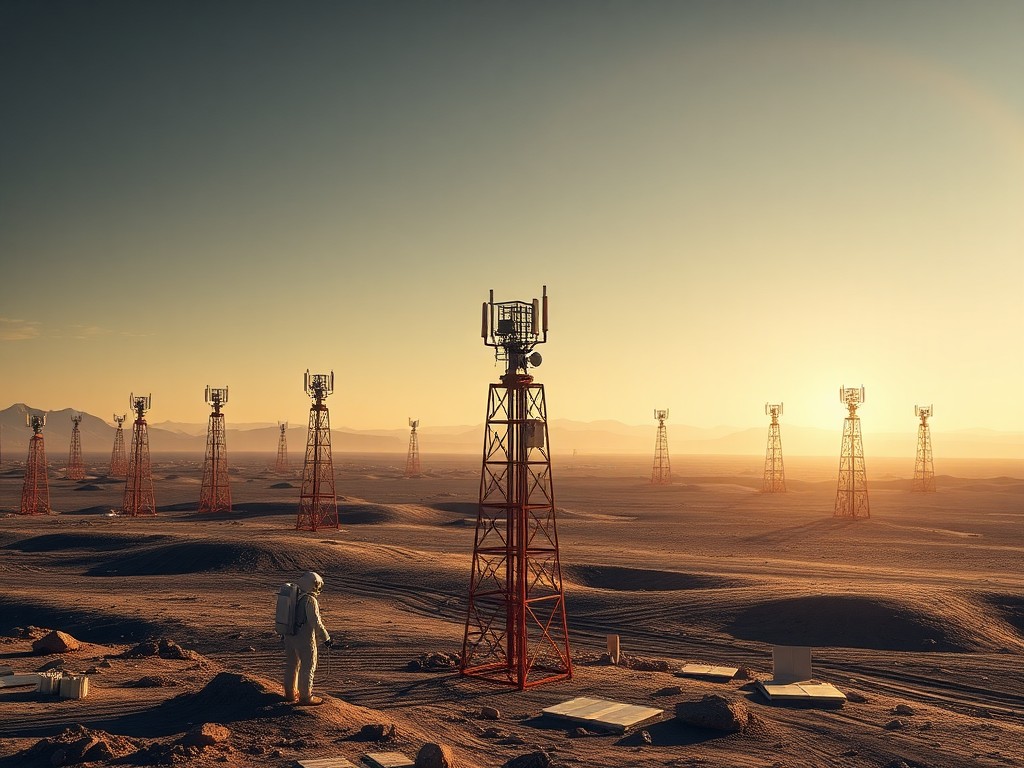

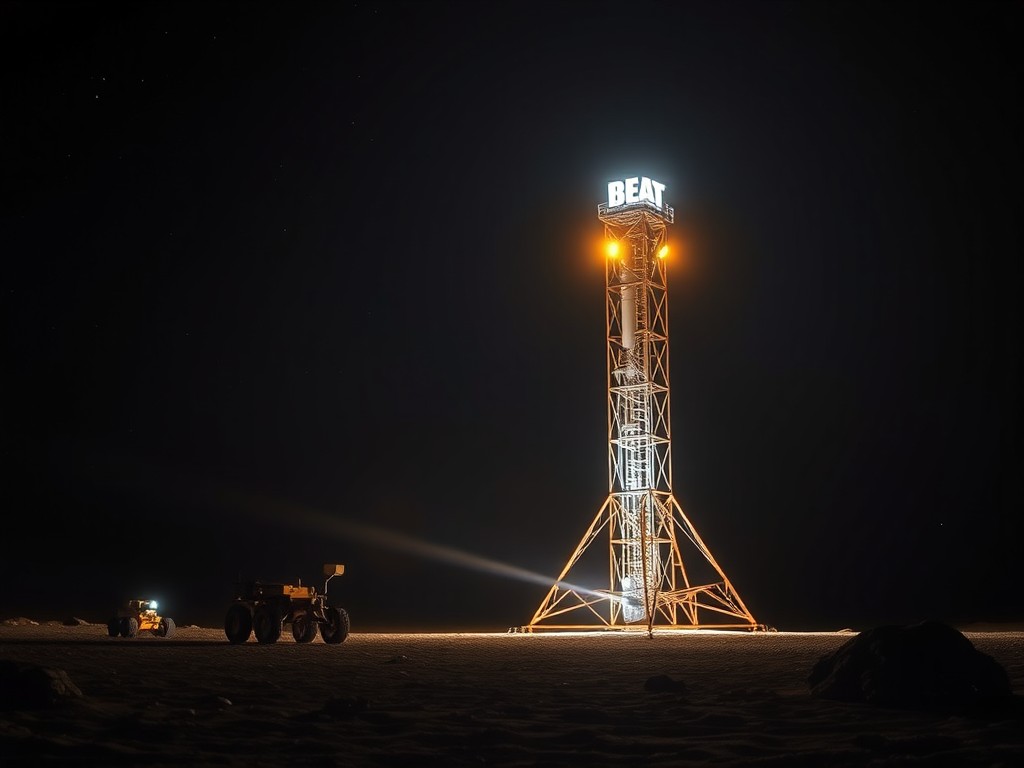
Cosmic power stations are no longer just a sci-fi dream. Fox News reports that charging your devices on the moon might soon become a reality, thanks to innovative technology developed by Honeybee Robotics, a Blue Origin company. As NASA’s Artemis program aims to establish a sustainable human presence on the moon, the need for a reliable power source has become paramount. Enter the Lunar Array Mast and Power System (LAMPS), a groundbreaking project that promises to revolutionize lunar living and working conditions.
Skyscrapers on the moon? You bet! Honeybee Robotics, in collaboration with mPower Technology, is developing LAMPS as a key component of the lunar power grid. This system will feature towers as tall as the Statue of Liberty, equipped with solar panels and batteries. These colossal structures won’t just provide power; they’ll also facilitate communications and even offer street lighting on the moon’s surface.
Complementing LAMPS is Honeybee’s LUNARSABER initiative, which introduces 100-meter tall deployable towers. These innovative structures integrate solar power, storage, and communication capabilities, ensuring a comprehensive energy solution for lunar operations.
Lunar Tanning: Not Just for Astronauts Anymore
Sun-worshipping taken to new heights. The LUNARSABER towers boast cutting-edge technology designed to maximize energy capture in the challenging lunar environment. With 360-degree sunlight capture and large sails that track the sun’s position, these towers can access nearly 95% of available solar light throughout the year.
This impressive efficiency allows them to store energy during the lunar day, providing a consistent power supply even during the two-week lunar night. However, implementing such advanced technology on the moon presents unique challenges, including dealing with lunar dust and extreme temperature fluctuations, which engineers must overcome.
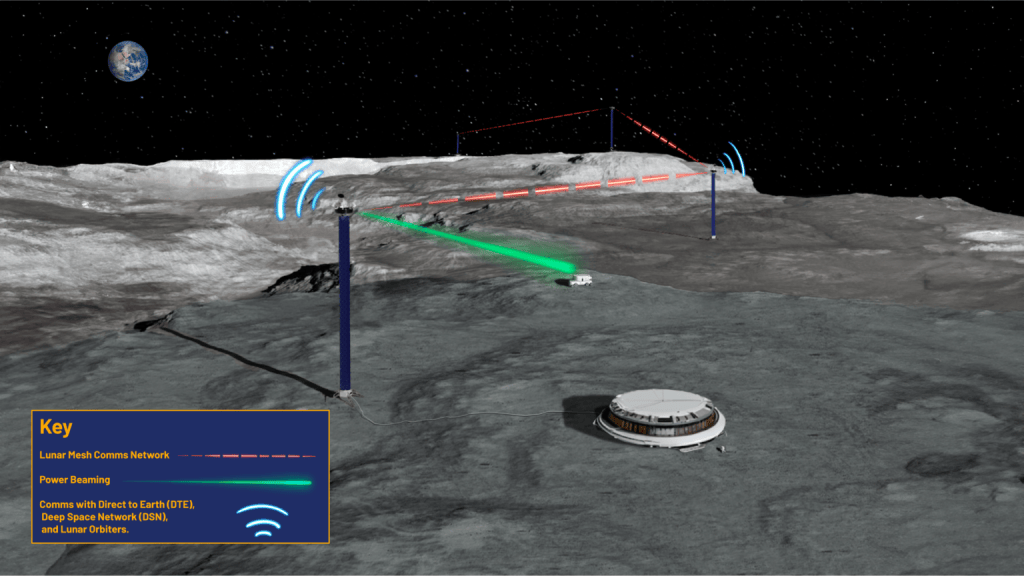
One small step for tech, one giant leap for space exploration. The implications of this lunar power grid extend far beyond mere convenience. By creating a network of energy-beaming towers, LUNARSABER could connect various lunar outposts and vehicles, laying the groundwork for a bustling lunar economy. This technology could also prove invaluable for future Mars missions, potentially adapting to the Red Planet’s environment.
Perhaps most crucially, as Fox News explains, « In emergencies, such as a lunar rover running out of power during the lunar night, a nearby LUNARSABER could direct a concentrated beam of sunlight to recharge its solar panels, ensuring continuous operation. » This capability underscores the system’s potential to not just power lunar activities, but to safeguard them as well.