
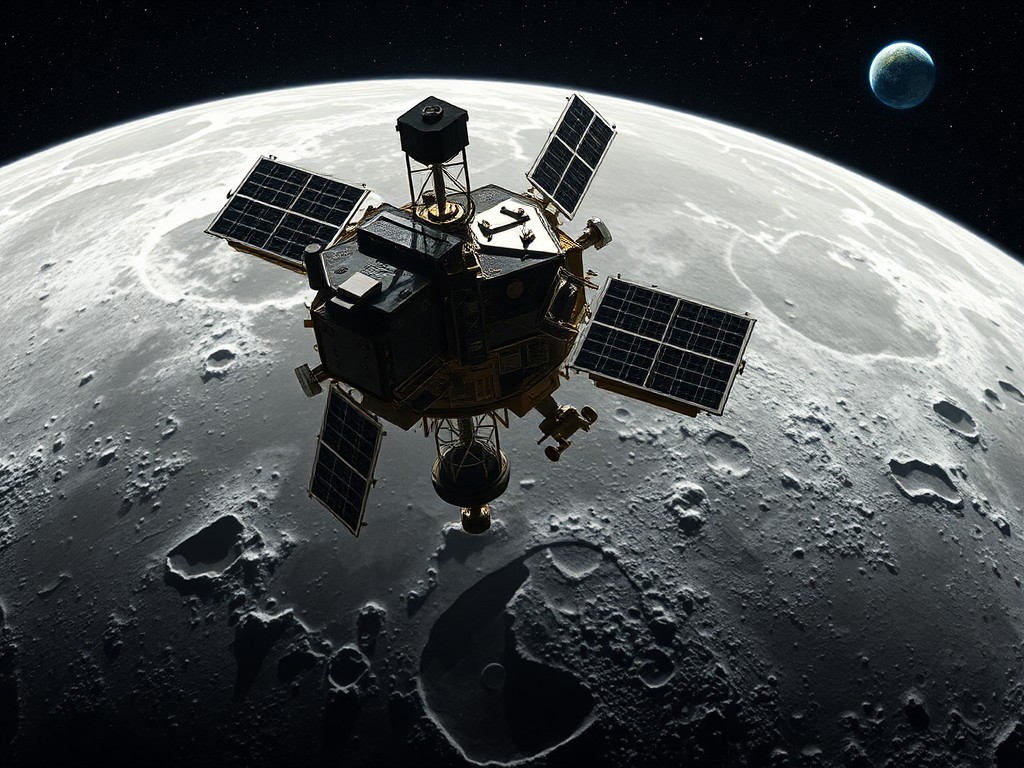
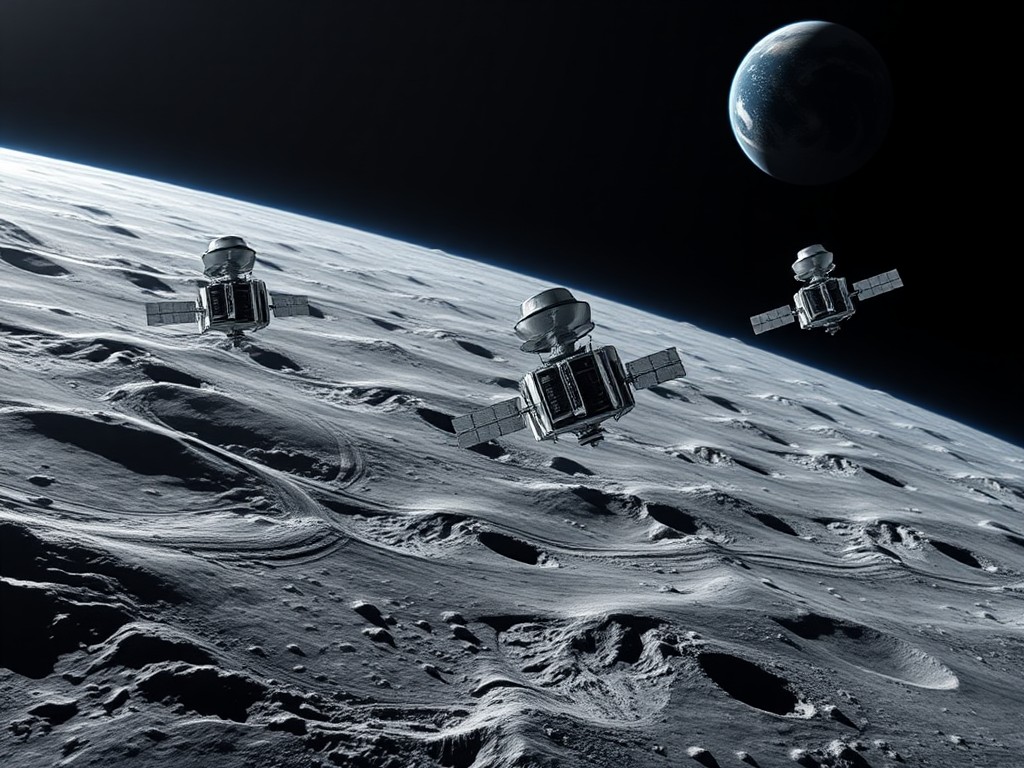
Lunar real estate booming? NASA has taken a giant leap in lunar exploration by awarding Intuitive Machines a contract potentially worth $4.82 billion to develop, launch, and operate a five-satellite communications and navigation network around the Moon. As reported by Payload Space, this groundbreaking initiative aims to provide constant connectivity with the lunar south pole, supporting a new era of exploration and sustainable presence on our celestial neighbor.
From sci-fi to reality, the lunar network will cater to an increasing traffic of landers, rovers, and eventually, crewed missions under the Artemis program. Steve Altemus, CEO of Intuitive Machines, told Payload, « We were in a strong position with a ground network, and with the ability to rideshare and bring satellites with us [on] this regular cadence of missions, we could deploy a constellation of satellites around the moon. » The company’s ambitious timeline includes launching the first spacecraft on IM-3 next year, followed by two more on IM-4 in 2027, and the final satellites on a fifth lunar mission.
NASA Bets Big on Private Lunar Communications
Houston, we have a plan – but is it foolproof? The contract structure reveals NASA’s innovative approach to space infrastructure development. Intuitive Machines will receive an initial $150 million in development funding, followed by a service contract based on selling network minutes to NASA. While this model mimics terrestrial telecommunications, it also raises questions about the privatization of lunar communications. The company is currently seeking a satellite bus manufacturer capable of maintaining lunar orbit, while planning to build the radio and positioning payloads in-house.
Cosmic Traffic Jam Ahead? As lunar activity ramps up, so does the potential for orbital congestion. Currently, only six orbiters from the US, India, China, and South Korea zip around the Moon. However, this seemingly empty space is already causing concerns. Soyoung Chung, a researcher at the Korean space agency, reported that their orbiter had received 40 conjunction warnings since its 2022 arrival.
This increasing « traffic » underscores the need for effective communication networks and, potentially, lunar traffic management systems. As Altemus quipped, « We’re certainly going to have to think about, as it gets more crowded up there, how are we managing the traffic model around the Moon? And you know what, that’s a first world problem. »