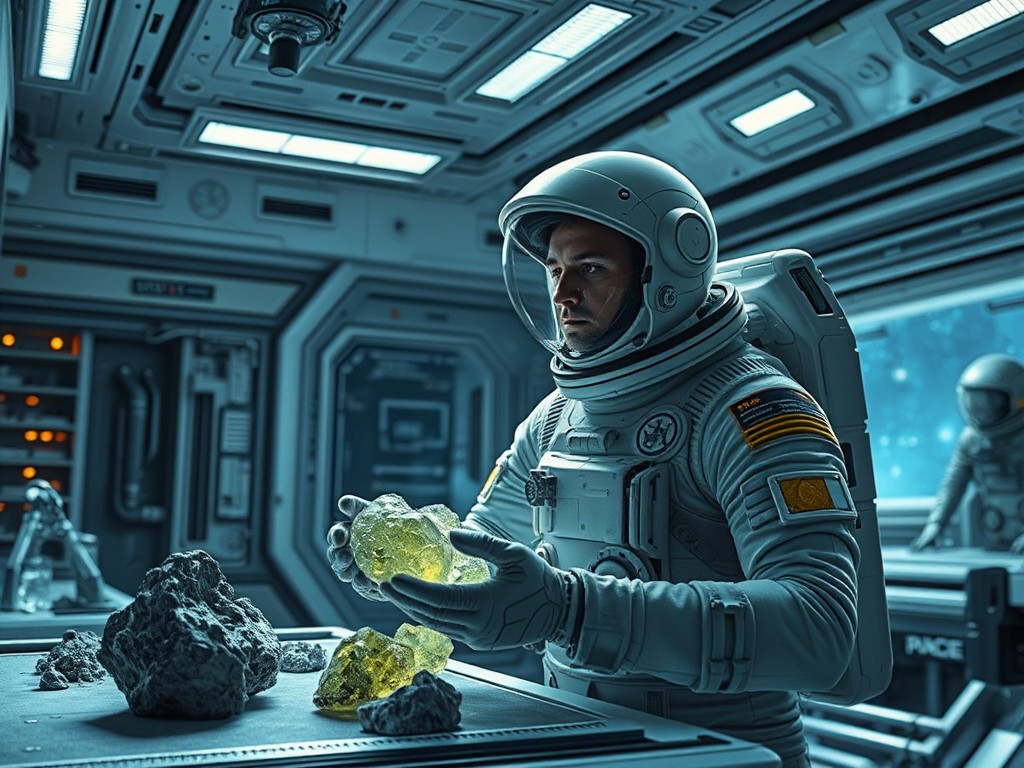
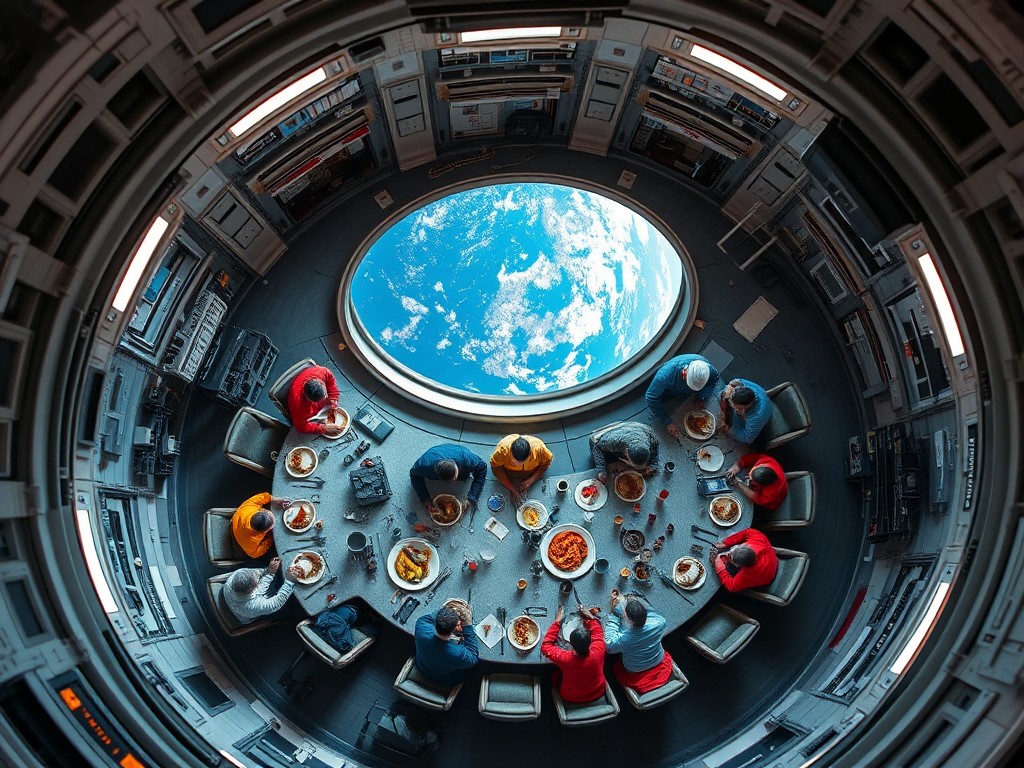
Space rocks on the menu? Scientists have cooked up a revolutionary idea to keep astronauts well-fed during extended space missions. A study published in The International Journal of Astrobiology and described in Mashable proposes an unconventional solution to the challenge of space nutrition: using asteroids as a food source. Before you imagine astronauts munching on cosmic pebbles, it’s important to understand that the concept involves breaking down the carbon content of these celestial bodies and transforming it into edible material.
From waste to plate. This innovative approach draws inspiration from an unlikely source: a U.S. Department of Defense project aimed at converting plastic waste into food. The process, known as pyrolysis, breaks down materials into solid, gas, and oil components. In this space-age adaptation, the resulting oil would be fed to bacteria in a bioreactor, ultimately producing a nutrient-rich biomass. Joshua Pearce, an engineering professor at Western University in Ontario, told The New York Times, « Asteroids are similar to plastic when it comes to microbes, » highlighting the potential of this method.
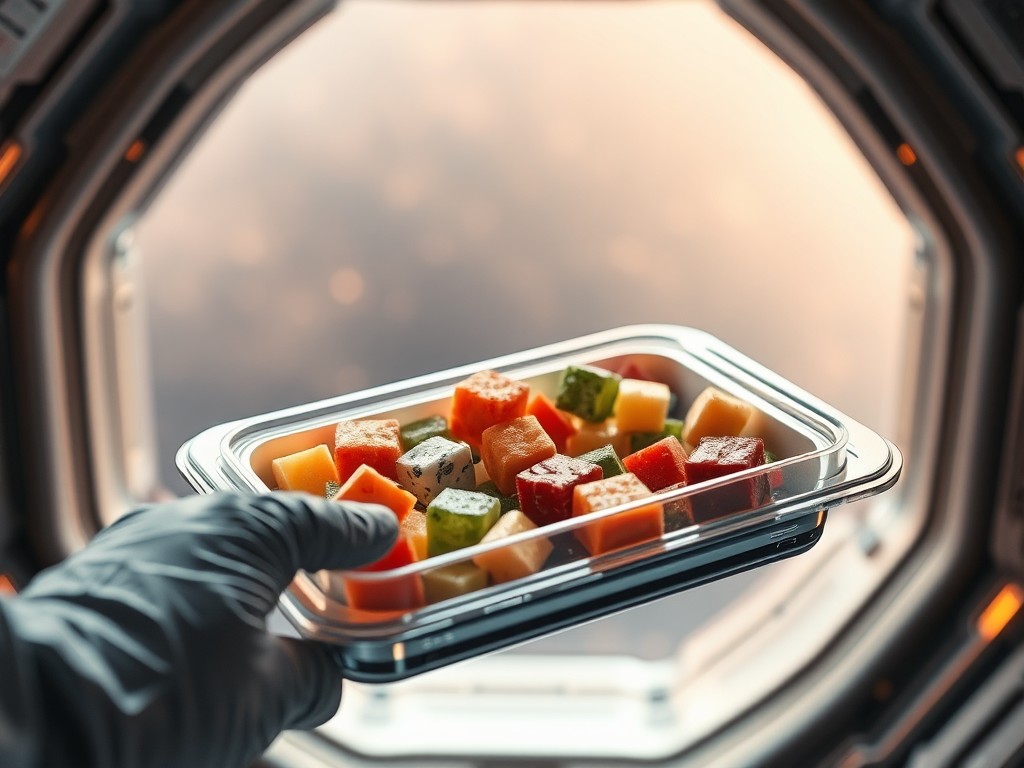
Cosmic Snacks: Not Just for Sci-Fi Anymore
Rocks for breakfast, anyone? To validate the concept, scientists have already begun experimenting with extraterrestrial nibbles. Annemiek Waajen of Vrije Universiteit Amsterdam conducted separate research, feeding pieces of Earth-fallen meteorites to microbes. The results showed that the microbes successfully grew after consuming the rocks. This promising outcome lends credibility to the asteroid-based nutrition theory.
However, it’s crucial to note that significant hurdles remain. Extensive toxicity tests and safety demonstrations are essential before any asteroid-derived meals make their way onto a space menu. As Dr. Waajen, who was not involved in the primary study, cautioned, « It is something that’s still a long way away. »
A feast fit for outer space. Despite these challenges, the potential of this technology is astronomical. Researchers have set their sights on the asteroid Bennu, calculating that its carbon content, even when inefficiently processed by microbes, could theoretically support an astronaut for at least 600 years. This breakthrough could transform long-term space exploration, offering a sustainable food source for missions venturing deep into the cosmos.