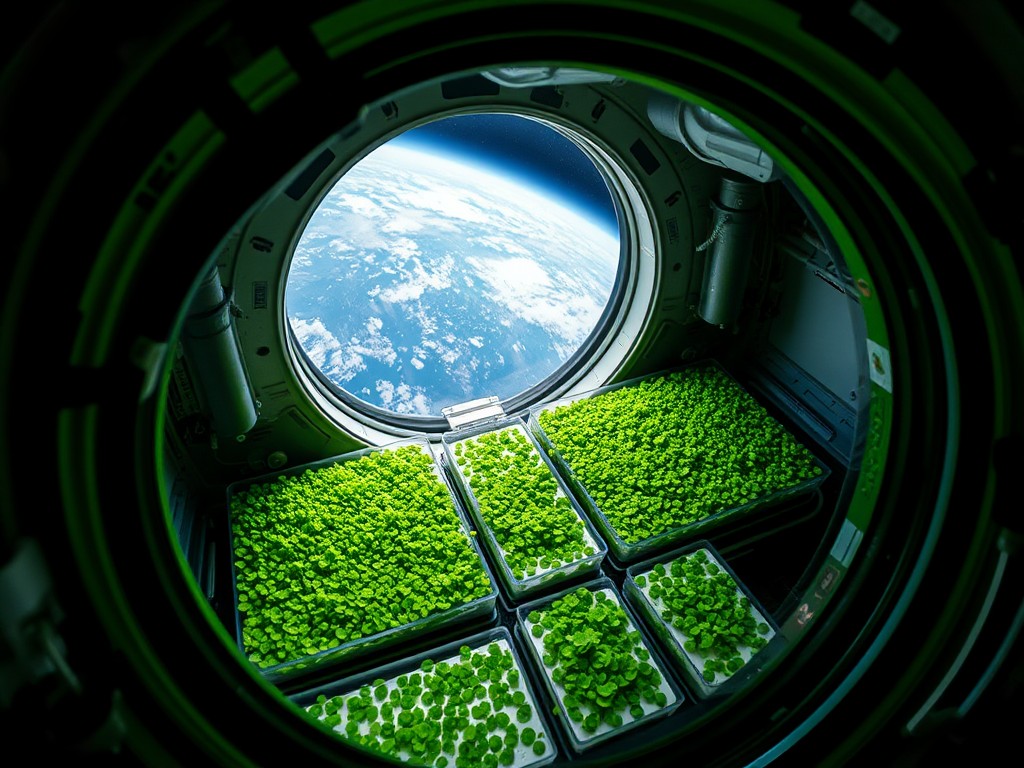
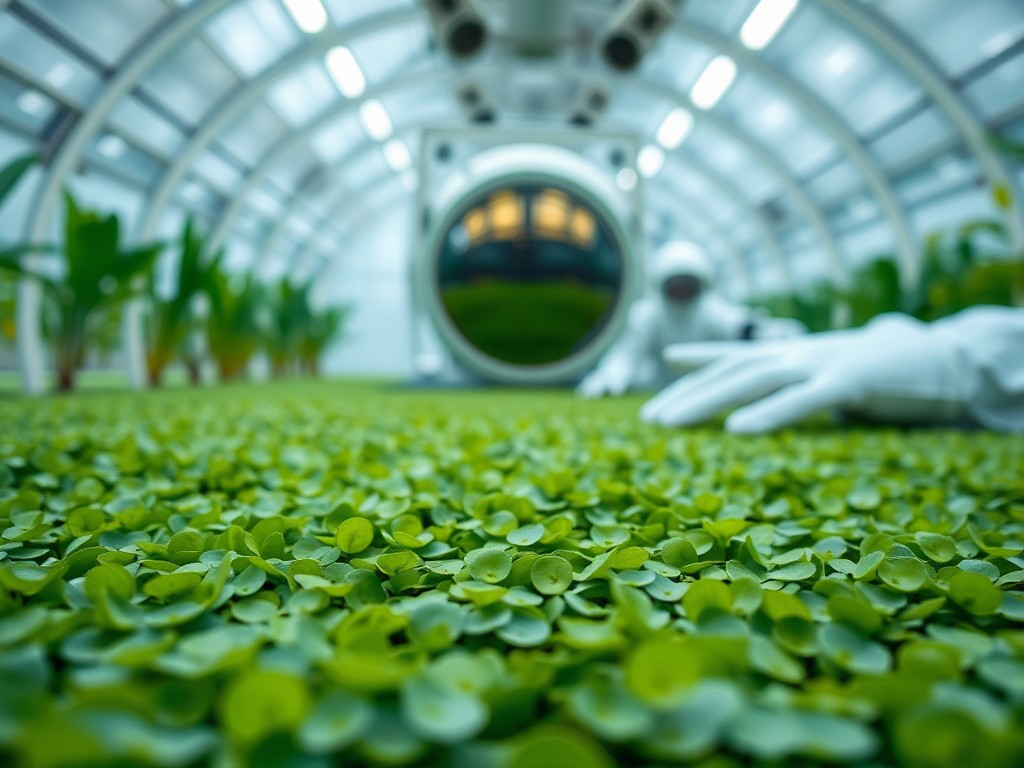
Living in space needs smarter solutions. According to recent research from Yeshiva University, a tiny aquatic plant could change how astronauts eat in space. Duckweed, a floating green plant found worldwide, is emerging as a promising candidate for space-based agriculture due to its minimal resource requirements and efficient growth patterns.
Nature’s perfect space traveler. Unlike traditional crops, duckweed thrives without soil in hydroponic systems, making it ideal for space missions where every gram of payload matters. The plant’s genetic structure proves remarkably simple, lacking many genes found in other plants. « Their genomes are very simple, which allows them to hybridize readily, » explains Natania Birnbaum, researcher at Yeshiva University. While current space farming faces numerous challenges, including complex irrigation systems and potential crop failures, duckweed’s simplicity could bypass many of these obstacles.
Space Food Gets an Upgrade
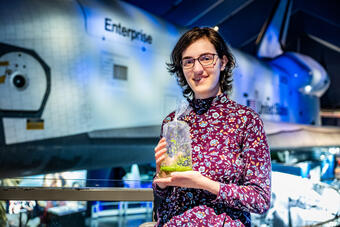
Not your ordinary pond plant. This crunchy vegetable packs a powerful nutritional punch, delivering high protein content comparable to animal proteins, along with essential antioxidants, amino acids, and Omega-3s. More impressively, duckweed demonstrates a unique ability to absorb nutrients directly from water, contributing to water purification and recycling – crucial capabilities for long-duration space missions. « In space, we need crops that produce a lot of nutritious material with minimal resources and volume and that can grow very fast and tolerate environmental extremes, » Birnbaum told Yeshiva University’s research symposium.
The future grows greener. Recent studies suggest duckweed’s potential extends beyond basic nutrition. Its compatibility with autonomous cultivation systems makes it particularly valuable for future space habitats. « By incorporating duckweed into these systems, space habitats can become more self-sustaining and resilient, » Birnbaum notes. As space agencies and private companies plan longer missions and permanent space habitations, this humble plant could play a crucial role in developing sustainable food systems beyond Earth.