
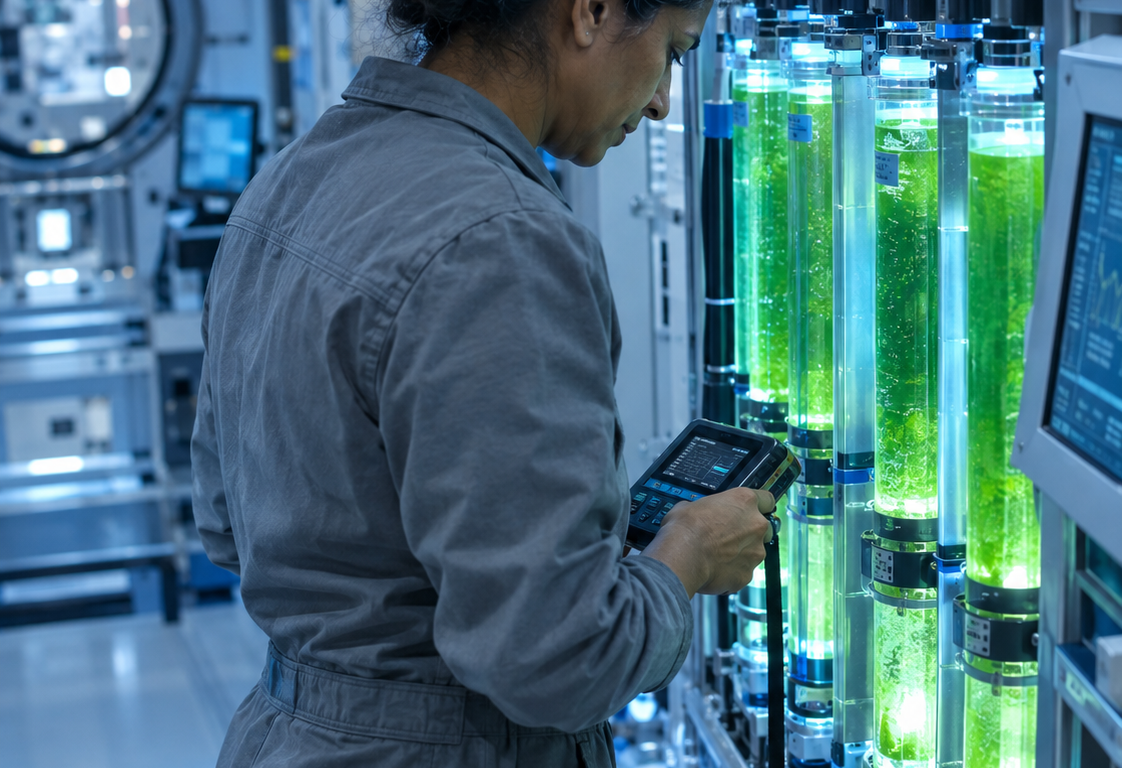
Growing food is the easy part. According to The Economic Times, citing a 2025 release from DLR, Germany’s aerospace research agency, scientists knew spirulina, the cyanobacterium Limnospira indica, could survive microgravity: Arthrospira-B proved that in 2018-2019. The harder question, tested by Arthrospira-C aboard the ISS in 2025, was whether it could grow in a continuous, self-sustaining cycle instead of a single batch, the real precondition for a life-support system.
One microbe, two jobs. Spirulina consumes carbon dioxide and light to release oxygen, much like a plant, while growing fast enough to double as an easily digestible food source, without the heavy processing most space crops require. It ran from DLR’s Microgravity User Support Center in Cologne, biology led by Belgium’s SCK CEN, bioreactor built by Redwire Space Europe. It isn’t the only orbital effort chasing a closed loop: aboard China’s Tiangong station, a rice trial is working through its own generational cycle without returning a seed to Earth.
A Milestone, Not Yet a Menu
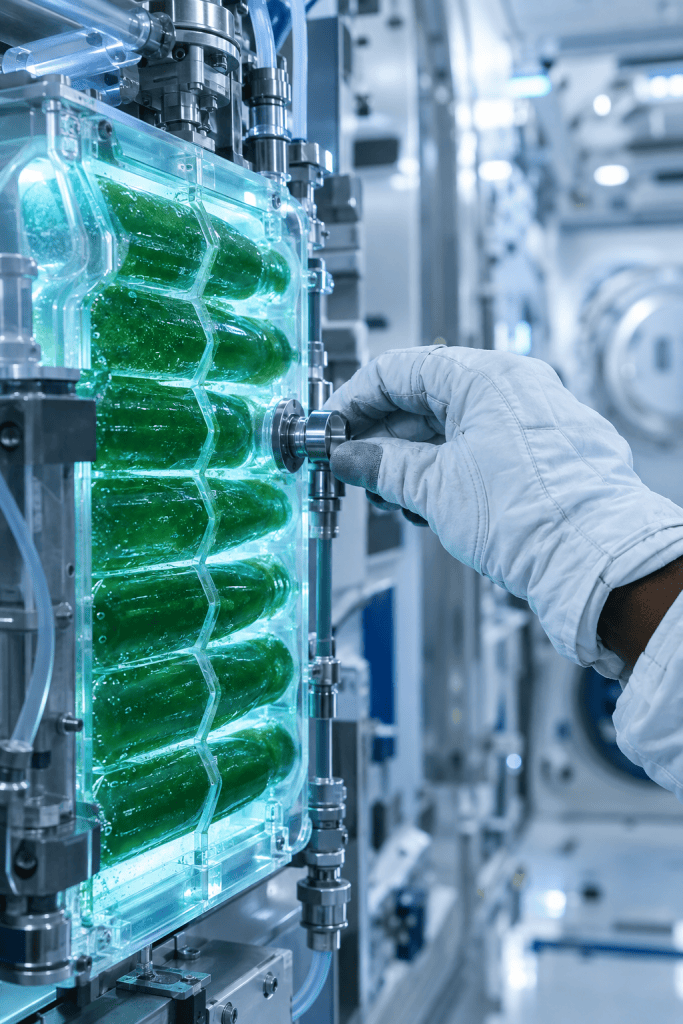
Don’t set the table yet. DLR itself called the result a « milestone, » not a completed project, according to The Economic Times. Scaling a lab bioreactor to feed four astronauts for years remains unsolved, and taste, texture and food fatigue are still open questions. Space agencies often dress up early biology results as breakthroughs; this one reads better as groundwork.
The real driver is arithmetic. A crewed Mars mission, two to three years round trip, cannot carry all its food from Earth, and every launched gram costs dearly, which is why closed-loop, algae-based life support keeps resurfacing in both European and American research, NASA included. The same logic doesn’t need Mars to matter: disaster relief, submarines or drought-stressed regions on Earth could use it long before any crew does, millions of kilometers away.
 The EcoGalactic Gazette