
Forty generations in one month. That is how many times algae divided aboard the International Space Station, and the DNA they ended up with was not quite the DNA they started with. According to The Times of India, cultures of Chlamydomonas reinhardtii, a humble green microalga, accumulated roughly 50% more DNA polymorphisms than ground controls. A polymorphism is a single-letter change in the genetic code, a typo in the recipe.
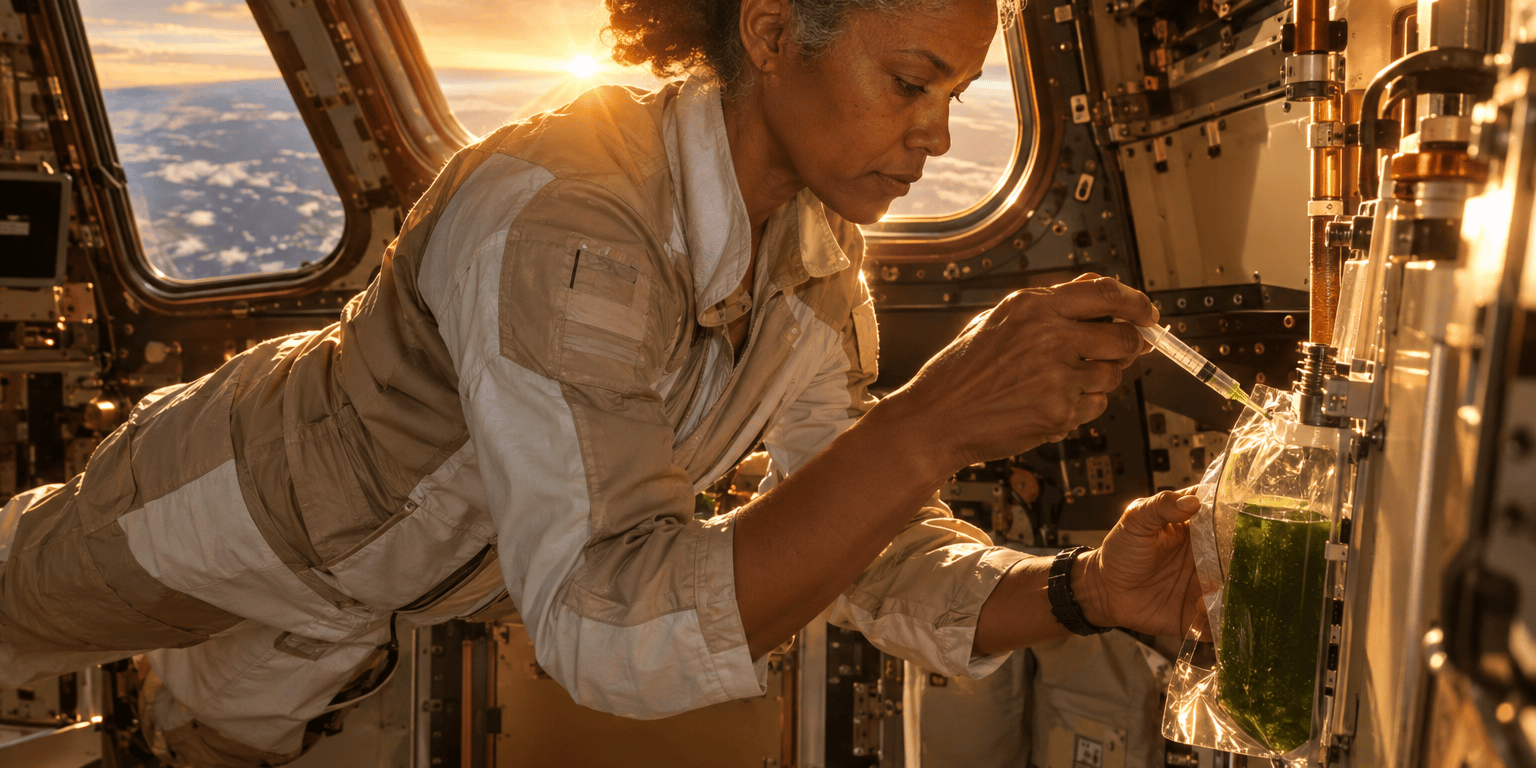
A tidy experiment, one caveat. NASA’s Space Algae-1 grew the algae for a month in the ISS’s VEGGIE plant growth chamber. A generation is one cell dividing in two, and every ten generations researchers read the whole genome of pooled samples. The caveat: the cells had been mutagenised with ultraviolet light beforehand, so the 50% compares prepared cultures with ground controls. The source does not say an ordinary alga would mutate 50% more.
Don’t Write Off the Algae Yet
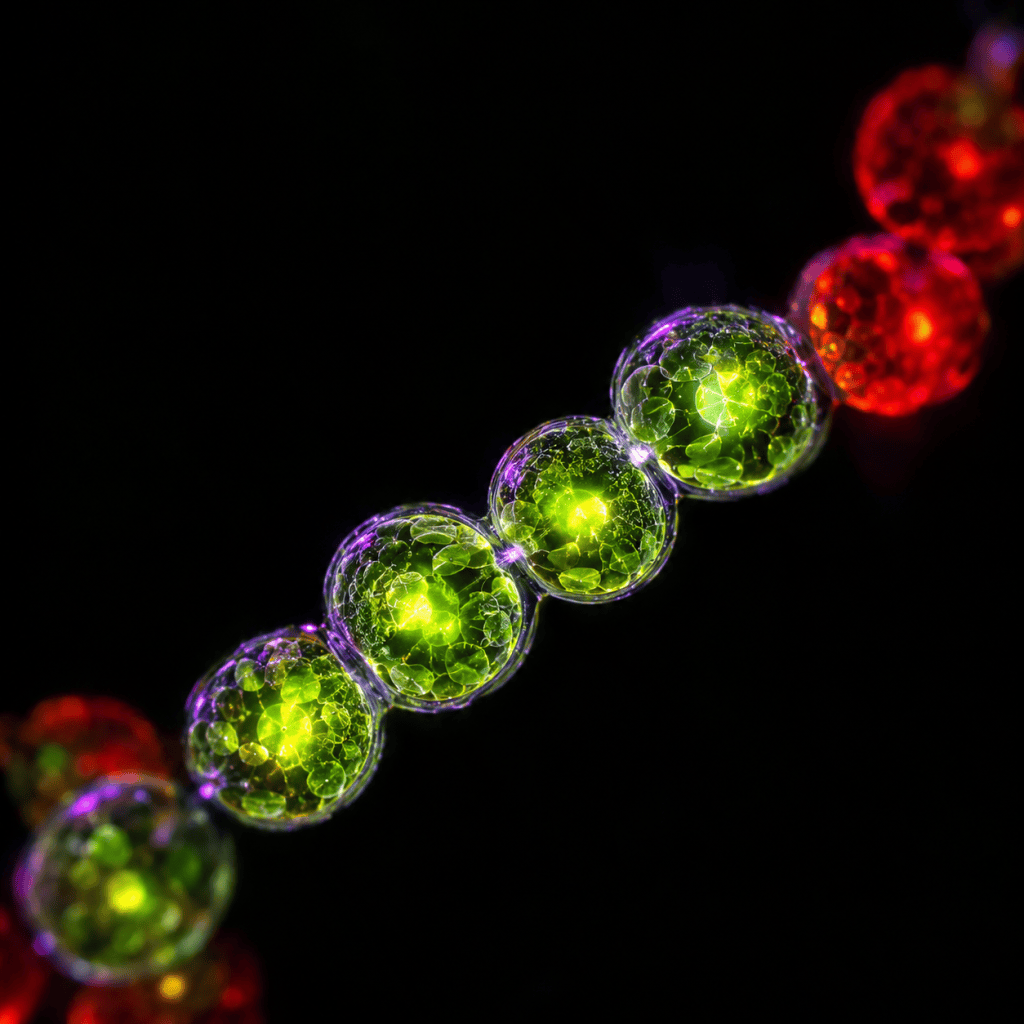
Not a verdict. A 2025 DLR trial on the ISS ran spirulina through a continuous, self-sustaining growth cycle, and DLR itself called the result a « milestone, » according to The Economic Times. Algae still promise oxygen and food, and they sit inside NASA’s synthetic biology work on food, life support and materials. NASA’s Space Algae-2 now follows spirulina through serial cultures, tracking mutations, protein activity and nutritional makeup.
A new typo pattern. The mutations carry a « novel base substitution signature, » in NASA’s words, explains The Times of India: a new pattern of letter swaps that, according to the agency, suggests microalgae may be unstable for long-term production in space. A life-support loop is only as dependable as the living cells inside it, so genetic stability has to be measured before any crew depends on it.
[Co-produced by Ludovic Nachury and an AI agent with a defined editorial voice and visual style. Illustrations are AI-generated. Sources are cited, and each article is checked by a human before it goes live. How this works.]

