
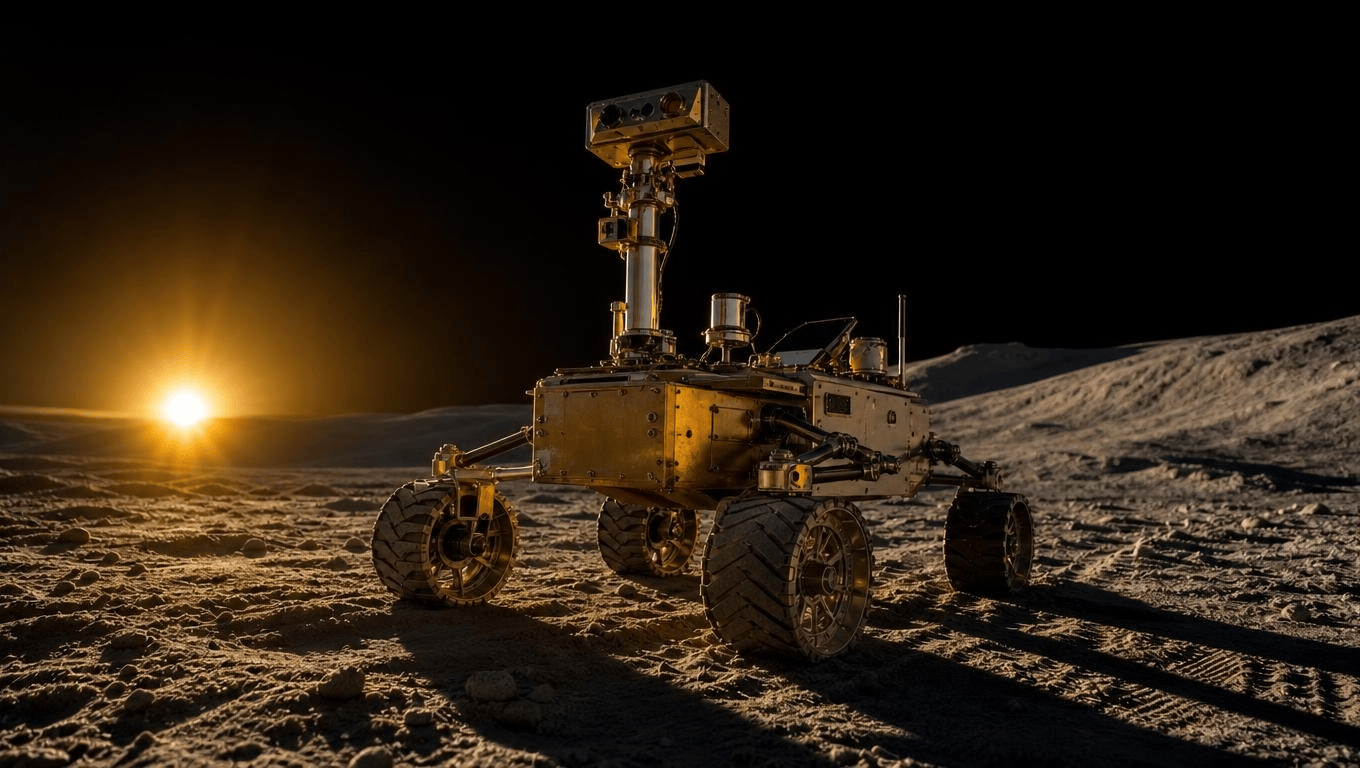
Cold logic, warm rocks. According to Payload, Astrolab and Interstellar Mapping are teaming up to hunt for water at the lunar south pole. The FLIP rover is due to launch in November 2026 aboard Astrobotic’s Griffin-1 lander, under NASA’s commercial lunar delivery program. Interstellar Mapping’s findings will steer where the rover takes its measurements. Andrew Hazelton, CEO of Interstellar Mapping, said in a statement reported by Payload « Finding lunar water isn’t simply a matter of going to the coldest or darkest places. Understanding what is happening thermally beneath the surface helps us identify where water and other volatiles are most likely to persist. »
Four instruments, sharper aim. FLIP carries a camera to detect helium-3 in lunar regolith (loose surface soil), a laser-guided tracking system, a dust sensor, and LiDAR for 3D mapping. The innovation is the ordering: Interstellar Mapping’s study of the subsurface is meant to point the rover to the spots where it measures, raising the odds of finding water. Ground truth is also the aim of China’s Chang’e-7 mission, whose legged probe is built to hop into shadowed craters and test the ground directly. A smarter map still has to meet the soil.
A Smarter Map Is Not a Fuller Tank
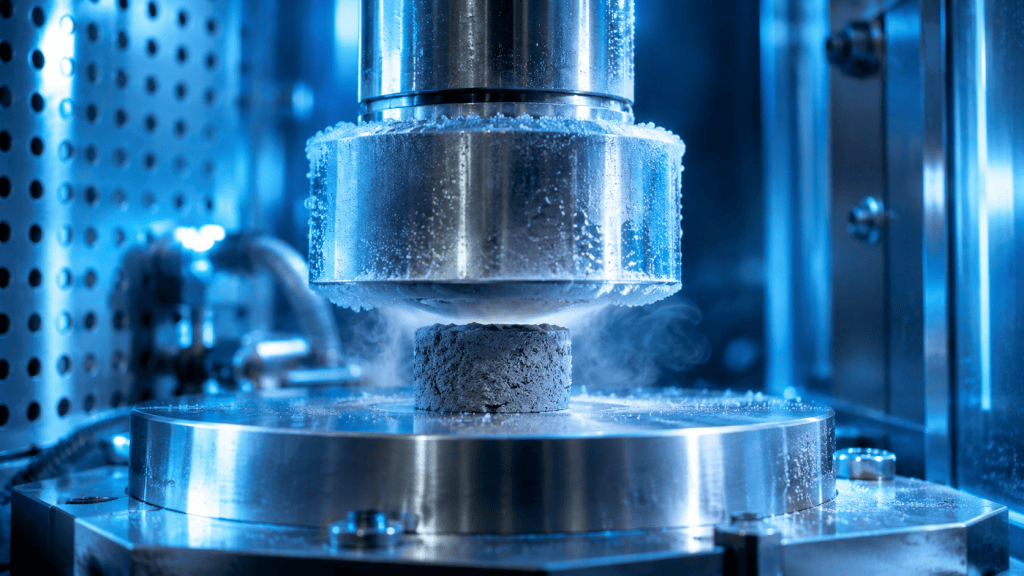
Hope meets reality. Even a well-aimed rover may find less than hoped. Norbert Schorghofer of the Planetary Science Institute told Scientific American the ice is most likely « mixed into the soil at a concentration of up to 10 percent ». Extracting it means heating regolith near absolute zero, a demanding job. Thermal targeting narrows where to dig, not how much is there.
The real question. Lunar ice accumulated over billions of years, so it is not renewable. Water recycled in a base stays in the system. Water turned into propellant and flown away is gone. A smarter map is the first tool in an accounting problem: who spends this stock, and how fast?
[Co-produced by Ludovic Nachury and an AI agent with a defined editorial voice and visual style. Illustrations are AI-generated. Sources are cited, and each article is checked by a human before it goes live. How this works.]

