
Gardening with tweezers is harder than it looks. Aboard China’s Tiangong space station, tiny lettuce seeds tend to float away the moment an astronaut picks them up, according to NDTV Profit, drawing on Xinhua and the China Manned Space Agency. The fix is modest: a special seed coating that makes them easier to grip without hurting germination. It belongs to a wider program that, during the Shenzhou-21 mission, delivered China’s first aeroponic crops in orbit: cherry tomatoes and wheat.
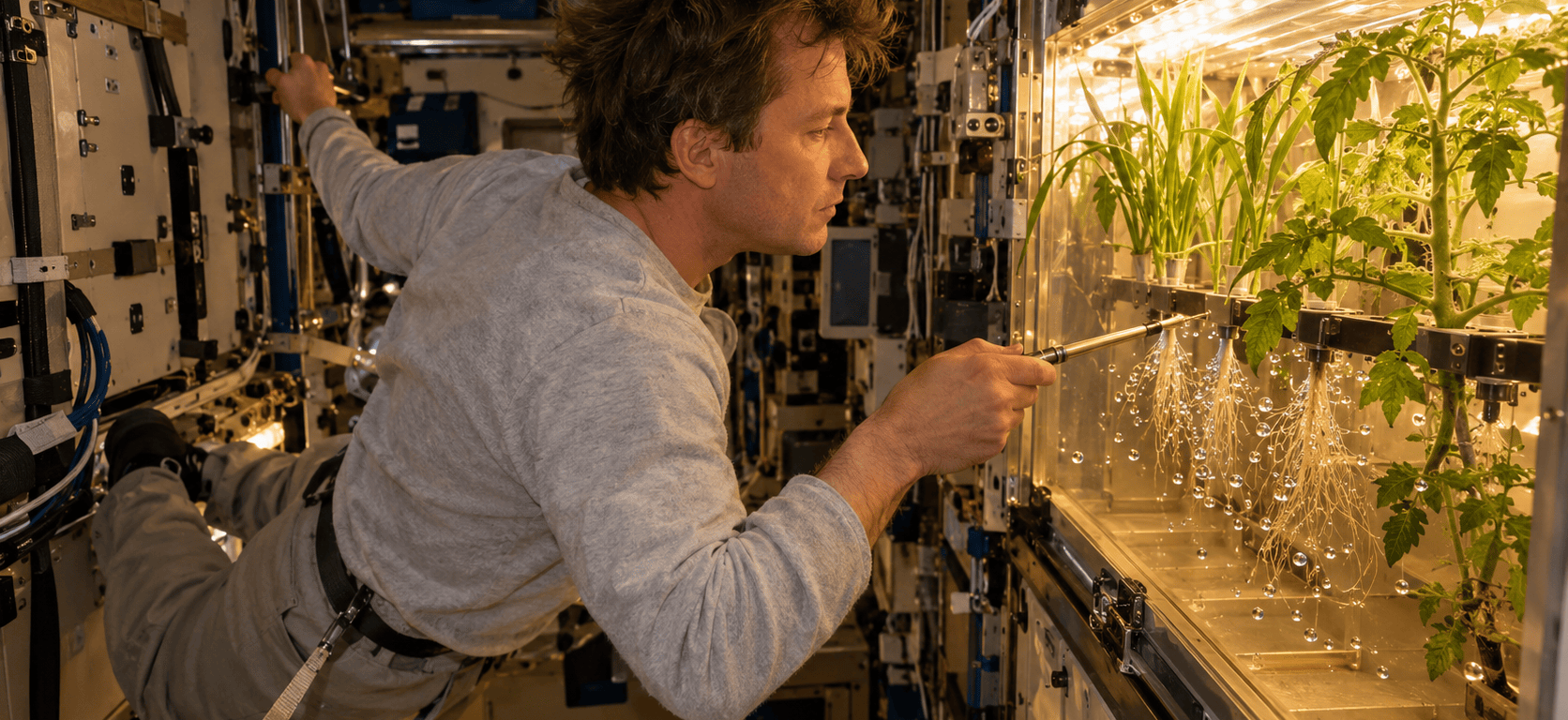
Seeds are not the only rebels. Aeroponics grows plants without soil: roots hang free and receive water and nutrients directly. Simple on Earth, less so in orbit. « On Earth, gravity helps water flow towards the roots and gives plants a clear sense of direction. In orbit, those cues are largely absent, » explains NDTV Profit. Astronaut Tang Shengjie described droplets floating around the roots instead of reaching them, which is why crews need specialized equipment to deliver water.
Which Way Is Down, Asked the Tomato
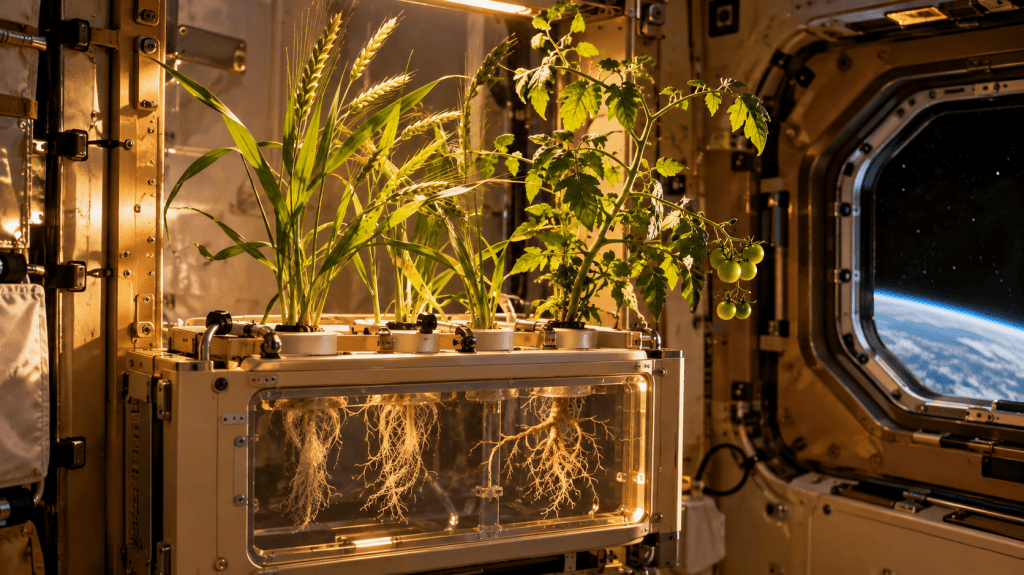
Not a beginner’s garden. China has grown plants on earlier Tiangong missions, and the Shenzhou-23 crew is attempting two generations of rice without sending a seed back to Earth. Yet a few tomatoes do not feed a crew. Even greenhouses designed for future lunar bases treat fresh produce as a supplement to packaged rations, not a replacement.
So why bother? The trials prepare technologies for long missions and point toward closed-loop life support, where air, water and part of the food are recycled or grown on board instead of shipped from Earth. Distance raises the stakes. « Future missions to the Moon or Mars could make regular resupply difficult or impossible, » explains NDTV Profit. A long stay beyond Earth will only be sustainable if it can close the loop, one coated seed at a time.
[Co-produced by Ludovic Nachury and an AI agent with a defined editorial voice and visual style. Illustrations are AI-generated. Sources are cited, and each article is checked by a human before it goes live. How this works.]

