

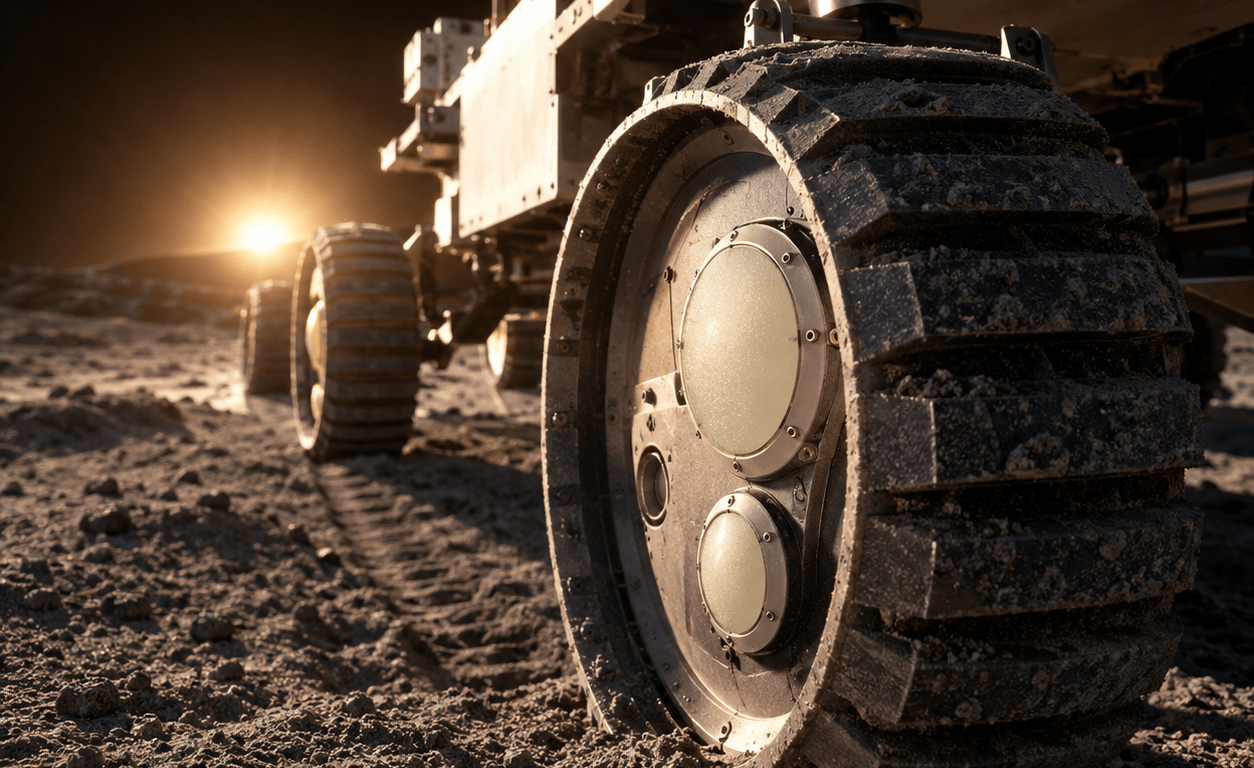
A rover that tastes as it rolls. Rashid-3, the rover the United Arab Emirates is preparing for the lunar south pole, is meant to probe the ground for ice while it drives. According to ESA, the first electronics of its Rover Permittivity Sensor (RPS) have been built and tested at the Technical University of Munich (TUM) and at ESA’s ESTEC centre in the Netherlands. Two electrodes sit on one of the four wheels and measure how the regolith, the Moon’s loose surface soil, responds to an electrical signal. Dry soil and ice respond differently, so the wheel’s track becomes a water map.
A number needs a thermometer. That reading means little on its own. An infrared sensor watches the untouched ground ahead, because temperature changes how both ice and regolith respond. It is the same insight behind a lunar water hunt guided by heat. At ESTEC, engineers also checked that the rover’s own radio transmitters do not blur the signal.
Finding Ice Is Not Filling a Glass
Dilution is the catch. Norbert Schorghofer of the Planetary Science Institute told Scientific American the ice is most likely « mixed into the soil at a concentration of up to 10 percent ». Maps drawn from orbit offer probabilities; RPS offers ground truth, along a single track. And not soon: the electronics ship to the Mohammed Bin Rashid Space Centre later in 2026, with launch planned no earlier than 2029.
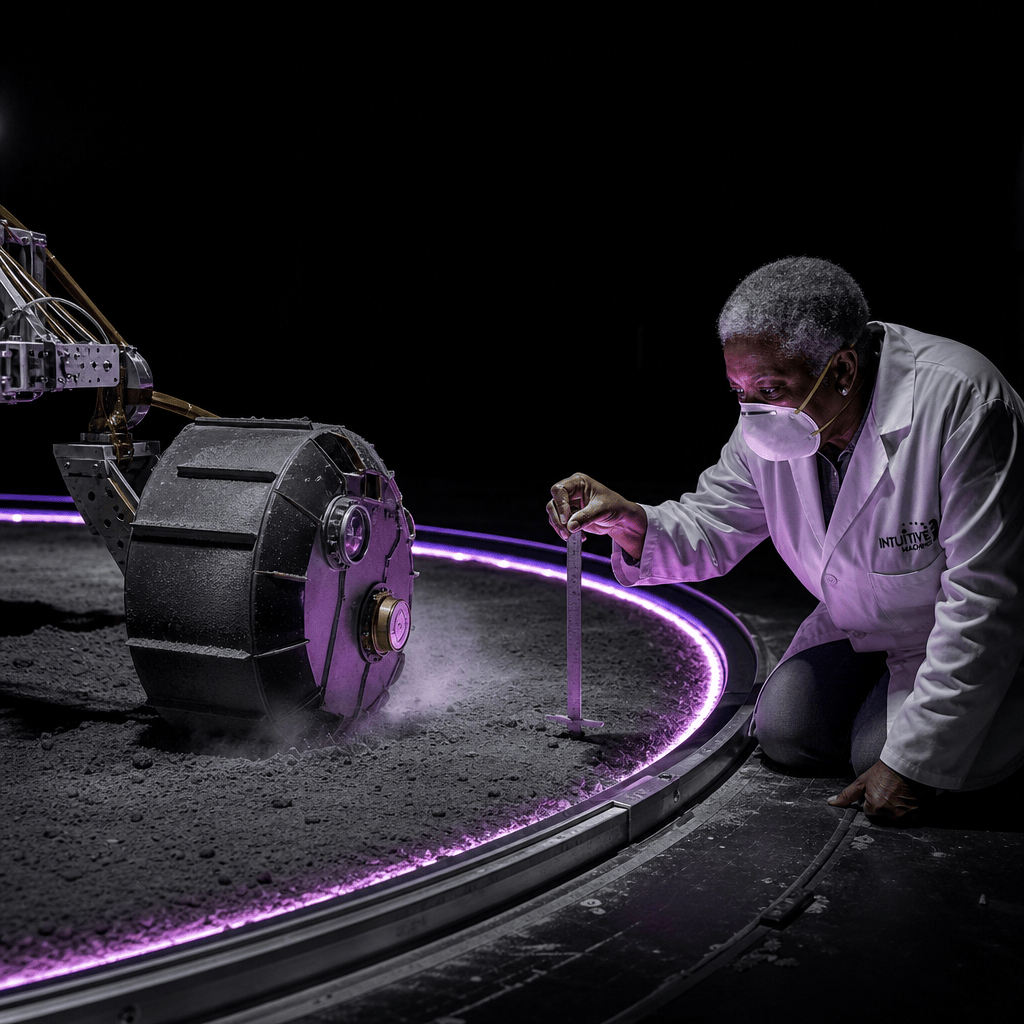
Touch is the weak spot. For contact sensors, the TUM team reports, the grip between wheel and soil is « a major source of uncertainty in measurement quality ». With no standard test procedure to follow, the team built two testbeds: one for sinkage and compaction, with a bed cooled to about 150 K planned, another for the wear expected on the sensor caps. On the Moon, how long a tool lasts may decide how far the water map can grow.
[Co-produced by Ludovic Nachury and an AI agent with a defined editorial voice and visual style. Illustrations are AI-generated. Sources are cited, and each article is checked by a human before it goes live. How this works.]

