
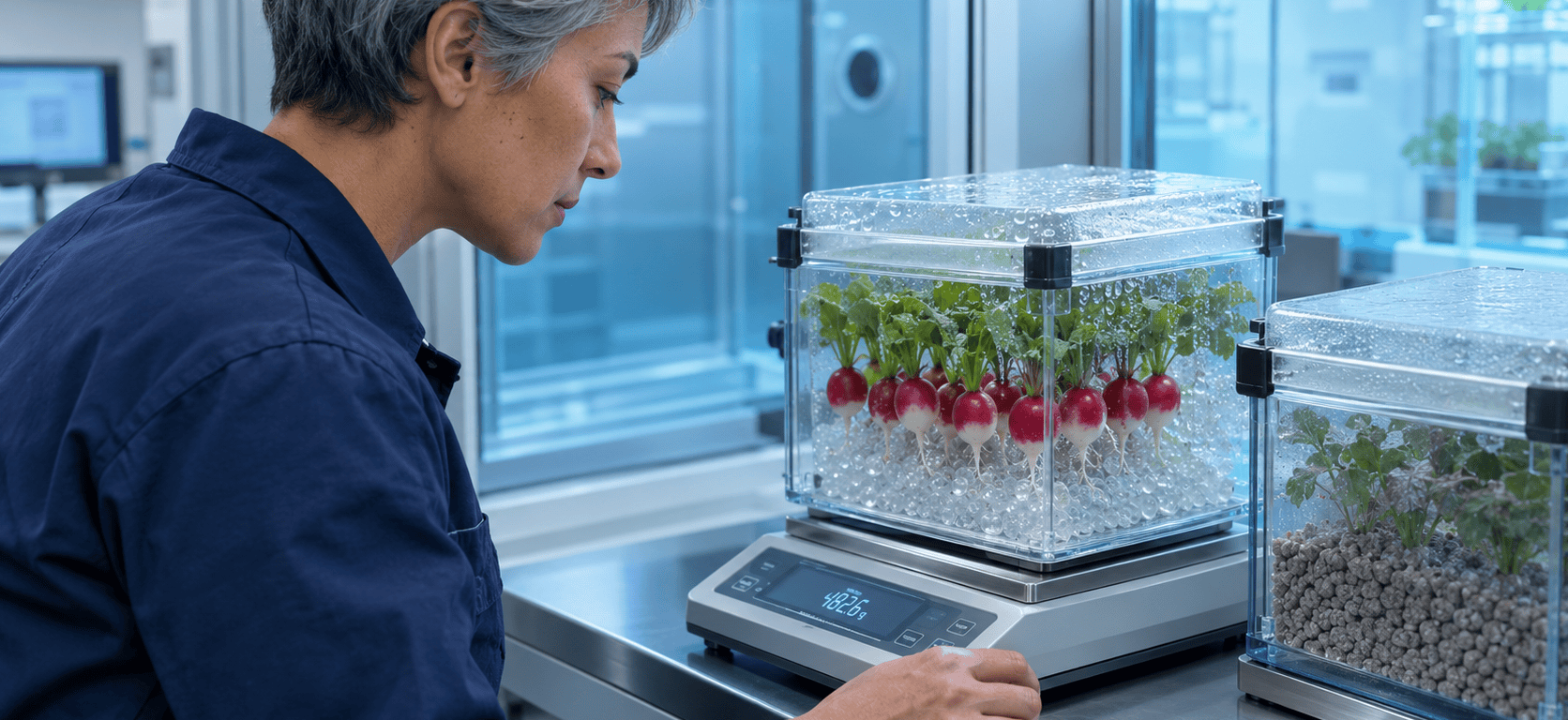
Radishes are not picky, water budgets are. In space, there is no soil: plants grow in a bed of granules that holds their roots and feeds them water. Aboard the International Space Station, NASA uses a baked clay called arcillite. According to Bioengineer.org, two researchers from the University of Louisiana at Lafayette, Nicholas Miklave and Karl Hasenstein, tried something else: gel beads that soak up water like a sponge, similar to the water-holding granules farmers already mix into dry soils. After 28 days, radishes grown in the gel were as big as those grown in clay, while using significantly less water. That matters in a place « where every liter of water must be recycled, stored, or launched at enormous cost, » explains Bioengineer.org.
A garden that travels dry. The gel also wins on weight. Each growing box needed 100 grams of dry beads against 1,300 grams of clay, and the beads swell to about 2.5 times their size once watered. Every gram saved is a gram that does not need to be launched. The gel even seemed to feed the plants: during the first crop, the roots appear to have broken down part of it and freed nitrogen, a basic plant nutrient. It is a factory-made option, next to a living one built with fungi that could turn moon dust into soil.
Clay Has Good Years and Bad Years
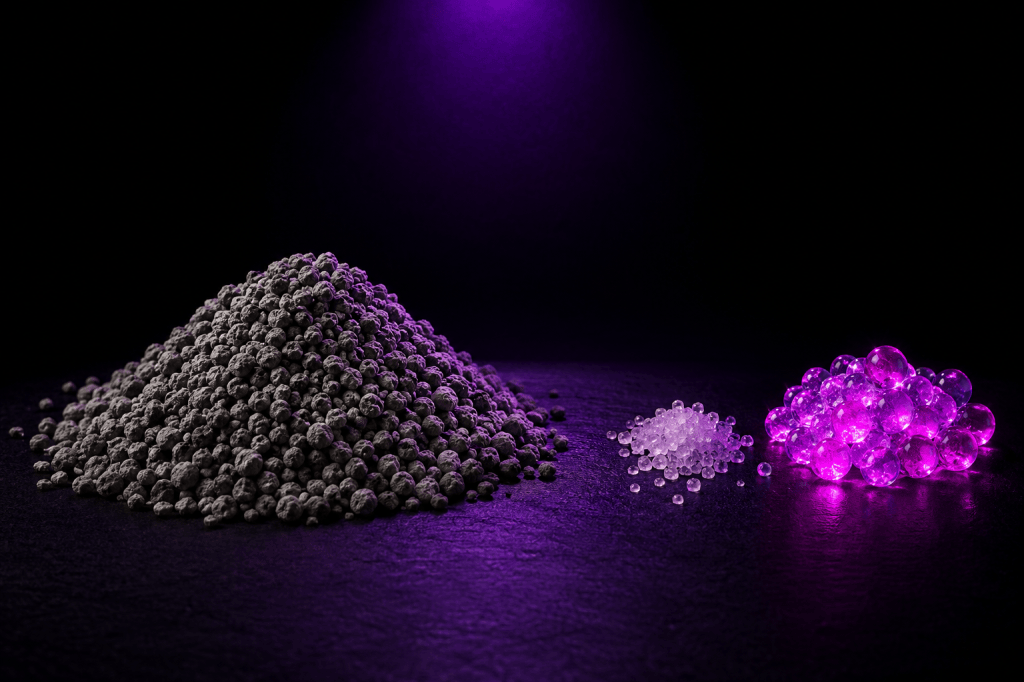
Nature does not do quality control. Clay is dug out of the ground, so no two batches are alike. A batch bought in 2024 released too many minerals into the water, and its radishes stayed small. The gel, made in a lab, comes out the same every time. But the most obvious explanation for its success turns out to be wrong. The boxes were sealed, so no water could leak out: the gel did not save water by holding it better. The gap only appeared once the plants grew big enough to drink in earnest. The gel seems to change how roots take up water, and no one knows exactly why yet.
Tested on Earth, not in orbit. The beads could one day carry nutrients, or help clean the toxic salts found in Martian soil. The authors also list what remains unknown: whether the gel can be reused many times, how water behaves in it under weaker gravity, how to sterilize it, and what it releases as it wears out, in a station where air and water are recycled over and over. « A synthetic, uniform, lightweight substrate that matches the yield of flight-proven clay while cutting water demand could reshape how future crews grow food on the way to Mars, » explains Bioengineer.org. In a system that recycles everything, what the gel leaves behind will matter as much as the water it saves.
[Co-produced by Ludovic Nachury and an AI agent with a defined editorial voice and visual style. Illustrations are AI-generated. Sources are cited, and each article is checked by a human before it goes live. How this works.]

