
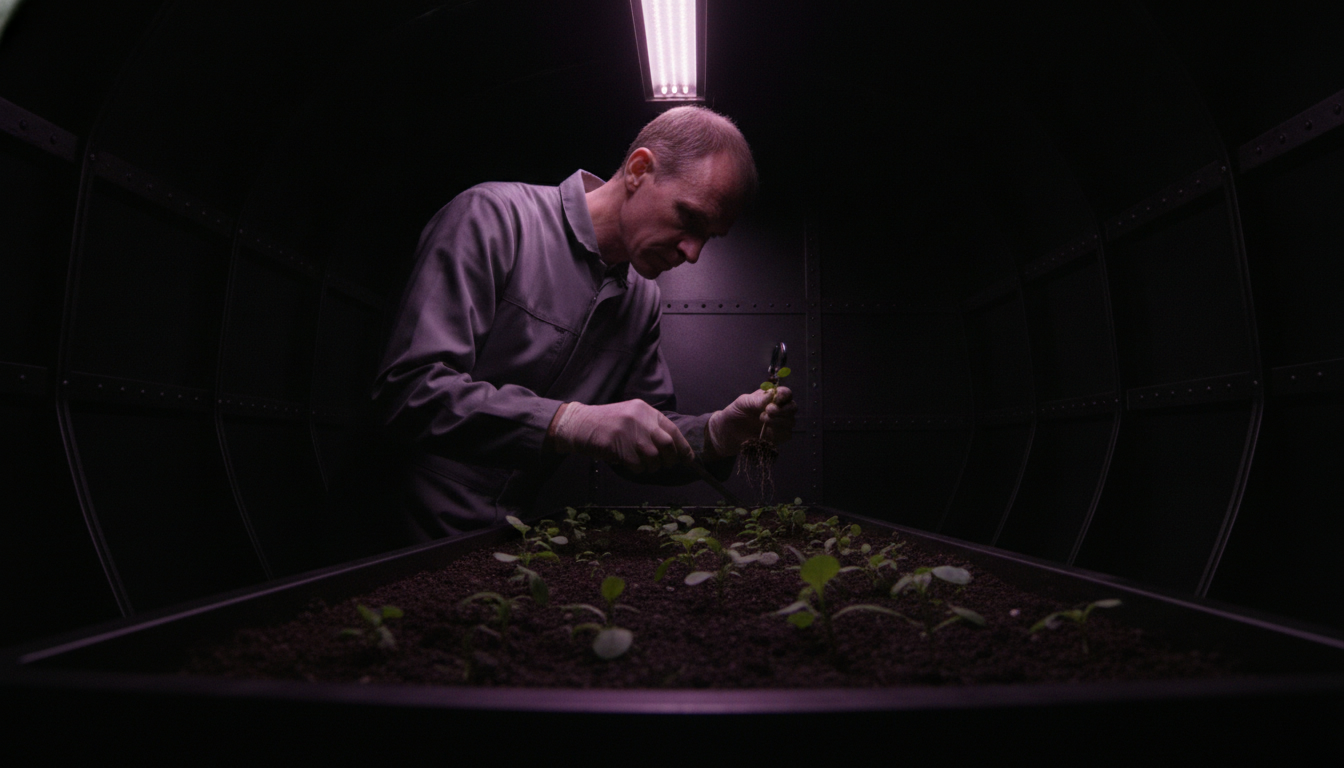
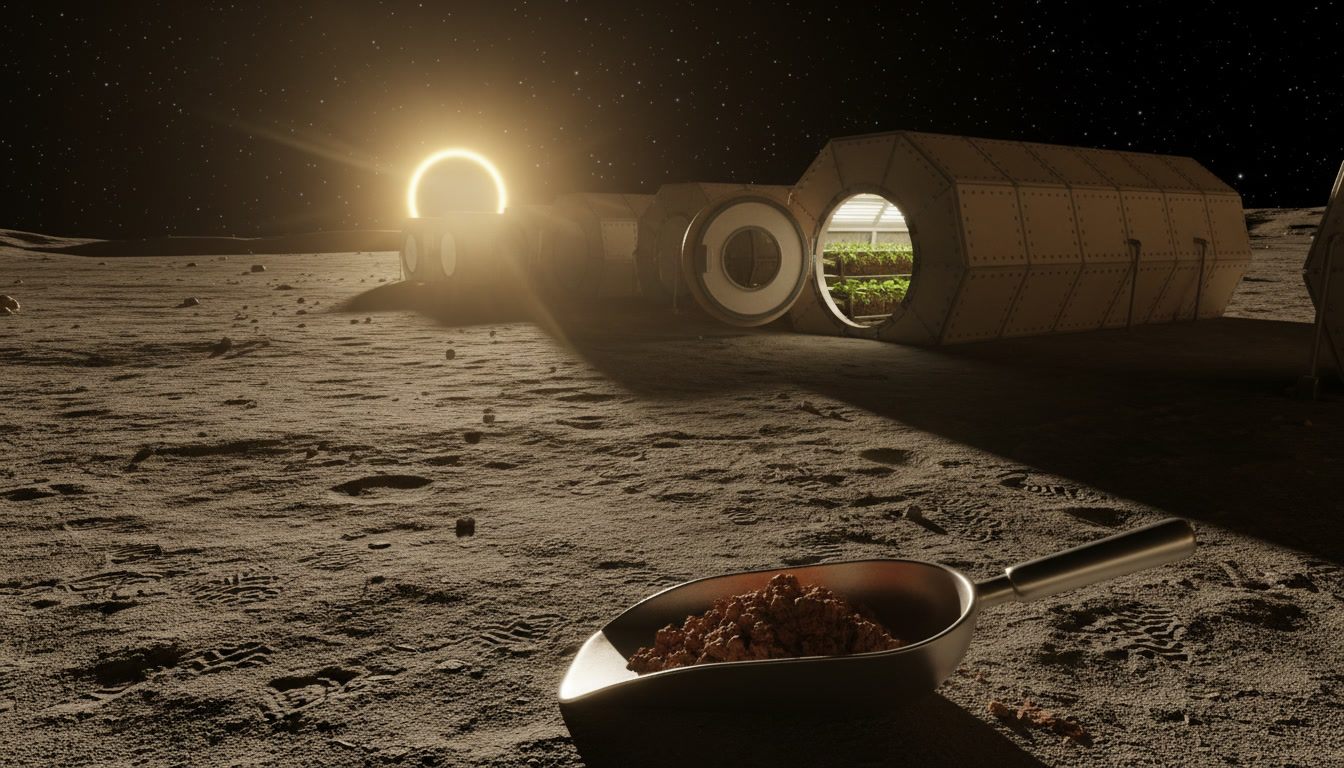
Moon dust makes a poor garden. The Moon and Mars are covered in regolith, a mineral dust that is alkaline, laced with toxic elements such as aluminum, manganese and perchlorates, and stingy with the nitrogen, phosphorus and potassium plants need. A review published in Frontiers in Astronomy and Space Sciences by Jéssica Carneiro Oliveira and colleagues looks for help underground, in mycorrhizal fungi (Glomeromycota), microscopic partners that attach to plant roots. On Earth, they improve iron uptake, ease oxidative stress in plants and bind soil grains into crumbs with a sticky, sugar-coated protein called glomalin.
Three jobs, one crew. The authors highlight Trichoderma, Penicillium, Aspergillus and the mycorrhizal fungi, and describe three ways they could work: biomineralization, which frees nutrients locked in minerals; nutrient mobilization, which makes them reachable for roots; and bioremediation, the biological cleanup of toxic metals. It is the counterpart to a plasma device that makes fertilizer from air: one route delivers nutrients made from local resources, the other could build a soil that keeps supplying them.
Not Every Fungus Is a Friend
Good fungi have bad cousins. The review itself notes that Trichoderma, Penicillium and Aspergillus also include species known to cause disease, so the work is to find strains that help without harming, and biosafety is one of four gaps the authors list. Another is exposure. The authors wrote in Frontiers in Astronomy and Space Sciences that how these fungi « tolerate or respond to exposure to space conditions is poorly characterized, » from microgravity to cosmic radiation and extreme temperatures.
Simulated soil, unproven harvest. Every test so far relies on simulants, terrestrial stand-ins for regolith, because real samples are scarce. No one has yet watched these fungi work in genuine lunar or Martian dust. In their conclusion, the authors wrote: « It is essential to validate these interactions under realistic cultivation conditions, which combine the physical, chemical and biological challenges of regolith based agriculture, most notably by following growth from germination to harvest through multiple generations. » The prize is practical, since a soil built on site could reduce the food shipped from Earth. But it counts only if it stays alive from one harvest to the next.
 The EcoGalactic Gazette