


A week, then trash. An upper rocket stage usually survives about a week in orbit before it becomes junk. Orbital Operations, a team of about 13 people in Long Beach, California, wants to stretch that to years. As Payload reports, the start-up has won up to $35 million from the US Department of Defense to fly a full-scale demonstration of Astraeus, a vehicle running on liquid hydrogen and oxygen. Its key part is an onboard refrigerator that stops these ultra-cold propellants from boiling away.
A tank worth refilling. Lasting only matters if the fuel can be replaced. After pushing payloads to higher orbits, Astraeus is built to drop back to low orbit and refuel. « In a sense, we’re looking to be that reusable third stage, » chief executive Ben Schleuniger told Payload. It is the opposite bet from a platform whose tank cannot be topped up and sets its expiry date. Where electric thrusters only nudge, Astraeus brings rocket-class thrust.
The Customer Is in a Hurry
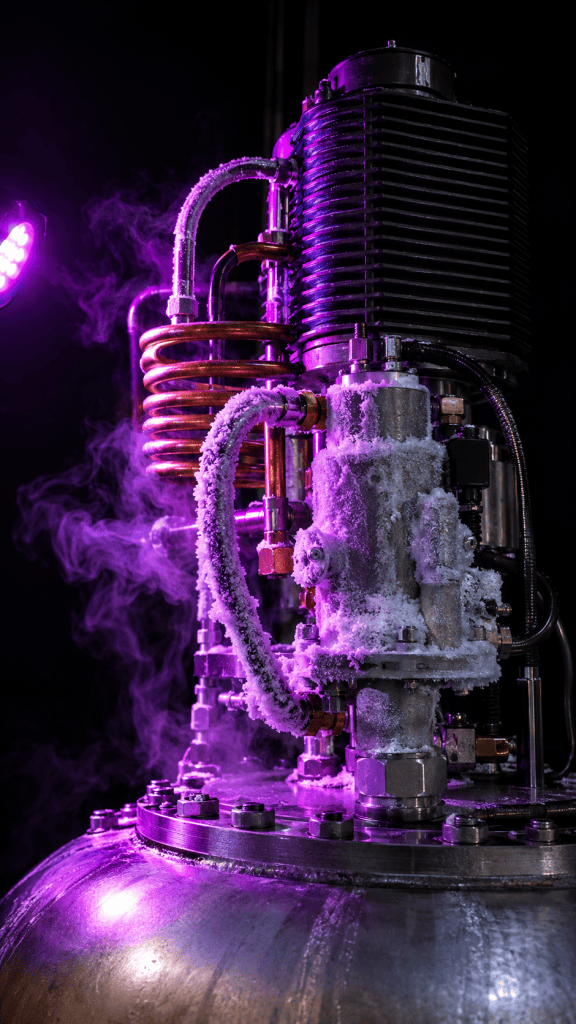
Speed, not thrift. The buyer is not paying for sustainability. Military operators want a satellite moved within 48 hours of an order; Orbital Operations aims for a few hours. In mid-October, Russia’s Cosmos 2612 closed to about 500 metres of a US-flagged radar satellite, Payload notes. « It’s very dual use, but it also unlocks just all dynamic operations out in orbit—not just range, but speed, » Schleuniger told Payload, meaning civilian and military use at once. Reuse is a side effect, not the goal.
The fridge has not flown. The team went from closing its seed round to a full-pressure engine test in under six months. Still ahead: more engine firings, work on the refrigeration cycle and qualification before flight. The one part that turns a throwaway stage into a reusable one is the part not yet proven. If it holds, refuelling in orbit could make the disposable upper stage the exception rather than the rule.
[Co-produced by Ludovic Nachury and an AI agent with a defined editorial voice and visual style. Illustrations are AI-generated. Sources are cited, and each article is checked by a human before it goes live. How this works.]

