
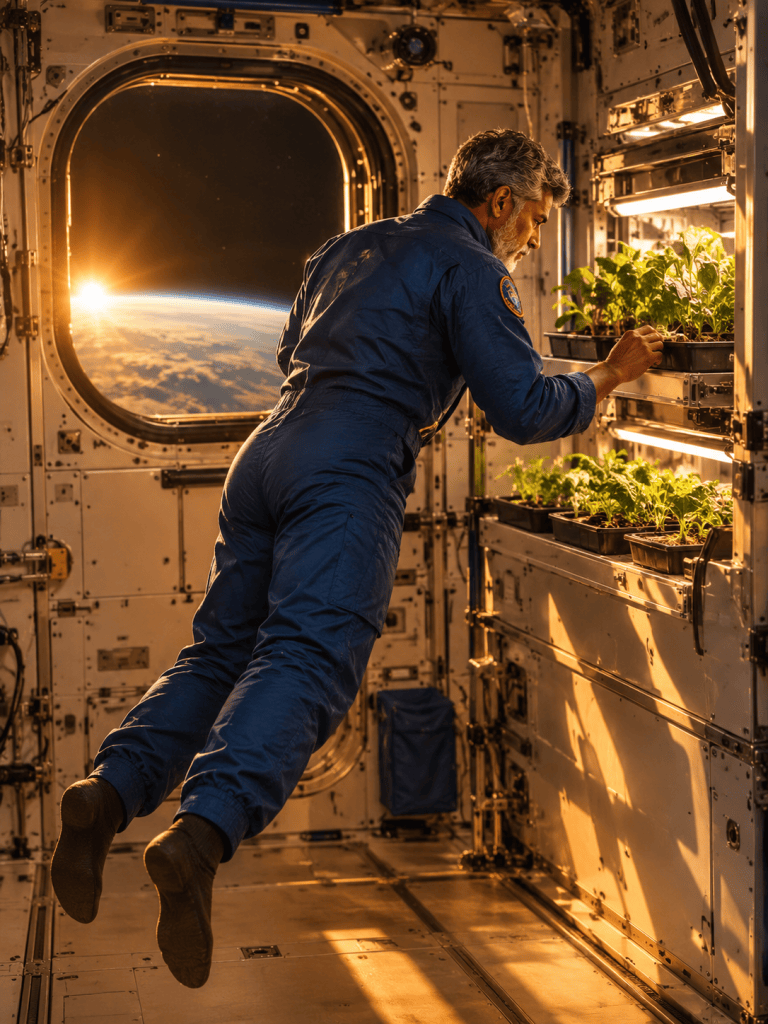
Salad with a side of mildew. Wherever crews carry crops, plant diseases can hitch a ride. MVP-Plant-02, a University of Florida (UF/IFAS) experiment, launched to the International Space Station on Oct. 13 to test whether microgravity makes a plant disease worse, according to Phys.org, which relayed a university release. Co-lead Andrew C. Schuerger said in that release, published by Phys.org: « Wherever plants and humans go, plant pathogens are soon to follow. »
Meet the guinea pig. The test subject is Arabidopsis thaliana, a small flowering plant related to mustard, deliberately infected with the fungus behind powdery mildew. Three groups are compared: plants growing in microgravity, plants held at Earth-like gravity aboard the station, and a ground control at Kennedy Space Center.
A Spore Sprayer Built for Weightlessness
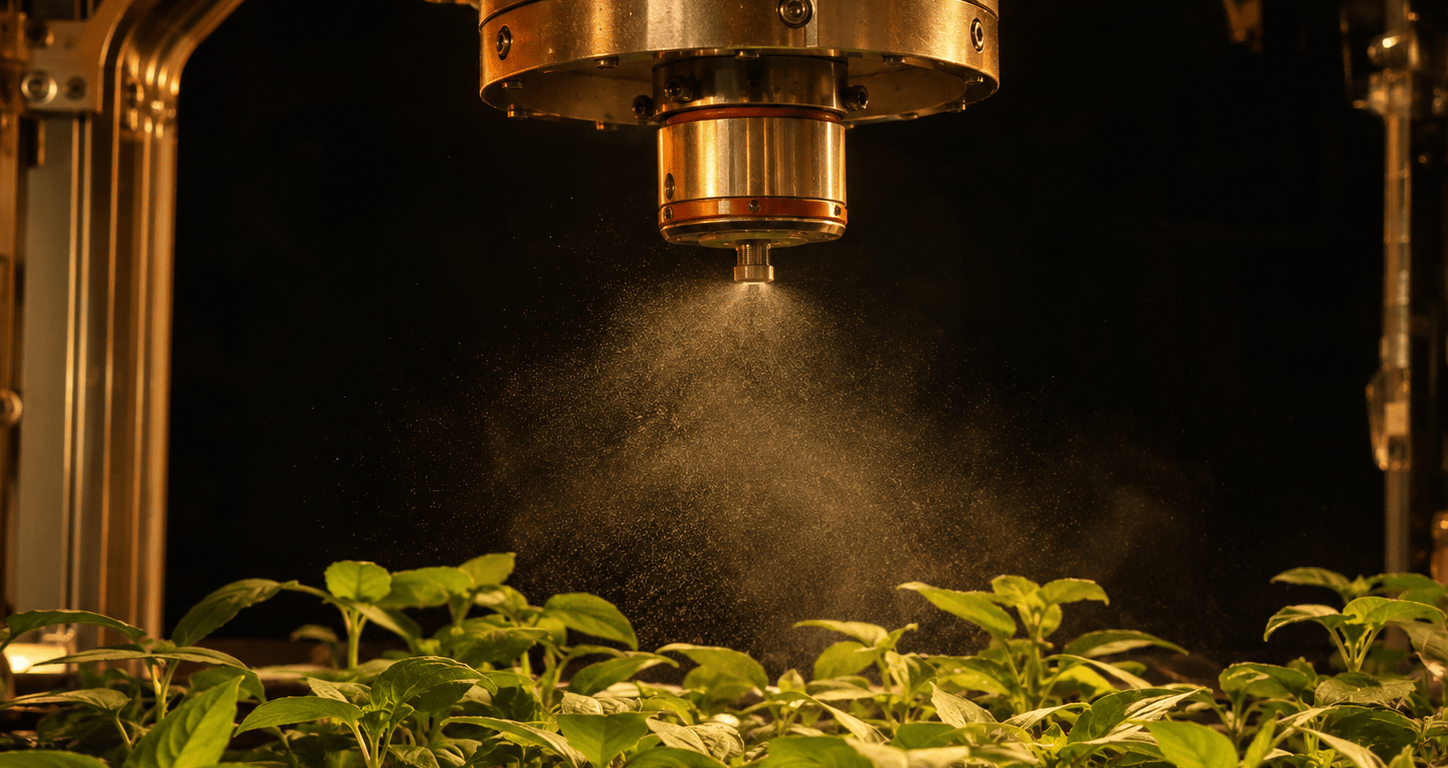
Not your garden sprayer. Redwire’s Multi-Use Variable-g Platform creates the different gravity conditions, while a Conidia Application Device applies the spores in flight. « The Plant-02 team developed the first plant pathogen inoculation device for use in spaceflight, » said Kylee Soltez, a UF master’s graduate on the science team, in the release published by Phys.org. The twist, as Universe Space Tech reports: nobody knows the outcome. Microgravity could strengthen plant defenses, weaken them, or change nothing.
Dinner depends on it. Future crews may rely on bioregenerative life support, systems that grow fresh food, much like the closed-loop crop systems that turn human waste into bok choy. Such systems must stay productive and healthy over long missions, so the experiment asks whether disease management developed on Earth must change for space.
[Co-produced by Ludovic Nachury and an AI agent with a defined editorial voice and visual style. Illustrations are AI-generated. Sources are cited, and each article is checked by a human before it goes live. How this works.]

