
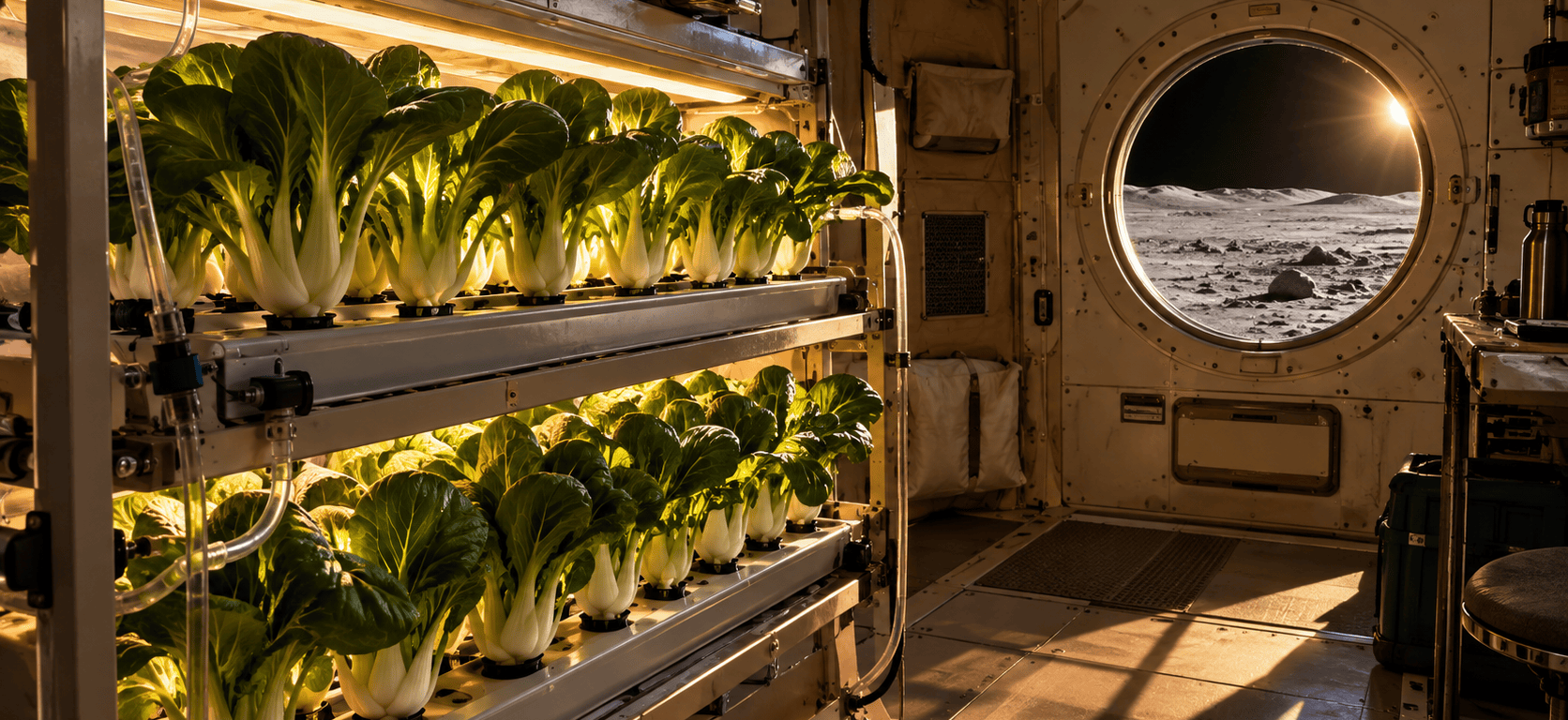
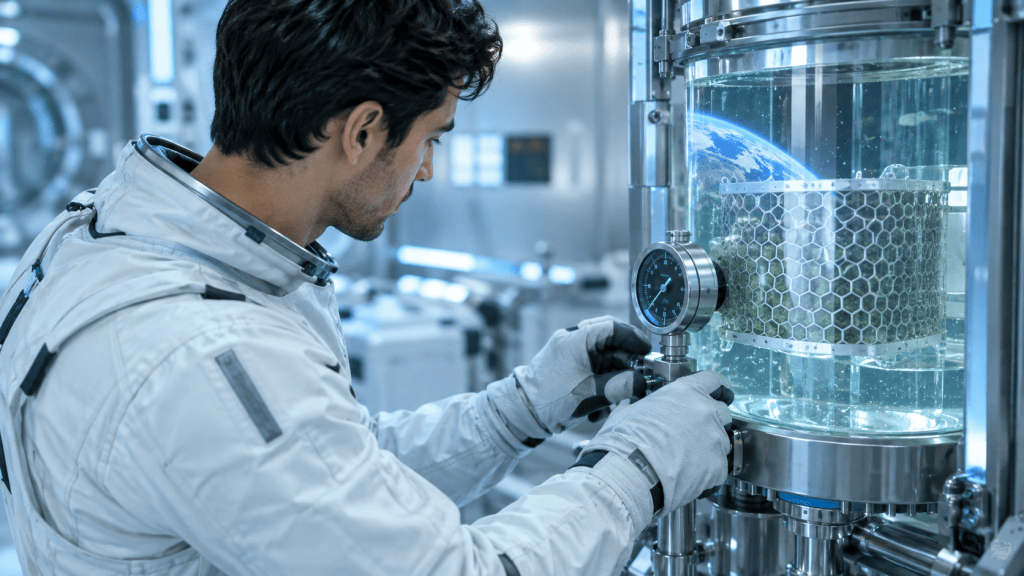
Waste, put back to work. According to AG Information Network of the West, researchers at the University of South Florida have built a loop in which human waste goes in and plant food comes out. The university’s Membrane Biotechnology Lab, working with NASA’s Kennedy Space Center, uses microorganisms to process the waste and recover a nutrient-rich liquid that feeds plants without any soil. Bok choy, a leafy Chinese cabbage, has already grown on it.
Two decades of groundwork. Professor Daniel Yeh says his lab has spent roughly twenty years on wastewater treatment and resource recovery, eight years of them with Kennedy. The motive is arithmetic: transporting supplies to space is prohibitively expensive, so recycling nutrients matters. It echoes a plasma device that makes fertilizer from air, another way to make nutrients on site from a different raw material.
One Cabbage Is Not a Harvest
Read the fine print. The report gives no yield, no growing time, no second crop and no crew-sized volumes, and it does not say whether the system has run in microgravity. A review of soil fungi for lunar farming shows how open that question stays: the authors wrote in Frontiers in Astronomy and Space Sciences that how such organisms « tolerate or respond to exposure to space conditions is poorly characterized. »
The payoff may land at home first. The technology is pitched for more than space: it could also tackle waste management on Earth, which may be where it pays off first. Off-world, the loop still has to show it can feed a crew, not a single plant. A lasting outpost starts by wasting nothing, not even its waste.

