
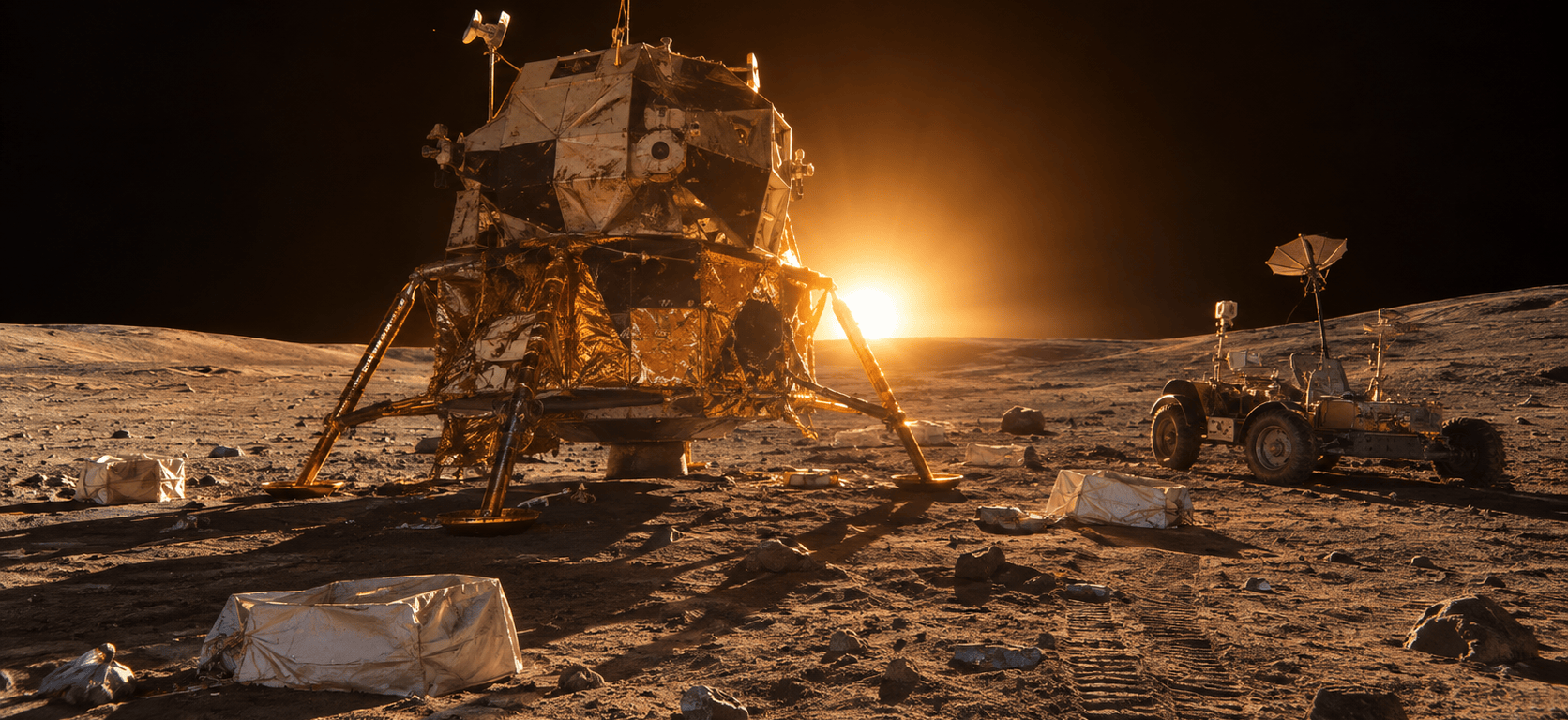
Fifty-five years later, someone should check on the trash. That is one of the more unusual ideas in a National Academies report which, according to Payload, ranks four sites far from the lunar poles where astronauts would do science that robots cannot. At Mons Hadley, crews would walk to the Apollo 15 site to see how hardware and astronaut waste have aged, a rare look at the footprint humans leave behind. The committee assumes modest outings: two astronauts, no rover, and one to four moonwalks per site.
The other three are just as particular. Bhabha Crater, on the far side, is shielded from Earth’s radio noise, a quiet spot for listening to the sky. The Aristarchus Plateau may hold water and rare earth elements. Yet the list also admits what a human visit costs: the Orientale Basin, the Moon’s best-preserved large impact basin, would get a single visit, so the site stays intact for a future gravitational wave observatory.
Great Sites, Awkward Timing
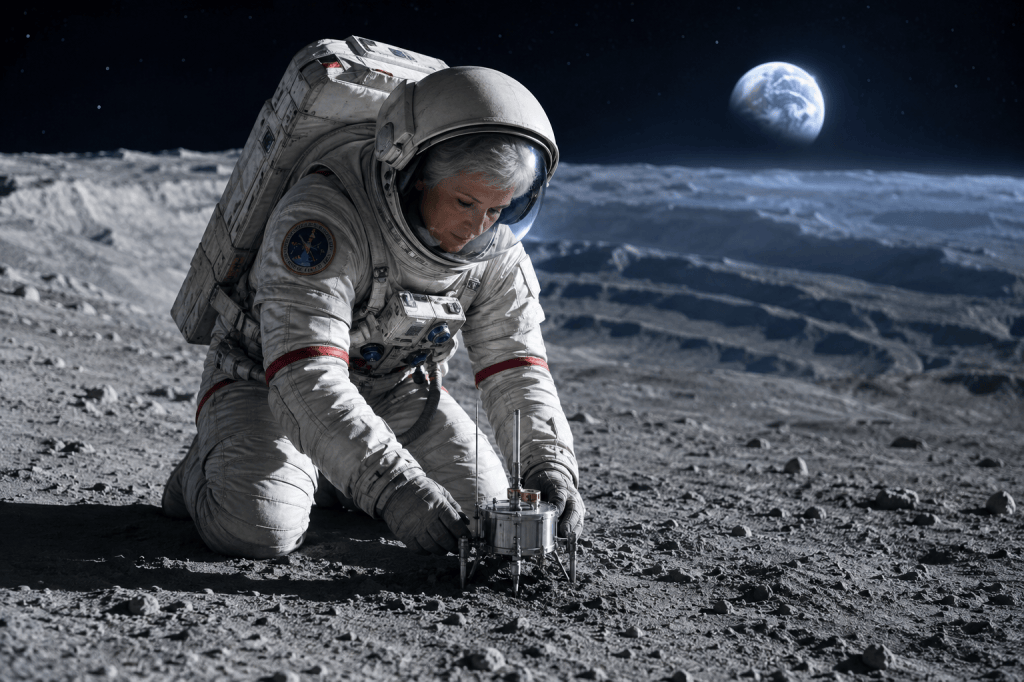
The report landed after the plans changed. NASA ordered the study in 2025, then refocused on a South Pole base, which it is already preparing with instruments sent ahead of the crews. The sorties are now pitched as add-ons, and NASA has not said whether it will act on them. The committee still hands over a to-do list: let astronauts go beyond the current 2 km limit around the lander, build instruments that survive the lunar night, and fund the labs that will study the samples.
A plan B with fewer cliffs. The list may matter sooner than expected. If Artemis IV cannot reach the pole, Andrew Hazelton, CEO of Interstellar Mapping, told Payload that sites farther from it « could meet many of the same objectives with potentially lower landing risk. » He also told Payload that « every new data point helps, and the sites in this report would add several. » A Moon program with a backup address, and a site it agrees to visit only once, is learning restraint before it learns to build.
[Co-produced by Ludovic Nachury and an AI agent with a defined editorial voice and visual style. Illustrations are AI-generated. Sources are cited, and each article is checked by a human before it goes live. How this works.]

