
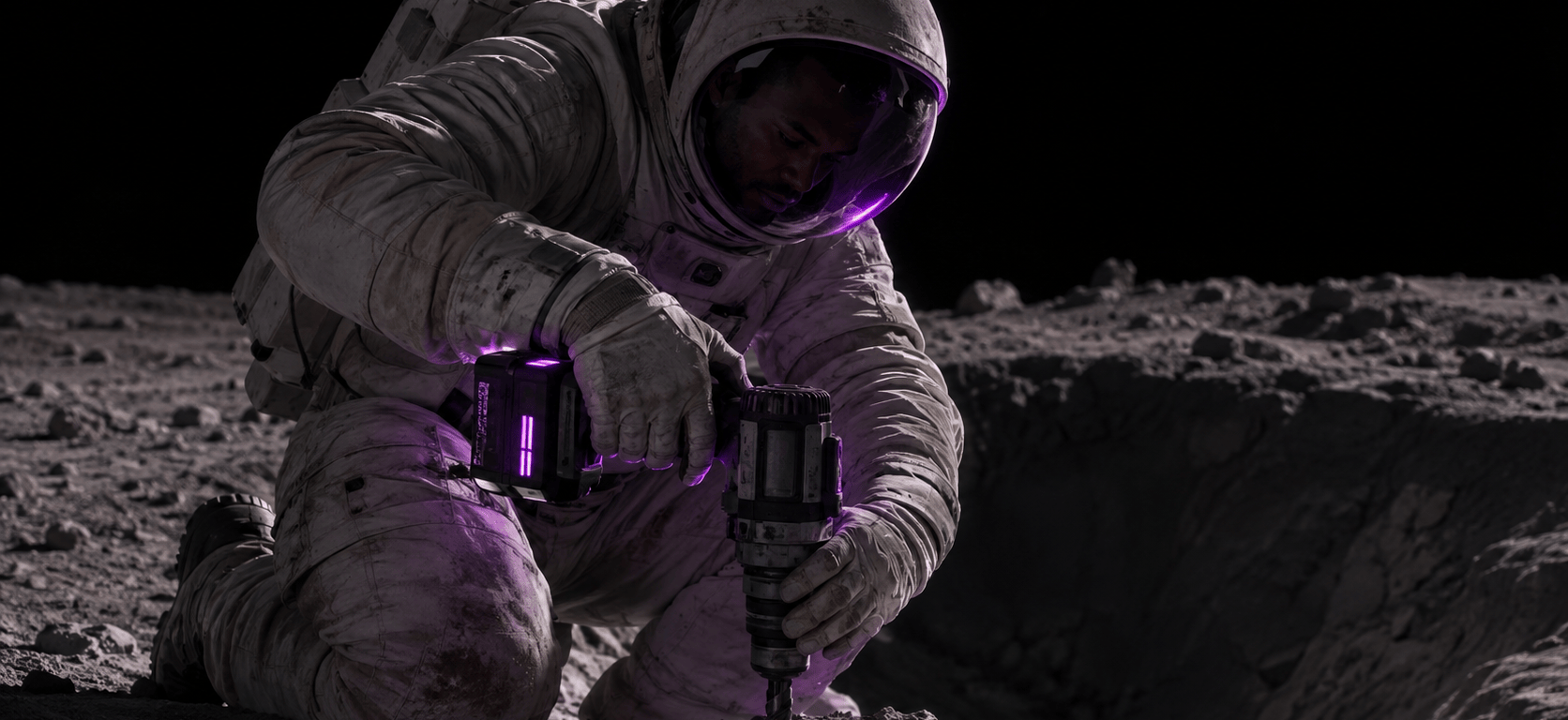
A battery that freezes is a flashlight with no light. NASA reports that its SPEARS project replaces the liquid electrolyte of lithium-ion cells with a solid one, made of ceramic or polymer. The liquid is the weak link: it freezes in the cold, boils off in vacuum, and the lunar south pole drops to about minus 200 °C at night. A solid electrolyte does not freeze, and NASA also wants cells that pose no fire hazard.
Minus 80, not minus 200. In vacuum tests, small prototype cells worked from minus 60 °C to 80 °C, with slightly reduced performance down to minus 80 °C, and took cycles from 100 °C to minus 170 °C without damage. Yi Lin, who leads the testing, told NASA: « We proved for the first time that these cells can work down to minus 80 degrees Celsius. » The catch: that is less than half the cold of a lunar night, and at minus 170 °C the cells survive but do not run.
Warm-Up Beats Wrap-Up
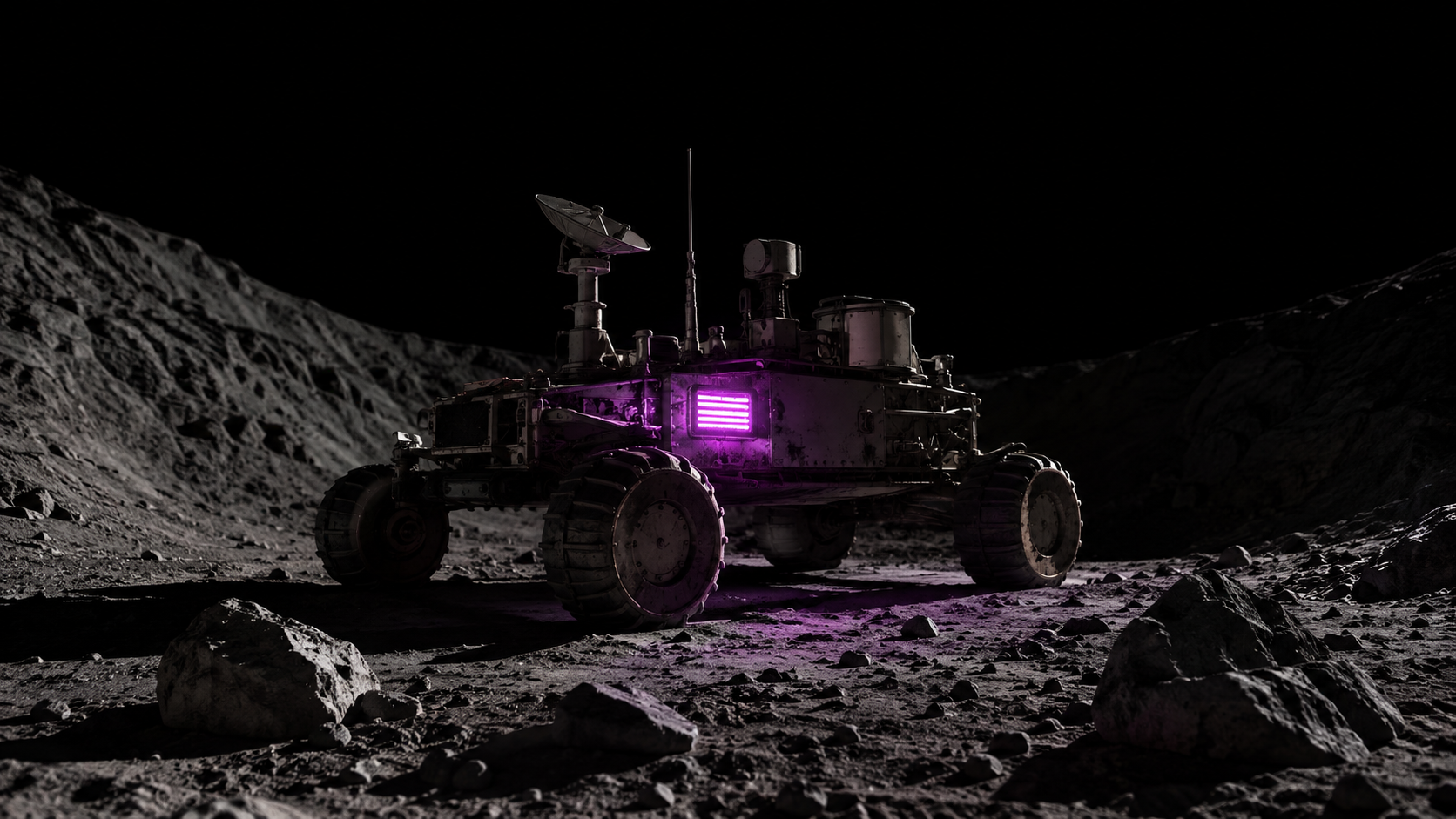
Heaters, not blankets. Survival is enough, because small heaters can bring the cells back to working temperature. They need not be kept warm all the time, which could mean lighter thermal systems for rovers and habitats. That fits a pattern: ESA’s OASIS service station would pair solar panels with a separate battery to carry 15 W through the lunar night, and a proposed microreactor called MULE would spend its heat instead of wasting it. On the Moon, warmth is part of the energy budget.
Tools first, promises later. The targets are drills for shadowed craters, rovers, emergency packs for astronauts and long-duration instruments. « We can tune for energy, tune for power, tune for durability, depending on the application, » NASA quotes Lin as saying. The project began in 2026 and is still at the technology development stage, with flight hardware being prepared. A commercial collaboration is only a possible next step, and spin-offs on Earth are mentioned. The open question is how far below minus 80 °C the range can stretch, and Lin is confident of improving it.
[Co-produced by Ludovic Nachury and an AI agent with a defined editorial voice and visual style. Illustrations are AI-generated. Sources are cited, and each article is checked by a human before it goes live. How this works.]

